Navigating the PRSI Refund Guidelines: An Essential Resource for Employers
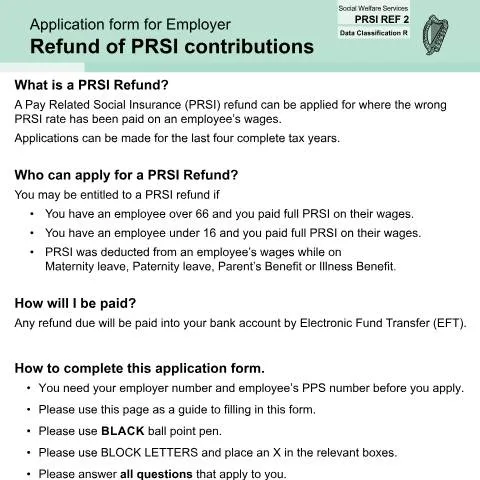
Understanding the intricacies of the Operational Guidelines: PRSI - PRSI Refunds Section is paramount for employers seeking refunds on Pay Related Social Insurance (PRSI) contributions. This guide dives into the core of the PRSI REF2 document, elucidating its purpose, contents, and the procedural nuances employers need to grasp when navigating the refund process.
Decoding the PRSI Refund: What’s In It for Employers?
The PRSI refund system is designed to reimburse employers who have inadvertently overpaid PRSI contributions on behalf of their employees. The guidelines outline specific scenarios where refunds can be claimed, appealing particularly to employers who might not be fully aware of their entitlements.
Key Scenarios for Refund Eligibility
- Employees Over 66: Employers who have paid full PRSI contributions for employees aged over 66 are eligible for refunds.
- Employees Under 16: If full PRSI contributions were paid for employees under 16, a refund may be warranted.
- Employees on Leave: Employers can claim refunds for employees who had PRSI deducted while receiving Maternity Leave, Paternity Leave, Parent’s Benefit, or Illness Benefit.
This document serves as a comprehensive roadmap for employers navigating these refund scenarios, ensuring they can reclaim overpaid contributions efficiently.
Step-by-Step Guide to Leveraging PRSI REF2
Employers must approach the PRSI REF2 guidelines with preparation to streamline their application process. Here’s a detailed look at how to effectively utilize the document:
Preparation Before Application
- Gather Essential Information: Collect your employer number and the PPS numbers of the employees concerned.
- Understand the Time Frame: Note that refunds can be claimed for a maximum of four years prior to the current tax year. Ensure that your claims fall within this period.
Completing the Application
The guidelines specify the need for accuracy and completeness. Each application form should be filled out using a black ballpoint pen and block letters, with an 'X' marked in the relevant boxes. Incomplete forms will be returned, thus delaying the refund process.
Understanding the Structure of the Form
The PRSI REF2 form is divided into several sections, including:
- Employer Details: This section requires your employer number, registered name, and contact details.
- Payment Details: Provide your bank details for refund processing, including your IBAN and BIC codes.
- Reason for Refund: Clearly specify the reason for claiming the refund by using the provided codes, which categorize various refund scenarios.
Common Misinterpretations: Avoiding Pitfalls in Your Application
While the PRSI REF2 document is thorough, common misinterpretations can lead to application delays. Here are some frequent missteps:
Inadequate Documentation
One significant reason for application rejection is the lack of necessary documentation. Employers are often required to furnish documents like:
- E101/A1 certificates, if applicable
- Certificates of coverage, if relevant
- Exemption certificates, when necessary
Ensure that all pertinent documents accompany the application to facilitate a smoother process.
Incomplete or Incorrect Information
Failure to provide complete or accurate information can lead to delays or denials. Double-check all entries, especially PPS numbers and reasons for the refund.
Identifying the Right Audience: Who Needs This Guide?
Understanding the specific audience that the PRSI REF2 guidelines cater to is crucial. This document particularly benefits:
- Small to Medium Enterprises (SMEs): These businesses often find themselves navigating complex employment regulations and need clarity on PRSI refunds.
- HR Managers: Professionals responsible for payroll management must ensure compliance and correct contribution payments to avoid overpayment.
- Employers of Diverse Age Groups: Companies employing younger workers or senior citizens need to be aware of the specific refund criteria applicable to their workforce.
Interrelation with Other Social Protection Documents
The PRSI REF2 document does not operate in isolation. It is essential to understand how it connects with other processes within the social protection framework.
Related Documentation
In conjunction with the PRSI REF2, employers may encounter several other forms and documents that play a role in the PRSI refund process, such as:
- Form 11: Necessary for self-assessment and tax declaration, which may impact PRSI contributions.
- Revenue Online Service (ROS): Online access to manage tax liabilities and contributions effectively.
By understanding these relationships, employers can better navigate the landscape of employee contributions and refunds.
Key Terms to Understand for Success
For employers seeking to navigate the PRSI REF2 successfully, familiarizing themselves with specific terminology is crucial:
- PPS Number: The Personal Public Service Number is a primary identifier for individuals in Ireland and is essential for any refund application.
- Eircode: This national postal code system helps ensure accurate correspondence and refund processing.
- Electronic Fund Transfer (EFT): Refunds are processed through EFT, meaning employers need to provide accurate banking information.
Final Thoughts: Making the Most of PRSI Refunds
Employers who take the time to understand and navigate the PRSI REF2 guidelines can benefit significantly from the refund process. By following the outlined procedures, paying attention to detail, and ensuring all necessary documentation is provided, they can reclaim overpaid contributions efficiently. This understanding not only aids in maintaining compliance but also enhances the financial management of business operations.
As the landscape of employment regulations can often feel overwhelming, leveraging the guidance provided in the operational guidelines will empower employers to make informed decisions regarding their PRSI contributions. By remaining vigilant about changes and updates to these guidelines, businesses can ensure they are optimizing their financial responsibilities while supporting their workforce effectively.
| Refund Scenario | Eligibility Criteria |
|---|---|
| Employees Over 66 | Full PRSI contributions paid on their wages |
| Employees Under 16 | Full PRSI contributions paid on their wages |
| Employees on Leave | PRSI deductions while receiving benefits for Maternity, Paternity, Illness |
Understanding PRSI Contributions and Refunds
Pay Related Social Insurance (PRSI) is a crucial component of Ireland's social welfare system, affecting both employees and employers. Understanding the nuances of PRSI contributions and the potential for refunds is essential for businesses navigating their payroll obligations. Employers must deduct PRSI from employees' earnings, which contributes to various social insurance benefits for employees, including pensions and unemployment benefits. However, there are circumstances under which employers may be eligible for a refund of these contributions.
The PRSI contributions are classified into different classes, with Class A being the most common for employees in full-time employment. Employers contribute a percentage of the employee's earnings, which is determined by their gross income. The amount of PRSI that an employer must pay depends on the employee's earnings level, with specific thresholds established by the Revenue. Understanding these classes and their corresponding rates is vital for accurate payroll management and potential refunds.
Refunds may occur under various conditions, such as overpayments due to administrative errors, employees working fewer hours than anticipated, or the employment of a qualifying individual who is exempt from PRSI. For instance, employers who have deducted PRSI for employees aged under 16 or those whose earnings fall below the certain thresholds may seek refunds. In this context, the PRSI Refund Form (PRSI REF2) becomes a key tool for employers to reclaim these contributions effectively.
Step-by-Step Guide to Completing the PRSI Refund Form
The process of applying for a PRSI refund through the PRSI REF2 form requires attention to detail and an understanding of the specific requirements set forth by the Revenue. Here’s a walkthrough to help employers navigate this process successfully.
1. Obtain the PRSI REF2 Form: The first step for employers is to download the PRSI REF2 form from the Revenue website or request a hard copy directly from the Revenue. It’s essential to ensure you are using the most current version of the form, as outdated forms may lead to processing delays.
2. Fill in Employer Details: The employer must provide accurate information, including their employer’s name, address, and Revenue reference number. This information is crucial as it identifies the business and links the refund request to the correct employer account.
3. Employee Information: Next, the form requires details about the employee for whom the refund is being claimed. This includes their name, PPSN (Personal Public Service Number), and the specific period for which the PRSI contributions were deducted. It's imperative that this information matches what is recorded with the Department of Social Protection to avoid discrepancies.
Fill in your form directly online
No printing: type your details into the boxes of the official form, tick, then download the PDF ready to send.
- 1Type into the form boxes
- 2Tick in one click
- 3Save and download the PDF
4. Detail the Refund Claims: Each claim needs a detailed explanation of the reason for the refund request. Employers should clearly outline whether the claim is due to overpayment, an employee's reduced hours, or other qualifying reasons. Clear documentation supporting the claim will expedite the processing time.
5. Sign and Date the Form: After filling out all necessary sections, the employer must sign and date the form. This confirms that all information provided is accurate to the best of their knowledge and that they adhere to the regulations set by the Revenue.
6. Submit the Form: Finally, employers must submit the completed PRSI REF2 form to their local Revenue office. This can often be done via post, though some employers may have the option to submit their forms electronically through MyGovID, facilitating a quicker processing time. It’s advisable to keep a copy of the submitted form for record-keeping and future reference.
Common Pitfalls and How to Avoid Them
Despite having a clear guideline, many employers encounter issues when applying for PRSI refunds. Here are some common pitfalls and strategies to avoid them:
1. Incomplete Forms: One of the most frequent reasons for delays or rejections is submitting incomplete forms. Employers should carefully review the PRSI REF2 form to ensure that every required field is filled in accurately. Cross-checking with payroll records can help ensure accuracy.
2. Incorrect Employee Information: Failing to provide the correct PPSN or employee details can result in processing setbacks. Employers should verify that the employee’s information is current and matches the records held by the Revenue and the Department of Social Protection.
3. Missing Supporting Documentation: Claims are often delayed due to the lack of necessary supporting documentation. Employers should keep thorough records of all payroll activities and be prepared to provide evidence of overpayments or eligibility for refunds. This could include payslips, records of hours worked, or correspondence regarding employment terms.
4. Ignoring Deadlines: Each tax year in Ireland operates on a calendar basis, which means that employers must be aware of the deadlines for filing PRSI refunds. Late submissions can result in the forfeiture of potential refunds. Employers should mark these dates in their calendars and ensure that all necessary forms are submitted in advance.
5. Not Seeking Professional Advice: If there is any uncertainty regarding the refund process or eligibility, seeking professional advice can save time and prevent costly mistakes. Engaging a tax advisor familiar with Irish payroll systems can provide invaluable insights and ensure compliance with all regulations.
By being aware of these pitfalls and taking proactive steps to avoid them, employers can enhance their chances of successfully obtaining PRSI refunds and ensure compliance with Irish legislation.