Navigating the Appeals Application: A Critical Step for Out-of-School Learners
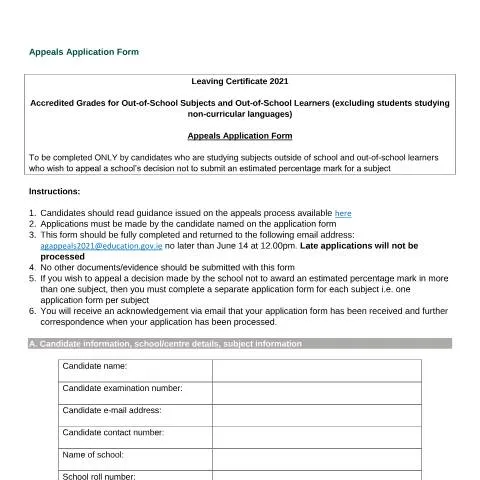
In the landscape of education in Ireland, the Appeals Application Form plays a pivotal role for certain candidates. This form is not merely a procedural necessity; it embodies the hopes and aspirations of those whose educational journey has taken an unconventional path. Candidates seeking to contest a school's decision not to submit an estimated percentage mark for subjects studied outside of a traditional school environment must engage with this process. Understanding the nuances involved in completing and submitting this form is essential for ensuring that every eligible learner’s voice is heard.
Understanding the Profile of Eligible Candidates
The Appeals Application Form is specifically designed for candidates studying subjects outside of the conventional school framework. This includes learners who are home-schooled, attending alternative education institutions, or pursuing independent study. Each candidate's situation may introduce unique elements to their appeal. Below are some profiles that may guide understanding:
- Home-Schooled Learners: These individuals may face challenges in getting their progress acknowledged by traditional educational institutions. Their appeal often hinges on how effectively their educational path aligns with the markers set out by the educational authorities.
- Independent Study: Candidates who have taken the initiative to study independently, perhaps due to conflicts with traditional schooling, will also find themselves needing to articulate their case clearly on the application.
- Conflict of Interest Situations: If a learner's teacher or tutor has declared a conflict of interest, they must navigate the appeals process with particular caution. The reasons for their appeal will need to be thoroughly justified.
- Educational Gaps: Those who have gaps in their education record, perhaps due to personal circumstances, should carefully outline their educational experiences when completing the form.
Application Submission Channels: Understanding Your Options
Submitting the Appeals Application Form can be accomplished through various channels, and understanding the implications of each is critical. The process must be completed by the candidate themselves, underscoring the personal nature of the appeal.
Options for Submission
| Submission Method | Details |
|---|---|
| This is the most common method. The completed form must be sent to the specified email address ([email protected]) before the deadline of June 14 at 12:00 PM. Late submissions will not be processed, making adherence to this timing paramount. | |
| Postal Submission | While email is preferred, postal submission may be an alternative if the candidate is unable to access email. However, this method could risk delays due to delivery times. |
| In-Person Submission | In rare circumstances, candidates may be allowed to submit in person at a designated educational office. This must be confirmed in advance, as most processing is done electronically. |
Key Components of the Appeals Application Form
The form itself is divided into several sections that require careful attention. Each section gathers specific information needed to support the candidate’s appeal. Below, we break down the critical components of this form:
Section A: Candidate and School Information
This section collects necessary candidate information including:
- Name and examination number
- Email and contact number
- Details about the school, including the name and roll number
- Subject in question and its level
It is imperative that all information provided is accurate, as any discrepancies could lead to delays or complications in processing.
Section B: Application Route
Candidates must select the appropriate route they followed when applying for an Accredited Grade. The options include:
- The individual providing tuition is a registered teacher
- The individual providing tuition is not a registered teacher
- The candidate studied independently, or there was a conflict of interest
This selection informs the panel of registered teachers about the background of the instructional support received, which is crucial for the appeal's consideration.
Section C: Reason for School’s Decision
Here, candidates must note the reasons provided by the school for not submitting an estimated percentage mark. The options may include:
- Lack of engagement from the teacher/tutor/student
- Failure to sign required declarations
- Absence of evidence for assessment
Each selected reason must be substantiated by clear articulation of circumstances leading to the appeal.
The Journey Through the Appeals Process
Understanding the timeline and stages of the appeals process can help candidates navigate their responsibilities and manage their expectations effectively.
Chronological Steps of the Appeals Process
- Preparation: Review the appeals guidance and ensure eligibility.
- Completion of the Application Form: Fill out all necessary sections with accurate information.
- Submission: Choose the appropriate submission method and send the form before the deadline.
- Acknowledgment of Receipt: Expect an email confirming receipt of the application form.
- Processing: The appeal will be reviewed by a panel of registered teachers.
- Decision Notification: Candidates will receive a communication regarding the outcome of their appeal.
- Follow-Up Actions: Depending on the outcome, candidates may need to consider further steps.
What to Do After You Submit Your Appeal
After completing and submitting the application, candidates might face a range of outcomes and should be prepared for each scenario.
Receiving the Outcome
Once the appeal has been processed, candidates will receive a notification regarding the decision. It is important to review this communication thoroughly for understanding the rationale behind the decision.
In Case of Refusal
If the appeal is denied, candidates have the option to seek clarification. They should:
- Request feedback from the panel to understand the basis of their decision.
- Evaluate the possibility of further action, which may include seeking a review or considering alternative pathways for recognition of their efforts.
Dealing with Missing Information
Should an application be deemed incomplete due to missing information or signatures, the candidate will be informed. Prompt action is necessary:
- Respond quickly to requests for additional information.
- Ensure that any supplementary documents are submitted as required.
The Wider Educational Context of the Appeals Application
Recognizing the Appeals Application Form’s place within the broader educational landscape is crucial. This form is part of a system that aims to provide equitable assessment opportunities for all learners, particularly those who encounter unique barriers.
Integration with Other Educational Processes
The appeals process works in conjunction with other educational assessments and standards, ensuring that learners outside the traditional education system are afforded the same opportunities for recognition of their achievements. Understanding this interconnectedness can empower candidates to advocate effectively for their educational pathways.
The Appeals Application Form is more than just a bureaucratic requirement; it is a vital tool for ensuring that learners' educational journeys are validated and recognized. Completing this form thoughtfully and accurately can significantly impact a candidate’s academic future.
Fill in your form directly online
No printing: type your details into the boxes of the official form, tick, then download the PDF ready to send.
- 1Type into the form boxes
- 2Tick in one click
- 3Save and download the PDF
Final Considerations
For candidates navigating this process, attention to detail and clarity of communication are key. From filling out personal details to articulating the reasons for the appeal, every step must be approached with diligence. Engaging with the process properly can lead to positive outcomes that enhance educational trajectories for all involved.
Understanding the Appeals Process in Ireland
The appeals process in Ireland can be intricate, depending on the specific context—be it tax, social welfare, or other administrative decisions. Understanding the nuances of this process is crucial for applicants. Generally, when a decision made by a governmental body is disputed, the affected individual has the right to appeal. This right is enshrined in various statutory provisions, such as the Tax Appeals Act 2015 for tax-related matters or the Social Welfare Consolidation Act for welfare decisions.
For example, if you have received a notification from Revenue indicating an adjustment to your tax liability, you may file an appeal to the Tax Appeals Commission. Similarly, if a social welfare claim has been denied, you can appeal through the Department of Social Protection. Each area has its own guidelines on how to submit an appeal, including deadlines, required documentation, and the process of hearings if applicable.
It's important to note that time is of the essence in these situations. Generally, you must file your appeal within a specific timeframe from the date of the decision. For tax appeals, the deadline is usually within 30 days of the notice. Late appeals might not be accepted unless there are extenuating circumstances justifying the delay, which adds another layer of complexity to the process.
Common Mistakes to Avoid When Submitting an Appeal
While navigating the appeals process, many applicants make common mistakes that can jeopardize their case. Understanding these pitfalls can significantly improve your chances of a successful outcome. Below are some mistakes to avoid:
- Incomplete Documentation: One of the most frequent mistakes is failing to provide all required documentation. Each appeal requires specific forms and supporting evidence. Leaving out crucial documents can lead to delays or rejections.
- Missing Deadlines: As mentioned previously, each appeal has a specific deadline. Mark these dates on your calendar and set reminders to ensure you submit your application on time. Late submissions often result in the dismissal of the appeal.
- Not Seeking Professional Advice: Given the complexities of the appeals process, it is advisable to seek professional advice. Many individuals attempt to navigate the process alone, which can lead to misunderstandings regarding the requirements. Consulting with a solicitor or an accountant familiar with the appeals process can provide invaluable insights.
- Neglecting to Follow Up: After submitting your appeal, it is crucial to follow up on its status. Delays can happen, and being proactive can help you catch potential issues early.
- Assuming the Outcome is Set in Stone: Many individuals believe that once a decision is made, it cannot be changed. However, the appeals process is designed to allow for reconsideration of decisions based on new evidence or perspectives.
By being aware of these common mistakes, you can navigate the appeals landscape more effectively, increasing your chances for a favorable outcome.
Resources and Support for Appeals in Ireland
The appeals process can feel overwhelming, but various resources and support systems are available to assist you. Here are some valuable resources that can help you at different stages of your appeal:
- Citizen Information: The Citizen Information website provides comprehensive guides on appeals across various government services, including taxation and social welfare. You can find detailed information on your rights, procedural steps, and relevant forms.
- Tax Appeals Commission: If your appeal pertains to taxation matters, the Tax Appeals Commission offers resources on how to submit an appeal, along with information on hearings and decisions. They also provide an online portal for tracking the status of your appeal.
- Department of Social Protection: For social welfare appeals, the Department of Social Protection has dedicated sections on its website detailing the process for appealing decisions, along with contact information for further assistance.
- Legal Aid Board: If you are concerned about the costs associated with seeking legal advice, the Legal Aid Board provides legal assistance at reduced rates for eligible individuals. They can help with understanding the appeals process and representing you if necessary.
- Community and Advocacy Groups: Various organizations and advocacy groups focus on specific sectors, such as housing, healthcare, and employment. These groups often provide support and guidance throughout the appeals process, ensuring you are well-informed of your rights and options.
Utilizing these resources can provide significant assistance as you navigate the complexities of the appeals process, making your experience more manageable and informed.