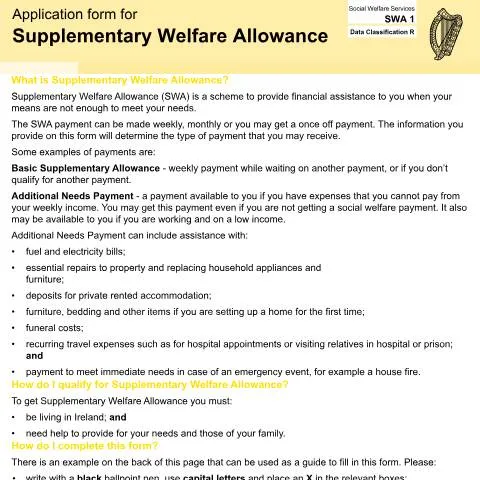
Navigating the Supplementary Welfare Allowance (SWA1) Application Process
Facing financial hardship is a reality for many residents in Ireland, and the Supplementary Welfare Allowance (SWA) serves as a crucial safety net. This scheme, administered by the Department of Social Protection, provides financial assistance to those whose means fall short of meeting basic needs. Understanding how to access these vital services is essential for anyone in need of support.
Who Should Consider Applying for SWA?
Individuals eligible for the SWA often find themselves in difficult circumstances. This includes:
- People awaiting other social welfare payments
- Low-income workers struggling to meet their expenses
- Families facing unexpected hardships like home repairs or medical emergencies
Examples of qualifying situations include:
- Basic Supplementary Allowance: This is available while waiting for another social welfare payment.
- Additional Needs Payment: This can assist with unexpected expenditures such as educational costs or urgent home repairs.
Understanding Specific Situations for Eligibility
Each applicant’s situation is unique. For instance, single parents may have different needs compared to a married couple supporting children. Consider these profiles:
- Single Parents: Often require additional financial support for childcare, schooling, and day-to-day expenses.
- Individuals Recently Unemployed: May need immediate assistance to cover living costs while searching for new employment.
- Low-Income Families: Those working in low-wage jobs might struggle to cover basic needs, making them suitable for SWA.
Timeline for Application Submission and Processing
Knowing when to apply for the SWA is key. The process includes several critical stages:
- Immediate Application: As soon as you identify a need for assistance, it is advised to complete the SWA1 form.
- Submission Deadline: Ensure your application is submitted as quickly as possible, ideally within weeks of your financial situation changing.
- Processing Time: While it varies, most applications are processed within a few weeks, with some cases taking longer depending on the complexity of the applicant's situation.
Post-application, applicants can expect to receive notification regarding their eligibility and payment amount.
Dissecting the SWA1 Form: Step-by-Step Guidance
The SWA1 application form is a detailed document designed to capture essential information about your situation. Let's break it down:
Part 1: Your Personal Information
Gathering your details is crucial. You’ll need to provide:
- Your Personal Public Service Number (PPSN)
- Contact information including your Eircode
- Details about your household composition and relationship status
Ensure that you fill this section accurately as it directly impacts your eligibility.
Part 2: Financial Information
This section requires comprehensive financial disclosure, including:
- Your gross weekly income from employment or self-employment
- Other forms of income, such as pensions or benefits
It's crucial to include accurate figures; discrepancies can lead to delays or declines.
Common Pitfalls in Filling Out the SWA1 Form
Many applicants make simple mistakes that can complicate the processing of their applications:
- Using incorrect or outdated contact information
- Failing to declare all sources of income or relevant financial obligations
- Neglecting to sign the declaration at the end of the form
To avoid these pitfalls, double-check your form before submission.
Compiling Supporting Documents: What You Need
When submitting your SWA1 application, accompanying documentation is essential to substantiate your claims. Here’s what you might need:
Essential Documentation Checklist
| Document Type | Description |
|---|---|
| Payslips | Three recent payslips if employed |
| Proof of Other Incomes | Bank statements, pensions, or any other income sources |
| Identification | Copy of your PPS card or other ID |
| Evidence of Expenditures | Invoices or bills reflecting your current financial burdens |
Each document should clearly outline relevant details to support your application claims.
After Submission: What Can You Expect?
Once you’ve submitted your form and supporting documents, there are several outcomes to anticipate:
- Approval: If your application is successful, you will be informed of your payment details promptly.
- Further Information Requested: The Department may contact you for additional details, which could delay the process if not provided expeditiously.
- Refusal: If your application is refused, you will receive an explanation, and you may have options for appeal.
The Importance of Keeping Records
It is critical to maintain copies of all documents submitted and any correspondence received. This ensures you have a complete record should any queries arise.
What to Do If Your Application Is Refused
Receiving a refusal can be disheartening, but understanding your next steps is vital:
Steps to Challenge a Refusal
- Understand the Reason: Carefully read the refusal letter to comprehend why your application was declined.
- Gather Further Evidence: If necessary, collect additional documentation or information that supports your case.
- Contact the Department: Reach out to the Department of Social Protection to discuss your application and any potential for appeal.
Appealing the Decision
If you believe your application was unjustly denied, you have the right to appeal. The appeal process generally involves:
- Filing an appeal within 21 days from the date of the refusal letter.
- Submitting your appeal in writing, clearly stating the reasons you believe the decision should be overturned.
Final Considerations: The Long-Term Implications of SWA
Utilizing the SWA can provide immediate relief, but it also has longer-term implications. Understanding these consequences is crucial for financial planning and stability.
- Payments may be reviewed periodically, so maintaining updated information with the Department is necessary.
- Receiving SWA can sometimes affect eligibility for other financial supports, so consulting with a social welfare officer can provide clarity.
The SWA scheme, encapsulated in the SWA1 form, is a lifeline for many individuals across Ireland. By understanding the application process, knowing what to expect, and being prepared to navigate potential challenges, you can better position yourself to access the support you need.
Understanding the Role of Community Welfare Officers
Community Welfare Officers (CWOs) play a crucial role in the delivery of Community Welfare Services in Ireland. These officers work under the Department of Social Protection and are responsible for providing support to individuals and families in need. They assess circumstances and determine eligibility for various social assistance programs, including the Supplementary Welfare Allowance.
The CWO's function extends beyond mere financial assistance; they also provide advice and support in navigating the complex system of social services. They can assist with applications for other types of assistance, such as Rent Supplement or the Back to School Clothing and Footwear Allowance. It's essential to have a clear understanding of what CWOs can do to maximize the benefits you may receive.
To access the services of a CWO, you can locate your local office through the Department of Social Protection’s official website. Once there, you can reach out to schedule an appointment or find out about walk-in services. Bringing relevant documentation, such as identification and proof of income, can expedite the process during your initial consultation.
Eligibility Criteria for Community Welfare Services
Determining eligibility for Community Welfare Services involves several factors, primarily based on your financial circumstances and immediate needs. The Supplementary Welfare Allowance, for example, is designed to provide a safety net for those who are not receiving enough income to support themselves and their families. Eligibility typically depends on your income level, housing costs, and other essential expenditures.
Individuals who are unemployed, unable to work due to illness, or facing unforeseen financial difficulties may qualify for assistance. However, it’s important to note that the Community Welfare Services aim to support individuals who are actively seeking to improve their situation. For instance, if you are applying for education or training programs, the CWO may also provide guidance on additional support services that can further enhance your employability.
In addition, applicants must usually possess a Personal Public Service Number (PPSN) and meet residency requirements. The Department of Social Protection has detailed information regarding specific eligibility criteria for each type of assistance program, so it’s advisable to consult their resources or speak directly with a CWO for personalized guidance.
Challenges in Accessing Community Welfare Services and Solutions
While Community Welfare Services are designed to assist those in need, many individuals face challenges in accessing these crucial benefits. Some of the most common barriers include misunderstandings about eligibility, lack of awareness of available resources, and the complexity of application processes. Additionally, language barriers or limited access to technology can hinder individuals from seeking the help they need.
One of the most effective ways to overcome these challenges is to engage with community organizations and local advocacy groups that specialize in social welfare issues. Many of these organizations offer free workshops or one-on-one consultations to help individuals navigate the system and understand their rights and entitlements. They can also provide assistance in collecting the necessary documentation for your application.
Moreover, staying informed about deadlines and required documentation can significantly ease the application process. The Department of Social Protection regularly updates their guidelines and information about the Community Welfare Services, so accessing their website or signing up for their newsletters can be beneficial.
Lastly, if you encounter difficulties or delays in receiving assistance, don't hesitate to follow up with your CWO. Persistence is often key in the administrative processes, and keeping a record of your communications with the Department can help resolve issues more efficiently.