Understanding the FOI Request Form from Injuries Ireland
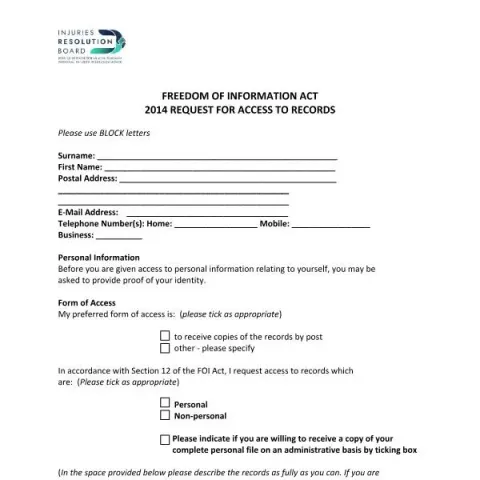
The Freedom of Information Act 2014 Request for Access to Records form is a vital document designed to facilitate transparency and accountability within Irish public bodies, specifically here, Injuries Ireland. This official form allows individuals to request access to records held by the organisation, whether these are personal or non-personal in nature. It is essential for members of the public, researchers, or legal representatives seeking information under the provisions of the FOI Act to understand how to complete this form properly and what to expect in the process.
Purpose and Scope of the FOI Request Form
The primary purpose of this form is to enable individuals to formally request access to records held by Injuries Ireland, a government agency dedicated to injury prevention and safety promotion. The form covers two main categories of records: personal records, which relate directly to the requester, and non-personal records, which might include reports, data, or other documentation held by the agency.
By submitting this form, applicants can obtain copies of documents, records, or files that are relevant to their request. This process supports the principles of transparency and accountability, allowing individuals to scrutinise information held by public bodies, subject to certain legal exemptions.
How to Complete the FOI Request Form
Personal Details Section
The form begins with the applicant providing essential personal information, including:
- Surname
- First Name
- Postal Address
- Email Address
- Telephone Numbers (home, mobile, business)
Applicants may be asked to provide proof of identity before access is granted, especially when requesting personal records, to ensure data protection and privacy.
Preferred Method of Access
The form offers options for how the requester wishes to receive the records:
- Copies sent by post
- Other methods (to be specified)
Type of Records Requested
Applicants must specify whether they seek personal or non-personal records by ticking the appropriate box. If requesting personal records, the applicant should describe the records as fully as possible, including the name(s) in which the records are held.
If the request pertains to personal information about another individual, the requester must have obtained the written consent of that individual, as access to such data is protected by data privacy laws.
Description of Records
In the space provided, the applicant should clearly describe the records they wish to access. The more precise the description, the easier it will be for the organisation to locate the relevant documents. For example, specifying dates, types of documents, or specific incidents can facilitate a smoother process.
Submitting and Processing the FOI Request
Once completed, the applicant must sign and date the form. The organisation then processes the request, which is subject to statutory timeframes set out in the FOI Act. Typically, public bodies aim to respond within 20 working days of receiving a valid request, although this period can be extended under certain circumstances, such as complex requests or volume of records involved.
Fill in your form directly online
No printing: type your details into the boxes of the official form, tick, then download the PDF ready to send.
- 1Type into the form boxes
- 2Tick in one click
- 3Save and download the PDF
It is important to note that the organisation may refuse access to records if certain exemptions apply, such as protection of personal data, legal privilege, or security concerns. If access is refused, the applicant will be provided with reasons for the refusal and information about their right to appeal.
After Submitting the Request
Following submission, the applicant will receive a response from Injuries Ireland indicating whether their request has been accepted, the records that will be provided, or the reasons for any refusal. If the applicant is dissatisfied with the decision, they have the right to request an internal review or lodge a complaint with the Office of the Information Commissioner.
In summary, the FOI Request Form from Injuries Ireland is a crucial tool enabling individuals to access information held by the organisation. Proper completion of the form, understanding of the process, and awareness of legal rights ensure that applicants can effectively exercise their rights under Irish law.