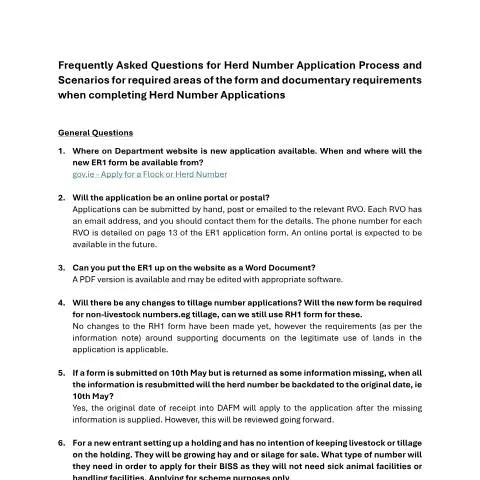
Understanding the ER1 Document: A Comprehensive Overview
The Animal Identification & Movement (AIM) — FAQs for ER1 Application Form issued by the Department of Agriculture, Food and the Marine serves as a crucial resource for farmers and agricultural stakeholders looking to navigate the herd number application process. As the agricultural landscape evolves, so too do the necessary procedures for compliance and identification of livestock. This document not only answers common queries but provides clarity on the procedural framework surrounding the ER1 application.
Scope and Limitations of the ER1 Document
It is pertinent to note that the ER1 document is tailored specifically for the herd number application process, addressing various concerns that may arise during the application. The FAQs included within are designed to guide users through specific scenarios and challenges they might encounter. However, it is essential to understand that while this guide offers extensive information, it does not encompass every possible situation; users might still need to consult with local authorities or the department for unique or complex cases.
Key Areas Covered
- Application submission methods (postal, email, in-person)
- Documentation requirements for various types of applicants
- Processing timelines and backdating policies
- Specific scenarios regarding partnerships and individual applications
Step-by-Step Guide to Utilizing the ER1 Document
Successfully navigating the ER1 process requires a methodical approach. Here’s a streamlined step-by-step guide to ensure all aspects are adequately addressed:
- Accessing the Application: Visit the official Department of Agriculture website to locate the ER1 application. The document is typically available in PDF format, which can be edited with appropriate software.
- Selecting the Appropriate Submission Method: The application can be submitted via email, post, or in person at your relevant Regional Veterinary Office (RVO). Ensure you verify the contact details for your RVO as listed in the ER1 document.
- Gathering Required Documentation: Assess the documentation needed based on your specific situation—whether you are a new entrant to farming, transferring ownership, or changing herd keepers. An inadequate or incomplete application can lead to delays.
- Filling Out the Application: Refer to the specific sections outlined in the ER1 document. Pay particular attention to changes in business structure or ownership that require additional details.
- Submission and Follow-Up: Once submitted, keep track of your application and ensure to respond promptly to any requests for further information from the department.
Essential Terminology for Navigating the Application
Understanding key terms and phrases within the ER1 documentation is vital for effective application and compliance. Here are some important definitions:
- Herd Number: A unique identifier assigned to a farmer's livestock; essential for tracking and management.
- RVO: Regional Veterinary Office, the local authority responsible for the oversight of agricultural compliance.
- PPSN: Personal Public Service Number; essential for individuals in Ireland engaged in business or agricultural activities.
- Folio Number: A reference number for land registration and ownership verification; required in many applications.
Common Misinterpretations of the ER1 Process
Applicants often encounter confusion regarding specific elements of the ER1 application process. Addressing these misunderstandings can streamline the experience:
- Online vs. Offline Applications: Many applicants mistakenly believe that only online applications are processed. Recognize that multiple submission methods are valid, including postal and in-person options.
- Documentary Requirements: Some applicants overlook the necessity of submitting leases or land-use proofs, assuming verbal declarations are sufficient. Documentation must be comprehensive and accurate.
Interactions with Other Related Documentation
The ER1 application does not function in isolation. It often interacts with other forms and applications. Understanding these connections can enhance compliance and efficiency:
- RH1 Form: This form is relevant for tillage number applications, which remain unaffected by changes in the ER1 form.
- Company Documentation: If a company is registering as a herd owner, additional documents such as the statutory company documents must accompany the ER1 application.
Documentary Requirements: A Detailed Breakdown
Applicants must comprehensively understand the documentation required for a successful ER1 submission. Here’s a detailed overview of the necessary elements:
| Scenario | Required Documentation |
|---|---|
| New Entrant with No Livestock | Proof of legitimate use of land, ER1 application form |
| Changing Herd Keeper | Original herd number, signed ER1, witness signatures |
| Partnership Changes | Partnership agreement, proof of identity of new herd keeper |
| Company Applying as Herd Owner | Company constitution, CRO number documentation, identity proof |
Conclusion: Navigating the ER1 Document Effectively
Understanding the ins and outs of the ER1 application process is vital for any agricultural stakeholder aiming for compliance and effective livestock management. The Animal Identification & Movement guide is an invaluable tool that, when utilized correctly, can significantly ease the application process. By familiarizing oneself with the requirements, terminology, and potential pitfalls, applicants can approach their ER1 submissions with confidence and clarity, effectively fostering a responsible agricultural community.
Understanding the Animal Identification & Movement (AIM) System
The Animal Identification & Movement (AIM) system in Ireland is an essential regulatory framework designed to ensure traceability of livestock. This system plays a pivotal role in maintaining the health and safety of the food chain, animal disease control, and compliance with EU regulations. By accurately tracking the movement of animals, AIM helps safeguard public health and supports the overall livestock industry.
All cattle, sheep, and pigs must be registered in the AIM system. This involves providing detailed information about the animals’ identification, movements, and ownership. As part of this process, it is crucial for farmers and livestock holders to understand how to navigate the AIM and fulfil their obligations under the relevant regulations.
The AIM system operates primarily through the Department of Agriculture, Food and the Marine (DAFM). To engage with AIM, users must register for access to the online portal, which offers functionalities such as submitting movement notifications and managing livestock records. It is also essential to ensure that all movements of animals are reported within a specified timeframe, typically within 7 days of movement, to maintain compliance.
Common Issues and Troubleshooting in AIM Applications
While applying for the AIM system, many participants encounter challenges that can impede their ability to comply with regulations. Understanding these common issues and how to address them is vital for both new and existing users of the system.
1. Registration Delays
One of the most frequently reported issues relates to delays in processing registration applications. If your application for the AIM system is delayed, it may be due to incomplete information or discrepancies in the details provided. Ensure that all required fields in the application are filled and that your details match those on your identification documents. If you experience delays, contact the DAFM helpdesk with your application reference number for assistance.
2. Issues with Animal Identification
Errors in animal identification can lead to complications in reporting movements. It is critical that each animal is tagged correctly with a visible and legible identification number. If an error occurs, such as a missed or incorrect tag, you must rectify it immediately. Report any discrepancies via the AIM online portal or directly to your local DAFM office. Keep in mind that untagged livestock is subject to penalties under EU regulations.
3. Movement Notifications
Failure to notify the AIM system of an animal’s movement can result in penalties and difficulties in traceability. If you miss the 7-day notification window, you must submit a late movement notification as soon as possible, but be aware that this can attract fines. Familiarise yourself with the online submission process to ensure that you can quickly report movements and avoid complications.
Future Developments in the AIM System
The AIM system is continually evolving to enhance its effectiveness and user experience. The Department of Agriculture, Food and the Marine has announced plans for several updates aimed at improving the tracking and reporting of livestock movements. These developments may include the integration of more advanced technology, such as mobile applications and more comprehensive data analytics, to streamline the user experience and increase compliance rates.
One anticipated feature is the introduction of real-time movement tracking, which would allow farmers to report movements instantly through their smartphones or tablets. This technology could significantly reduce the incidence of late notifications and ensure that livestock traceability is maintained accurately and efficiently.
Moreover, training resources and informational webinars are expected to be launched to educate users about the new features and best practices within the AIM system. These resources will aim to address common user queries and provide a platform for farmers and livestock holders to share their experiences and insights.
Engaging with these new features will be important as they roll out, enabling livestock owners to stay compliant with regulations while benefitting from improved monitoring capabilities. Always check the DAFM website or subscribe to their newsletters to stay informed about upcoming changes and training offers related to the AIM system.