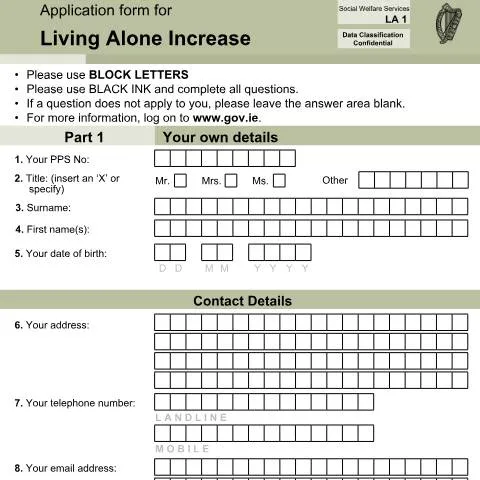
Understanding the Living Alone Increase: Key Information
The Living Alone Increase (LAI) is a valuable support provided by the Department of Social Protection in Ireland. It acknowledges the additional costs often associated with living alone and aims to alleviate financial pressures for vulnerable individuals. This guide, based on the Operational Guidelines: Living Alone Increase (LA1), outlines the contexts in which the LAI is applicable and provides a comprehensive understanding of the guidelines involved.
Who Can Benefit from the Living Alone Increase?
The Living Alone Increase is specifically designed for individuals who are living completely or mainly alone. It is particularly relevant for:
- Older individuals receiving state pensions, both contributory and non-contributory.
- Individuals with disabilities who qualify for certain allowance payments.
- Surviving partners of deceased pensioners or members of the civil service.
This targeted financial support aims to assist those who may experience social isolation or increased living expenses, ensuring they remain financially stable.
Eligibility Criteria
To qualify for the Living Alone Increase, applicants must meet specific criteria:
- Be in receipt of an eligible social welfare payment (e.g., State Pension, Disability Allowance).
- Live alone or mainly alone, without the presence of another adult in the household.
- Notify the Department of Social Protection regarding any changes in circumstances that may affect eligibility.
Navigating the Application Process
Understanding how to navigate the application process is crucial for potential recipients of the Living Alone Increase. The guidelines provide a structured approach to ensure that applicants complete their applications accurately and efficiently.
Step-by-Step Application Guide
- Gather Required Information: Ensure you have your Personal Public Service Number (PPSN), contact details, and information regarding any social welfare payments you receive.
- Document Changes in Living Arrangements: Clearly outline any changes that have led to your current living situation, specifying the date you began living alone.
- Submit the Application: Send the completed application form to the appropriate address based on your current welfare payments.
- Await Confirmation: After submission, keep an eye on correspondence from the Department for updates regarding your application status.
Intersections with Other Benefits and Supports
The Living Alone Increase does not exist in isolation but rather complements various other social welfare benefits provided by the Department of Social Protection. Understanding these intersections can provide recipients with a more holistic view of their entitlements.
Related Benefits
| Benefit | Description | Eligibility |
|---|---|---|
| State Pension (Contributory) | Financial support for individuals who have made sufficient PRSI contributions. | Age 66 or older. |
| Disability Allowance | Monthly payment for individuals with a disability that severely restricts them. | Age between 16 and 66, meeting medical criteria. |
| Blind Pension | Support for individuals who are blind or have a severe visual impairment. | Must be legally blind. |
Important Terminology and Concepts
When dealing with the Living Alone Increase, several key terms and concepts are integral to understanding the guidelines and procedures accurately:
- PPSN: Your unique identifier in the Irish social welfare system, required for all applications.
- Social Welfare Payment: Refers to various types of financial aid provided by the Department of Social Protection.
- Living Alone: Defined as residing without another adult in the household, impacting benefit eligibility.
Proactive Engagement with the Department of Social Protection
To ensure that you stay informed about changes in your eligibility or the application process concerning the Living Alone Increase, proactive engagement with the Department is advised. This includes:
- Regularly checking the official website for updates on social welfare policies.
- Attending information sessions hosted by local social welfare offices.
- Utilizing online resources for assistance in completing applications or queries related to your benefits.
Regular Updates and Communication
Staying in touch with the Department involves more than submitting your application. You must notify them of any changes in your circumstances that could affect your entitlement to the Living Alone Increase. This can include shifts in financial status, changes in household composition, or health-related issues.
Common Misunderstandings and Clarifications
Addressing frequent misunderstandings regarding the Living Alone Increase can assist applicants in navigating the process confidently. Here are some common points of confusion:
- Misunderstanding of 'Living Alone': Many applicants misinterpret the definition. Living alone means no other adults reside with you, not counting minors.
- Eligibility Post-Application: It is important to recognize that receiving the increase can change based on future living arrangements. Always report changes to the Department.
- Interaction with Other Benefits: Some may believe that receiving an additional benefit disqualifies them from the Living Alone Increase; however, multiple supports can coexist.
Final Thoughts: Embracing Support for Independent Living
The Living Alone Increase serves as a crucial financial support system for those navigating the challenges of independent living, particularly among vulnerable populations in Ireland. By understanding the guidelines laid out by the Department of Social Protection, potential recipients can leverage this assistance effectively.
Remember, the key to successfully accessing the Living Alone Increase lies in being informed, ensuring compliance with the eligibility criteria, and actively engaging with the Department regarding your circumstances. With the right approach and understanding, the Living Alone Increase can be a vital tool in fostering financial stability and independence.
Eligibility Criteria for Living Alone Increase
The Living Alone Increase is a supplementary payment designed to support individuals who live independently. To qualify for this increase, you must meet specific eligibility criteria enforced by the Department of Social Protection. The primary requirements include:
- Age Requirement: You must be aged 66 years or older.
- Living Alone: You must reside alone in your own home or in a rented accommodation; however, certain exemptions apply if you share your residence with other individuals who are in receipt of certain social welfare payments.
- Primary Payment: You should already be receiving a qualifying payment such as the State Pension (Contributory) or the State Pension (Non-Contributory).
- Residency: You must be a resident of Ireland and your primary residence must be within the state.
It is essential to note that living with an individual who provides care or assistance due to physical or mental disabilities may not disqualify you from receiving the Living Alone Increase, provided the individual does not also receive supplementary social welfare payments.
Application Process for Living Alone Increase
Applying for the Living Alone Increase is a straightforward process, but it is crucial to ensure that all necessary documentation is submitted correctly to avoid delays. Here’s a step-by-step guide:
- Check Eligibility: Before you start the application, confirm that you meet the eligibility criteria outlined above.
- Gather Required Documentation: Collect essential documents such as proof of age (birth certificate or passport), proof of residency (utility bills or rental agreements), and a copy of your current social welfare payment details. You may also need details of any additional income or pension you receive.
- Complete the Application Form: Download or request the appropriate application form from the Department of Social Protection. This may be Form 21, which is the specific application for the Living Alone Increase.
- Submit Your Application: You can submit your application online through MyGovID or by post. If submitting by post, make sure to send it to your local Intreo Centre.
- Await Confirmation: After submission, you will receive a confirmation receipt. The Department of Social Protection typically processes applications within a few weeks, but this may vary based on workloads.
- Respond to Any Queries: Be prepared to provide further information if the Department requests additional documentation or clarification regarding your application.
It’s essential to keep a record of your application and any correspondence with the Department, as this can be helpful for future reference or in case of any discrepancies.
Impact of Living Alone Increase on Other Benefits and Taxes
Receiving the Living Alone Increase can have implications for other benefits and tax situations. Understanding these impacts can help you better manage your finances and plan accordingly:
- Impact on Other Social Welfare Payments: In general, the Living Alone Increase is not counted as income for the purpose of assessing means for other social welfare payments. Therefore, it should not affect your eligibility for other supports, provided you meet all other criteria.
- Tax Considerations: The Living Alone Increase is not taxable, meaning it does not contribute to your taxable income, thus, it does not affect your Income Tax obligations.
- Impact on Housing Assistance: If you are receiving housing assistance or rent allowance, it's important to inform your local housing authority about the Living Alone Increase. While it should not affect your housing support directly, any changes in your overall income might be reviewed.
Furthermore, if you experience a change in your circumstances, such as moving in with someone or changes in your health status, it is crucial to notify the Department of Social Protection immediately, as this may affect your eligibility for the increase.