Navigating the Annex to Application Form C.D.22A: A Comprehensive Guide
When establishing a tax-exempt charity in Hong Kong, the Annex to Application Form C.D.22A stands as a critical document in the application process. This annex demands careful attention and precision, as it serves to detail both past and future charitable activities, thereby influencing the approval of tax-exempt status. Understanding its nuances can significantly impact the success of your application.
Understanding the Timeline: Key Dates for Submission
The timeline surrounding the submission of the C.D.22A annex is crucial for organizations aiming for tax exemption. The application process typically kicks off after the establishment of the charity. Here are the key phases to keep in mind:
- Application Initiation: Organizations can begin to fill out the annex upon registration.
- Submission Deadline: The completed annex should be submitted concurrently with the C.D.22 application.
- Evaluation Period: The review process usually takes between 3 to 6 months, depending on the complexity of the application.
- Post-Submission Wait: After submission, organizations can expect to receive feedback or a decision about their application within the stipulated timeframe.
Being proactive and adhering closely to these timelines can ensure that your organization remains on track in its quest for tax exemption.
Distinguishing the C.D.22A from Similar Forms
In the landscape of Hong Kong's administrative requirements, the C.D.22A may often be confused with other related documents. Understanding its unique role is vital:
- Primary Function: The C.D.22A specifically focuses on detailing planned and completed charitable activities, which is not the primary focus of other forms within the tax exemption application process.
- Complementary Nature: It complements the initial C.D.22 application form, which outlines the organization's structure and mission.
- Targeted Audience: While other forms may serve a broader audience, the C.D.22A is tailored specifically for entities applying for tax-exempt status.
This distinction is not merely administrative; it can influence how an organization presents its case for exemption.
The Integral Role of the C.D.22A within Tax Exemption Procedures
The completion of the C.D.22A is not just a formality; it plays a pivotal role in the wider context of the tax exemption process:
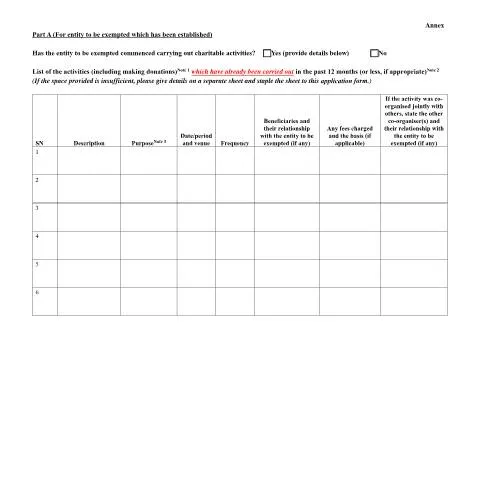
- Activity Documentation: The annex requires a comprehensive account of past activities and plans, demonstrating a commitment to charitable purposes.
- Proof of Compliance: By detailing activities, organizations can show their adherence to the legal obligations under the Basic Law of the Hong Kong Special Administrative Region.
- Foundation for Trust: Providing transparent information about beneficiaries fosters trust among stakeholders, including potential donors and the government.
Understanding this integral role can help organizations craft a compelling narrative to accompany their application.
A Step-by-Step Journey: From Initiation to Decision
Completing the C.D.22A requires meticulous attention to detail. Here’s a chronological breakdown of the journey:
Step 1: Preparation
Gather all necessary documentation and information regarding your organization's charitable activities.
Step 2: Filling Out the Annex
Begin filling out Parts A and B of the C.D.22A:
- Part A: Document activities that have already been carried out in the past 12 months.
- Part B: Outline planned activities for the upcoming 12 months, ensuring to detail their purpose, frequency, and beneficiaries.
Step 3: Review and Revision
Thoroughly review your completed form for any inaccuracies or omissions. It may be beneficial to engage a consultant or legal professional for a final check.
Step 4: Submission
Submit the C.D.22A along with the original C.D.22 form to the Tax-Exempt Charities office. Ensure you maintain copies for your records.
Step 5: Await Response
After submission, patiently await feedback. Engage with the authorities if there are any inquiries or additional information requests.
Unique Situations: Customizing Your Approach
Every organization is unique, and certain circumstances may require special attention while completing the C.D.22A:
- Foreign Entities: If the applying entity is not based in Hong Kong, additional documentation may be necessary to demonstrate compliance with local laws.
- Minor Organizations: Charities that are still in their infancy should focus on realistic and achievable activity goals within their application.
- Complex Cases: Organizations with intricate structures or multiple beneficiaries should ensure clarity in their descriptions to avoid confusion.
- Urgent Applications: In cases needing expedited processing, consider consulting directly with the Tax-Exempt Charities office.
Tailoring your approach based on these variables can significantly enhance the application experience.
The Real Stakes for Organizations: Rights, Obligations, and Consequences
Completing the C.D.22A is not simply a procedure; it carries significant implications for the organization:
- Rights Granted: Upon successful approval, organizations enjoy tax-exempt status, allowing them to allocate more resources towards charitable activities.
- Ongoing Obligations: Tax-exempt organizations are expected to maintain accurate records of activities and beneficiaries as part of their compliance requirements.
- Consequences of Non-Compliance: Failing to complete the C.D.22A accurately or omitting necessary information can lead to delays or denial of tax-exempt status, potentially jeopardizing the organization’s operations.
Recognizing these stakes can help organizations prioritize the quality of their application.
Practical Tips for Enhanced Submission Success
To improve the chances of a successful submission, consider the following practical tips:
- Use Clear Language: Avoid jargon and ensure clarity in describing activities and relationships.
- Be Specific: Provide detailed descriptions of activities, including specific dates, venues, and the frequency of events.
- Include Supporting Evidence: Attach any supplementary documents that can reinforce your application, such as photos of events or testimonials from beneficiaries.
- Engage Stakeholders Early: Involve board members and other stakeholders in the documentation process to ensure comprehensive details are captured.
Implementing these strategies can lead to a stronger application, facilitating a smoother approval process.
In conclusion, understanding the nuances and requirements of the Annex to Application Form C.D.22A is essential for any organization seeking tax-exempt status in Hong Kong. By approaching the process with diligence and care, entities can significantly improve their chances of success, allowing them to focus more on their charitable missions.
Understanding the Roles of GRS and CR in Processing Form C.D.22A
When dealing with the Annex to Application Form C.D.22, it is essential to understand the distinct roles played by the Companies Registry (CR) and the Government Records Service (GRS) in the application process. The CR primarily oversees the incorporation and registration of companies in Hong Kong, ensuring compliance with the Companies Ordinance. On the other hand, the GRS manages the public access to records, which includes governmental documents and records that are essential for verifying the information provided in your Form C.D.22A.
For applicants, this division of responsibility means that any discrepancies or issues raised by either authority can cause delays in processing. The CR focuses on the core details of the company, such as director information, registered address, and shareholder particulars. In contrast, the GRS may be involved in cross-verifying data against public records, ensuring that your business aligns with existing regulations. Therefore, applicants are encouraged to ensure that all information submitted through Form C.D.22A is accurate and fully supported by documentation that can be verified by both agencies.
Moreover, understanding this interaction can assist applicants in navigating potential challenges during the application process. If an applicant faces a delay due to requests for additional documentation or clarifications, it is advisable to anticipate the specific requests from either the CR or the GRS. This preparation can significantly expedite the overall process, avoiding common pitfalls that arise from a lack of understanding of the roles these authorities play.
Common Pitfalls and How to Avoid Them When Submitting C.D.22A
Completing the Annex to Application Form C.D.22A entails specific requirements that, if overlooked, can lead to application delays or even rejections. Being aware of these common pitfalls can help you prepare a robust submission.
One frequent mistake is the incorrect completion of the fields. For example, many applicants fail to provide accurate details regarding the company’s operational address or neglect to attach requisite supporting documents. Each field in Form C.D.22A has its significance, and missing or inaccurate information can trigger the rejection of the application. Therefore, meticulous attention to detail is paramount.
Another common pitfall involves failing to adhere to the bilingual documentation requirement. Given that Hong Kong operates in a bilingual framework, all documents must be provided in both English and Traditional Chinese. Not only does this ensure compliance, but it also facilitates smoother communication with the authorities. Ensure that translations are accurate and professionally done, as inaccuracies can lead to further scrutiny and delays.
Additionally, applicants should be vigilant about submission deadlines. The Hong Kong administrative environment typically expects timely submissions, and missing a deadline could mean additional fees or a need to restart the application process. Keeping a clear record of deadlines and setting reminders can mitigate the risk of such oversights.
Finally, applicants should thoroughly understand the implications of any changes to company details that might have occurred since the last submission. For instance, if there have been changes in directorship or shareholding, these must be reflected accurately in Form C.D.22A. Failure to disclose such changes not only complicates the processing of the current form but may also have legal ramifications.
The Importance of Compliance with the Basic Law of Hong Kong
Compliance with the Basic Law of the Hong Kong Special Administrative Region is crucial in the context of submitting the Annex to Application Form C.D.22A. The Basic Law serves as the constitutional document for the region, providing the legal framework that governs the relationship between the Hong Kong Special Administrative Region and the People's Republic of China. Understanding its implications is essential for any entity operating within this jurisdiction.
For instance, any applications submitted must align with the principles established in the Basic Law regarding company operations, shareholder rights, and corporate governance. Non-compliance with these principles can result in substantial legal repercussions, including fines or the revocation of your company's license to operate.
Moreover, the Basic Law stipulates specific rights that individuals and corporate entities possess, such as the right to free enterprise and the protection of private property. Familiarity with these rights can empower applicants when interacting with government bodies and in understanding their entitlements within the business framework.
Furthermore, the Basic Law ensures the independence of the judiciary and the protection of fundamental rights, which can influence the decision-making process regarding applications. This means that any challenges regarding the application of regulations, or disputes arising from the submission of Form C.D.22A, can be adjudicated based on the principles outlined in the Basic Law.
In conclusion, maintaining a thorough understanding of both the legal framework set out by the Basic Law and the procedural norms of the CR and GRS is critical for the successful submission of the Annex to Form C.D.22A. It ensures that applicants not only fulfill their administrative requirements but also safeguard their rights as business operators in Hong Kong.