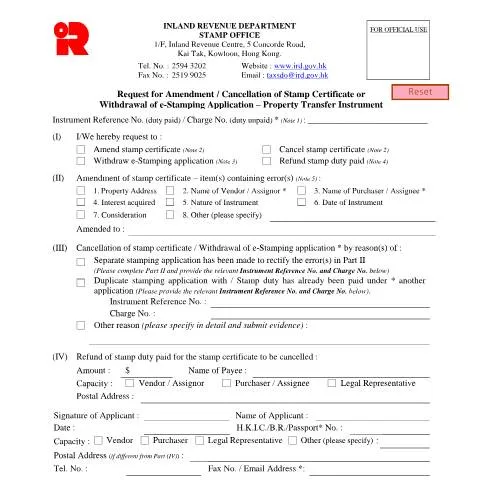
Understanding the Request for Amendment or Cancellation of Stamp Certificate
In the realm of property transactions in Hong Kong, the Request for Amendment / Cancellation of Stamp Certificate or Withdrawal of e-Stamping Application – Property Transfer Instrument plays a pivotal role. When navigating through the complexities of property laws, understanding this document can lead to smoother transactions and mitigate potential legal issues. This certificate, identified by its reference code IRSD 126A(E), is issued by the Inland Revenue Department (IRD), specifically under the Stamp Duty regulations.
Legal Validity and Implications of the Stamp Certificate
The stamp certificate serves as a crucial legal document that attests to the payment of stamp duty on property transfers. Its significance can be seen in various contexts:
- Proof of Payment: It verifies that the relevant duties have been settled, which is a prerequisite for the legal transfer of property ownership.
- Tax Compliance: The certificate helps ensure compliance with the tax obligations specified in the Basic Law of the Hong Kong Special Administrative Region.
- Legal Assurance: In the event of disputes, the stamp certificate stands as evidence that duties were duly paid, which can protect the interests of the involved parties.
Validity Duration and Renewal Conditions
When issued, the stamp certificate holds a specific validity period tied to the relevant property transaction. Generally, an active certificate remains valid until the transaction is finalized or cancelled. However, if complications arise—such as the need for amendments or a cancellation—prompt action must be taken:
- Amendment Requests: Situations where details of the initial certificate require modifications, such as changes in vendor or property address.
- Cancellation Procedures: Requests can be made if the property transfer is no longer proceeding or if an error must be rectified.
Common Scenarios Requiring Amendments or Cancellations
Understanding when and why an individual might need to amend or cancel their stamp certificate is essential. Common scenarios include:
- Errors in Documentation: Mistakes in the names of parties involved, property descriptions, or dates can necessitate a formal amendment.
- Change in Transaction Terms: Adjustments in the nature of the instrument or transfer details may require a cancellation of the current stamp certificate and the issuance of a new one.
- Withdrawal of e-Stamping Application: If an application is mistakenly submitted and needs to be withdrawn, this process must be initiated without delay.
Steps to Successfully Amend or Cancel a Stamp Certificate
Engaging with the IRD to amend or cancel a stamp certificate involves a methodical approach:
- Initiate the Request: Complete the IRSD 126A(E) form, making sure to indicate the specific request type in Section I.
- Provide Relevant Details: Fill in the sections related to the errors identified and the nature of the request. Ensure all fields are accurately completed.
- Submit Supporting Documents: Depending on the reason for your request, you may need to include additional documentation, such as original instruments or payment notices.
- Await Confirmation: After submitting the application, keep an eye on communications from the IRD for any follow-up actions or documents required.
Handling Errors or Disputes Related to the Stamp Certificate
Errors may occur at any stage of property transactions, and knowing how to address them is crucial to maintaining compliance and legal standing. In case of discrepancies:
- Contact the IRD Promptly: If an error is discovered, reach out to the IRD as soon as possible to discuss potential corrections.
- Provide Evidence: When disputing a stamp certificate's validity, supply any pertinent documentation that supports your case, such as transaction details or previous communications.
- Seek Resolution: The IRD may offer guidance on the best course of action, whether that involves amending the certificate or addressing the error through other means.
What to Do in Case of Loss or Theft of the Stamp Certificate
In the unfortunate event of loss or theft of the stamp certificate, immediate steps should be taken to mitigate potential issues:
- Report the Loss: Notify the IRD about the situation and follow their protocol for lost documents.
- Apply for a Replacement: Complete the necessary forms to request a duplicate stamp certificate, providing the IRD with specifics about the original document.
- Monitor for Fraud: Be vigilant regarding any unauthorized transactions that may arise due to loss or theft, and take action to safeguard your interests.
Practical Uses of the Stamp Certificate
The stamp certificate is not merely a bureaucratic formality; its utility spans various parties and situations:
- Property Buyers: Buyers must present the stamp certificate to confirm their legal ownership and tax compliance during property dealings.
- Financial Institutions: Banks and other lenders require this certificate to finalize mortgage processes, ensuring all legal obligations are satisfied.
- Real Estate Professionals: Agents and brokers use the stamp certificate as part of transaction documentation, facilitating smoother deals.
Cost Implications and Refund Procedures
Understanding the financial obligations tied to the stamp certificate is crucial for all parties involved:
- The stamp duty must be paid upon the issuance of the stamp certificate, with amounts varying based on the property value.
- If a request for cancellation is approved, individuals may be eligible for a refund of the stamp duty paid, provided they meet stipulated conditions as outlined by the IRD.
In-Depth Insight into the Submission Process
The submission of the IRSD 126A(E) form requires careful attention to detail:
- Submission Methods: Applications can be lodged via post, in person at the Stamp Office, or through electronic means when applicable.
- Timelines: Adhere to stipulated deadlines for submission to avoid complications, especially in cases where timely action is critical.
- Follow-Up: Keep records of all submissions and communications for reference, as they may be needed in subsequent discussions with the IRD.
Continued Relevance of Stamp Duty Regulations
In a rapidly changing real estate landscape, staying informed about stamp duty regulations is paramount. The IRD continually updates its policies to reflect market conditions, ensuring that stakeholders are aware of their obligations and rights. Regularly reviewing the Inland Revenue Department's communications will help ensure compliance and promote transparency in property transactions.
Final Remarks on Managing Stamp Certificates
Effectively managing the stamp certificate process can mean the difference between a successful property transaction and legal complications. By understanding the intricacies associated with the Request for Amendment / Cancellation of Stamp Certificate or Withdrawal of e-Stamping Application, stakeholders can navigate the complexities of property law in Hong Kong with greater confidence. Awareness of the legal implications, procedural requirements, and practical uses of the stamp certificate is essential for all involved in property transactions. Knowledge, proactive management, and timely communication with the IRD are foundational elements for success in this domain.
Eligibility Criteria for Requesting Amendment or Cancellation
When considering a request for amendment or cancellation of a Stamp Certificate related to a property transfer instrument in Hong Kong, it is essential to determine your eligibility. Typically, requests can be made by the person who obtained the Stamp Certificate, or their authorized representative. If the original application was not completed accurately, any inconsistencies or errors that arise must be addressed promptly to avoid complications in the property transaction process. Furthermore, understanding the nature of the amendment is crucial; it may involve changing the names listed on the document, adjusting the property details, or modifying the date of the transaction. Each scenario may have specific requirements and implications under the Stamp Duty Ordinance. It is advisable to consult with a legal professional to ensure that proper procedures are followed and that you are indeed eligible to initiate such requests.
Step-by-Step Procedure for Requesting a Withdrawal of e-Stamping Application
If you have submitted an e-Stamping application for a property transfer but decide to withdraw it, the procedure is straightforward but requires careful attention to detail. First, access the e-Stamping system using your registered account. Locate the application in question, and ensure all information is correct and up to date. The withdrawal process generally involves clicking the 'Withdraw' option associated with your application. You must confirm your withdrawal by providing the reason for this decision. In Hong Kong, providing a valid reason helps maintain the integrity of the e-Stamping process and is crucial for record-keeping purposes.
Once submitted, your withdrawal request will be processed, and you should receive a confirmation via email or through the e-Stamping system. It is important to note that if you have already paid the Stamp Duty, a refund request can be submitted concurrently with the withdrawal. This ensures that you are not financially penalized for a transaction that will not proceed. Keep in mind that there are timelines for both withdrawal and refund requests, typically needing to be completed within the same tax year, which runs from April 1 to March 31.
Common Reasons for Amendment or Cancellation Requests
In the context of property transactions, there are several common reasons why an individual or entity might request an amendment or cancellation of a Stamp Certificate or withdraw an e-Stamping application. These reasons can range from simple clerical errors to significant changes in the transaction itself. For instance, if there was a typographical error in the buyer's name or the property address, it is critical to rectify this to ensure the legal integrity of the documentation.
Another common scenario involves changes in the transaction terms. For example, if the parties involved decide to alter the purchase price or change the terms of the sale, these modifications would require an amendment to the original Stamp Certificate. Additionally, external circumstances such as the buyer’s inability to secure financing or changes in personal circumstances can lead to the cancellation of a property transfer. In such cases, it is essential to act swiftly, as any delays can complicate the legal standing of the property transfer and potentially incur additional Stamp Duty liabilities.
Lastly, the property market's volatility can also lead to cancellations; sudden drops in property value may prompt sellers to withdraw from the transaction. Each of these scenarios not only necessitates an understanding of the specific regulations surrounding Stamp Duty but also underscores the importance of prompt and clear communication with the relevant authorities, such as the Companies Registry (CR) and the Government Records Service (GRS).