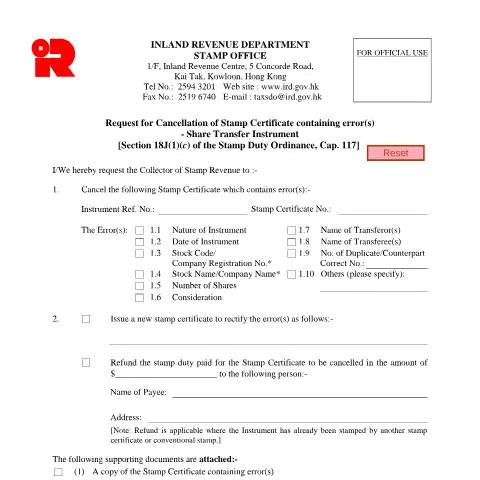
The Stamped Reality: Understanding the Request for Cancellation of Stamp Certificate
In the bustling financial realm of Hong Kong, the transfer of shares is a common yet intricate process. One key element that can often disrupt this process is the presence of errors in the stamp certificate associated with the share transfer. The Request for Cancellation of Stamp Certificate containing error(s) - Share Transfer, identified by the reference code IRSD 140(E), serves as a vital document for rectifying such discrepancies. This article delves into the legal implications, validation periods, eligibility, practical applications, and avenues for addressing complications associated with this document.
Legal Weight: The Certification's Role in Hong Kong's Regulatory Framework
The IRSD 140(E) form is anchored in the Hong Kong Stamp Duty Ordinance, specifically under Section 18(1)(c). This section governs the cancellation of stamp certificates that contain errors, thereby confirming the legal standing of the document in rectifying inaccuracies. Without this certification, a share transfer can be deemed invalid or contested, potentially leading to significant legal repercussions for the involved parties.
What Constitutes a Valid Stamp Certificate?
- Instrument Reference Number: Each stamp certificate is assigned a unique identifier, crucial for tracking and verification.
- Description of Errors: The form allows applicants to specify the nature of the errors—be it in the details of the instrument, the date, or the parties involved.
- Amount of Stamp Duty Paid: It is imperative to document and correct any discrepancies in the paid stamp duty amount, which is fundamental to the validity of the transfer.
Time Matters: Duration of Validity and Renewal Protocols
The importance of timing cannot be overstated when dealing with official documents like the IRSD 140(E). Once issued, the cancellation request must be processed promptly to avoid complications that could arise from prolonged errors.
Validity Duration
While there is no explicit expiration date for the cancellation request itself, it is advisable to submit the form as soon as errors are discovered. Delays can lead to further complications, including additional fees or disputes over the share transfer.
Renewal and Withdrawal Conditions
If the request for cancellation does not yield a successful resolution, the applicant may need to consider reapplying. Withdrawal of an application is permissible under certain conditions:
- Prior to the processing of the cancellation request.
- If a new or corrected stamp certificate has been issued, thereby making the cancellation unnecessary.
Who May Submit the Request? Eligibility Considerations
The IRSD 140(E) is not just accessible to any individual; specific criteria must be met for an applicant to qualify.
Eligible Applicants
Typically, the following parties are eligible to submit the application:
- Transferor: The individual or entity that originally transferred the shares.
- Transferee: The new owner of the shares who may be affected by the errors in the stamp certificate.
- Legal Representatives: Individuals authorized to act on behalf of either party.
Supporting Documentation Requirements
To bolster the credibility of the request, the following documents must accompany the form:
- A copy of the stamp certificate containing the errors.
- Evidence underpinning the claims of error (e.g., original share transfer instrument).
- If applicable, documentation supporting the necessity for a refund of the stamp duty paid.
Practical Uses: Where and How is the Cancellation Certificate Applied?
Understanding the usage of the IRSD 140(E) extends beyond mere legal symbolism; it has tangible implications for both personal and commercial transactions in Hong Kong.
Common Scenarios for Usage
- Share Transfers: Errors in the stamping process can invalidate share transfers, necessitating the cancellation of erroneous certificates.
- Corporate Restructuring: In cases of mergers or acquisitions, accurate documentation of share transfers is crucial, making the cancellation certificate a vital tool.
- Legal Disputes: In the event of disputes regarding share ownership, having a valid cancellation certificate can play a critical role in resolving conflicts.
Institutions Requiring the Certificate
Various stakeholders may request the cancellation certificate during their processes, including:
- Financial Institutions: Banks and lenders may require proof of corrected documentation before approving loans tied to shareholdings.
- Regulatory Bodies: Entities like the Hong Kong Companies Registry may demand accurate documentation for compliance with statutory obligations.
- Legal Practitioners: Lawyers often need this document when representing clients in disputes over share ownership or transfers.
Navigating Errors: What to Do in Case of Mistakes or Losses
Errors are an unfortunate reality in administrative processes. Whether they stem from clerical mistakes or miscommunications, knowing how to rectify them is paramount.
Steps to Rectify Errors
- Complete the IRSD 140(E) form accurately, specifying the exact errors.
- Gather required documentation supporting the request for cancellation.
- Submit the cancellation request to the Stamp Office promptly.
Addressing Lost Documents
In the unfortunate event that the original stamp certificate is lost, the following steps should be taken:
- File a formal declaration of loss with the appropriate authority.
- Obtain a duplicate certificate, if possible, to support your cancellation request.
- Seek legal advice if complications arise due to the loss of documentation.
Financial Considerations: Understanding Fees and Refunds
When it comes to stamp duty, understanding the financial implications is essential for any transaction involving share transfers. The IRSD 140(E) has specific provisions regarding refunds.
Refund Eligibility
Applicants may be eligible for a refund of stamp duty previously paid under certain conditions:
- The original stamp certificate has been stamped erroneously.
- A valid cancellation request has been submitted and approved.
Process for Claiming Refunds
To initiate a refund, follow these steps:
- Complete the cancellation request, including the refund section.
- Attach evidence of payment and the stamped documents.
- Submit both the cancellation request and refund claim to the Stamp Office.
Final Thoughts: Ensuring Compliance in Share Transfers
In the complex landscape of share transfers within Hong Kong, the IRSD 140(E) form acts as a crucial instrument in ensuring compliance with the Stamp Duty Ordinance. Its significance goes beyond mere paperwork; it safeguards the interests of both transferors and transferees, facilitating smoother transactions and reducing the risk of legal disputes. Understanding the details surrounding this document empowers stakeholders—from individual shareholders to corporate entities—to navigate the often turbulent waters of share transfers with confidence.
Understanding the Procedure for Requesting a Cancellation of Stamp Certificate
When errors occur on a Stamp Certificate related to share transfers in Hong Kong, it is crucial to understand the appropriate steps for cancellation. The Stamp Duty Ordinance mandates that all transfer documents, including share transfers, be accurately stamped. If your certificate contains inaccuracies, initiating a cancellation request is essential to rectify the situation and ensure compliance with local laws.
The initial step involves gathering all pertinent documentation, such as the original Stamp Certificate, the share transfer instrument, and any supporting evidence that illustrates the error. This might include correspondence with financial institutions or legal advisors that corroborate your claim. You will need to prepare a written request addressed to the Stamp Office of the Inland Revenue Department (IRD), outlining the nature of the error and the justification for the cancellation.
Upon submission, the Stamp Office will review your request. Keep in mind that the processing time can vary based on the complexity of the case. If the cancellation is granted, a new Stamp Certificate will be issued, which must be obtained promptly to avoid any penalties or further complications.
Common Errors on Stamp Certificates and Their Implications
Errors on Stamp Certificates can range from typographical mistakes to significant inaccuracies that could affect the legality of the share transfer. Understanding these common errors is vital for stakeholders involved in share transfers.
One prevalent error is incorrect details regarding the parties involved, such as misspelled names or incorrect identification numbers. These inaccuracies can lead to challenges in validating the ownership of shares when disputes arise. Furthermore, if the date of transfer is misrepresented, it may affect the tax obligations of both the transferor and transferee, leading to potential legal repercussions.
Fill in your form directly online
No printing: type your details into the boxes of the official form, tick, then download the PDF ready to send.
- 1Type into the form boxes
- 2Tick in one click
- 3Save and download the PDF
Another common issue includes discrepancies in the share amount or class. This situation can create confusion regarding the rights associated with the shares and complicate any subsequent transactions.
Additionally, the failure to properly account for any exemptions or special considerations under the Stamp Duty Ordinance can result in additional financial liabilities. For example, if a transfer falls under certain relief provisions and is not duly noted, the parties may inadvertently incur a higher stamp duty than required.
As such, it is advisable for stakeholders to conduct thorough reviews of all documents before submission to mitigate the risk of these errors occurring.
Frequently Encountered Questions Regarding Cancellation of Stamp Certificates
When navigating the cancellation of a Stamp Certificate, many individuals and entities often have similar questions regarding the process, requirements, and implications. Here are some frequently encountered questions to provide clarity:
What is the timeframe for submitting a cancellation request?
It is recommended to submit your cancellation request as soon as the error is identified. While there is no strict deadline set by the IRD, delaying could complicate your dealings, particularly if the share transfer is part of a larger transaction or if the affected parties need to maintain accurate records for compliance and legal purposes.
Is there a fee associated with the cancellation process?
Typically, there is no fee charged for the cancellation of a Stamp Certificate by the Stamp Office, but it is advisable to confirm any changes that may arise in the legislation or operational procedures by directly consulting the IRD.
Can I appeal if my cancellation request is denied?
If your request for cancellation is denied, you have the right to appeal the decision. This process involves submitting a detailed explanation of why you believe the denial is unwarranted, along with any additional evidence that supports your case. The appeals process may require adherence to specific deadlines and procedures, so it’s prudent to seek legal advice to navigate this complex area.
What happens if I do not request a cancellation for an erroneous Stamp Certificate?
Failing to request a cancellation may lead to various complications, including potential legal issues surrounding share ownership and tax obligations. An incorrect certificate could result in disputes during share transfers, which may necessitate costly legal interventions. Moreover, the IRD could impose fines or penalties for unreported inaccuracies, which can further strain financial resources.
Do I need to notify the share registrar about the cancellation?
Yes, you are obligated to inform the share registrar regarding the cancellation of the Stamp Certificate. This step is crucial to ensure that the records reflect the current and accurate conditions of the share transfer. Failing to notify them could lead to further complications in future share transactions.