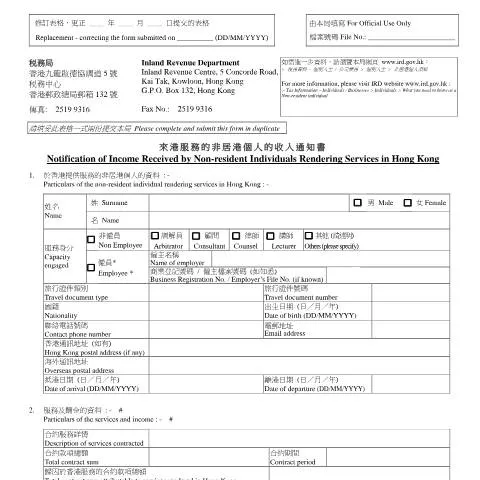
Navigating the IR 623R Form: A Comprehensive Guide
When engaging in professional services in Hong Kong as a non-resident, it's essential to understand the intricate web of documentation required for compliance with local tax laws. The Notification of Income Received by Non-resident Individuals Rendering Services in Hong Kong, known by its code IR 623R, serves a pivotal role in this process. This guide delves deep into the nuances of the IR 623R form, equipping you with the knowledge required to navigate its complexities effectively.
The Strategic Importance of the IR 623R Form
Upon rendering services in Hong Kong, non-resident individuals must declare their income through the IR 623R form. This document not only acts as a declaration of income but also serves as a means for the Inland Revenue Department to assess any tax liabilities accurately. By providing detailed information about the services rendered, the form establishes a clear basis for tax assessment, ensuring that non-residents meet their legal obligations without unnecessary complications.
Who is Responsible for Filing the IR 623R?
In general, the responsibility to submit the IR 623R resides with non-resident individuals who have engaged in services within Hong Kong. This could encompass various professionals, including consultants, lecturers, and arbitrators. It’s crucial to note that even if the services rendered were temporary, the income generated may still fall under the purview of Hong Kong taxation laws.
Understanding the Who, What, When, and Where of Filing
- Who: Non-resident individuals providing services in Hong Kong.
- What: IR 623R form detailing income and services rendered.
- When: Normally to be submitted within one month of income being received.
- Where: The completed form should be submitted to the Inland Revenue Department in duplicate.
Diving Into the Form: A Section-by-Section Breakdown
The IR 623R is divided into several sections that require detailed information. Understanding each section's requirements can significantly minimize the risk of errors during submission.
Section 1: Personal Details and Capacity Engaged
This initial section demands specific personal information, including your name, nationality, and capacity in which you are working (e.g., consultant, lecturer). One common pitfall involves incorrectly filling out your capacity engaged status. Ensure this accurately reflects your engagement type, as discrepancies may lead to complications.
Section 2: Details of Services and Income
Here, you need to articulate the nature of the services contracted, the total contract sum, and crucially, the amount expected to be received. Misestimating this figure or failing to provide a clear description could cause delays or potential disputes with tax authorities.
Key Considerations for Section 2
- Ensure clarity in the Description of services contracted—provide a thorough explanation.
- Accurately report the Total contract sum and any deductions if applicable.
- Keep track of the specific period in which you rendered services to avoid confusion.
Section 3: Receipt Dates and Periods
This section demands meticulous attention to detail regarding the dates you received payments and the periods spent in Hong Kong. It’s critical to align these dates accurately to facilitate a correct tax assessment.
Section 4: Details of the Payer
In this segment, you must provide information about the payer of your services. Ensure that you include the payer's name, contact information, and business registration number. A common oversight is neglecting to confirm that the payer's details are current and accurate, which can lead to administrative setbacks.
Methodology for Submission: Paper vs. E-Service
There are multiple avenues for submitting the IR 623R, each with its own set of advantages and considerations. Understanding these can save you time and effort.
Submitting via E-Service
Filing the IR 623R online offers several benefits, including instant confirmation of receipt and the ability to track your submission status. The online platform typically streamlines the process and reduces the potential for errors, making it a preferred option for many.
Submitting via Paper
For those opting to submit in paper form, ensure that you send it in duplicate to the Inland Revenue Department. While this method may feel more traditional, it’s essential to allow sufficient time for postal delivery and processing.
Post-Submission: Tracking and Following Up
Once the IR 623R has been submitted, you may be left wondering about the next steps. Monitoring the status of your submission is crucial to ensure compliance and address any issues that may arise.
How to Track Your Submission
You can stay informed about your submission by contacting the Inland Revenue Department directly. Keeping your reference number handy will facilitate quicker service. Be proactive in following up, as this can expedite any necessary adjustments or responses from the department.
What If You Encounter Issues?
If there is a refusal or you receive a notification indicating missing information, the best approach is to respond swiftly. Provide any required details promptly to rectify the situation. In cases of substantial error or misunderstanding, consider seeking professional advice to navigate the complexities of Hong Kong's tax system.
Addressing Unique Cases: Who Might Need This Form?
While the IR 623R is primarily aimed at non-resident individuals, there are unique cases that may require additional consideration.
Individuals with Multiple Engagements
For those rendering multiple services across different engagements, careful documentation is necessary. Each contract may require separate declarations, thus ensuring accuracy in tax reporting.
Minor Contributors
In instances where the services rendered come from individuals who are not of legal working age, there are special regulations that may apply. Compliance with local labor laws is paramount, and it's advisable to consult local legal guidelines.
Emergency Situations
If an urgent submission is required due to unforeseen circumstances, contact the Inland Revenue Department as soon as possible. Providing a clear account of your situation may facilitate a more immediate resolution or extension.
Understanding the Implications of Refusal
Receiving a refusal for your IR 623R submission can be disheartening, but it is essential to approach the situation with a solutions-oriented mindset.
Steps to Take Following a Refusal
- Review the Refusal Reason: Understand why your form was rejected.
- Gather Required Documentation: If additional information is needed, compile it without delay.
- Resubmit Promptly: Address the issues identified to facilitate a favorable outcome.
In some cases, seeking assistance from a tax professional may yield benefits, particularly if the nature of the refusal is complex.
Final Thoughts on the IR 623R Submission Process
Completing the IR 623R form is a critical step for non-resident individuals engaged in services in Hong Kong. By understanding the form’s intricate details, various submission methodologies, and post-submission protocols, you can navigate this process effectively. Remember to consult with local experts if you encounter unique challenges, and take proactive steps to ensure compliance with Hong Kong’s tax regulations.
Understanding Tax Obligations for Non-resident Individuals in Hong Kong
When a non-resident individual renders services in Hong Kong, understanding the tax obligations is crucial. Under the Inland Revenue Ordinance, income derived from services performed in Hong Kong is subject to taxation, irrespective of the individual's residency status. Non-residents must be aware that they are required to report their income to the Hong Kong tax authorities.
The first step in understanding tax obligations is to determine whether the services rendered are classified as 'employment' or 'self-employment.' Employment income will typically fall under Form IR56B, which is submitted by employers for reporting salaries, wages, bonuses, and allowances paid to their employees. On the other hand, income from self-employment is reported using a separate declaration, specifically Form BIR60.
It is critical to note that even if the individual does not have a permanent establishment in Hong Kong, the income earned within Hong Kong's jurisdiction is taxable. Therefore, thorough documentation of income and any related expenses is advisable to ensure compliance and facilitate the filing process.
The Role of Double Taxation Agreements in Reducing Tax Liabilities
Double Taxation Agreements (DTAs) play a pivotal role in mitigating the risk of double taxation for non-resident individuals rendering services in Hong Kong. Currently, Hong Kong has entered into DTAs with numerous jurisdictions, including the United Kingdom, Australia, and Canada, among others. These agreements are designed to protect individuals from being taxed on the same income in both their resident country and Hong Kong.
Non-resident individuals should review the relevant DTA to ascertain any exemptions or reductions in tax rates that may apply. For instance, if the individual is resident in a country that has a DTA with Hong Kong, they may be eligible for tax relief on specific types of income, such as royalties, dividends, or service fees.
To claim the benefits of a DTA, non-resident individuals must submit a claim with the Inland Revenue Department (IRD), along with any necessary supporting documentation. This may include a tax residency certificate from their home country, which serves as proof of residency. It's essential to be aware of the time limits and requirements for such claims, as failure to comply can result in the loss of potential tax relief.
Practical Steps for Filing Notifications and Managing Compliance
Filing a notification of income for non-resident individuals can be a straightforward process, provided the correct steps are followed. The first step is to gather all relevant information regarding the income received from services rendered in Hong Kong. This includes invoices, contracts, and any other documentation that supports the income claim. Non-residents should keep detailed records of all transactions to facilitate the filing and auditing process.
Once the information is gathered, the next step involves completing the appropriate forms. Non-resident individuals typically use Form BIR60 to report their service income. The form requires details such as the nature of the services provided, the amount charged, and any expenses incurred in the process. It’s advisable to also include a breakdown of the services rendered, as this can provide clarity to the IRD during assessment.
After completing the form, non-residents must ensure timely submission to the IRD. The tax year in Hong Kong runs from April 1 to March 31 of the following year, and notifications should be submitted within the prescribed deadline to avoid late penalties. Utilizing e-services offered by the IRD can streamline the filing process and provide immediate acknowledgment of submission.
Lastly, non-residents should remain vigilant about compliance. This involves not only filing notifications accurately and on time but also understanding the implications of any changes in tax regulations or policies in Hong Kong. Staying informed about updates from the Inland Revenue Department and engaging with professional tax advisors can significantly aid in navigating the complexities of tax obligations for non-resident individuals.