Understanding the Notification of Cessation of Business: A Step-by-Step Guide
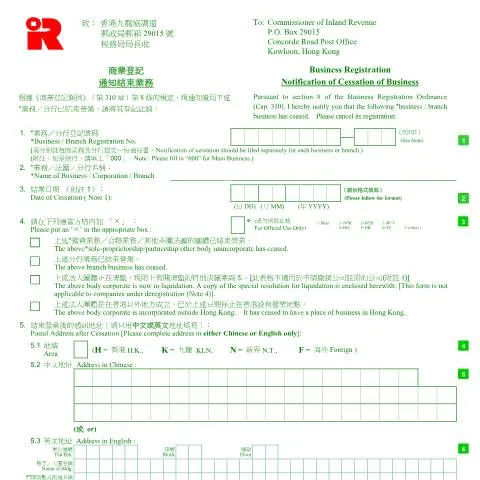
When a business in Hong Kong ceases operations, it is crucial to notify the relevant authorities to ensure compliance with local regulations. The Notification of Cessation of Business (form IRC 3113) is the official document that business operators must complete and submit to the Business Registration Office. This article serves as an in-depth resource for understanding the intricacies of this notification process.
Disentangling the IRC 3113 from Similar Documents
The Notification of Cessation of Business may be confused with various other forms related to business registration. However, it serves a distinct purpose in the administrative landscape of Hong Kong. Understanding its specific role is crucial:
- Distinct Purpose: Unlike Business Registration Applications or Updates, which focus on initiating or modifying a business registration, the IRC 3113 is exclusively for declaring that a business has officially ceased operations.
- Specificity: This form requires detailed information regarding the cessation date and the specific business activities that are being discontinued, which is not necessary in other registration forms.
- Consequences of Neglect: Failing to submit this form can lead to penalties, whereas other forms primarily involve administrative updates.
Preparing the Required Documentation: A Checklist
Completing the IRC 3113 involves more than just filling out the form. Preparation is key to ensuring that all necessary supporting documents are included. The documentation required often varies based on the business structure:
1. Sole Proprietorship
- Completed IRC 3113.
- Copy of the identification document of the business operator (HKID or Passport).
2. Partnership
- Completed IRC 3113.
- Identification documents for all partners.
3. Corporations
- Completed IRC 3113.
- Resolution for cessation signed by the board of directors.
- Documentation proving the compliance of all legal requirements for winding up the business.
4. Liquidated Entities
- Completed IRC 3113.
- Proof of liquidation (special resolution).
Gathering these documents beforehand can streamline the submission process and mitigate delays.
Channels of Submission: Navigating Your Options
Business operators have multiple avenues to submit the IRC 3113. Each channel has unique advantages:
| Submission Channel | Advantages | Considerations |
|---|---|---|
| Online Submission | Convenient and time-saving; instant confirmation of submission. | Requires a digital signature and internet access. |
| Postal Submission | Suitable for those without internet access; allows for meticulous documentation. | Can be slow; risk of mail delays. |
| In-Person Submission | Direct interaction; immediate feedback on the submission. | May require waiting in line; limited to office hours. |
Processing and Tracking Your Submission
Once the IRC 3113 is submitted, it enters the processing phase. Understanding how the Business Registration Office handles this form is vital:
- Initial Review: The submitted form will be reviewed for completeness and accuracy. The office may contact the business operator if further information is needed.
- Notification of Processing: Business operators will not receive a formal acknowledgment unless required details are missing. It's advisable to keep record copies and any correspondence.
- Follow-Up: If there is a delay beyond the standard processing time, operators may contact the Business Registration Office for updates.
Legal Framework Governing the IRC 3113
The legal basis for the Notification of Cessation of Business is rooted in the Business Registration Ordinance (Cap. 310). Familiarity with this framework helps understand the importance of compliance:
- The ordinance stipulates that businesses must notify the Commissioner of Inland Revenue of any cessation. Failure to comply may lead to penalties up to HKD 5,000.
- In addition, any changes in business operations must be reported within one month to avoid further complications.
- The ordinance aims to maintain accurate public records and ensure that businesses are operating within the legal bounds.
Timeline: Key Dates to Remember
Timing is crucial when submitting the IRC 3113. Here's a timeline that outlines essential dates:
- Date of Cessation: The date on which the business officially stops operations must be clearly stated in the form.
- Submission Deadline: The form must be submitted within one month following the cessation date.
- Post-Submission Period: Once submitted, the business operator has to await confirmation or potential queries from the Business Registration Office.
The Importance of the Notification in the Business Lifecycle
Understanding the relevance of the IRC 3113 within the broader context of business administration is essential:
- Compliance: Fulfilling this obligation ensures that the business remains compliant with local laws, preventing future legal complications.
- Tax Implications: Proper cessation notifications can simplify tax matters, ensuring that the business is not liable for taxes post-cessation.
- Legal Closure: This form serves as an official record of the business's end, which is crucial for future reference or in case of disputes.
Fulfilling the IRC 3113 is not just a bureaucratic requirement but a step towards responsible business management.
Final Considerations for Business Operators
As you prepare to submit your Notification of Cessation of Business, consider the following:
- Accuracy is Key: Ensure all information entered in the form is accurate and matches supporting documents.
- Keep Copies: Maintain copies of submitted forms and all correspondence for your records.
- Seek Professional Guidance: If you are unsure about the process, consulting with a legal or business advisor can provide clarity and prevent costly mistakes.
Successfully navigating the cessation process through the Notification of Cessation of Business not only fulfills legal obligations but also allows business owners to close a chapter responsibly, paving the way for future ventures.
Understanding the Process of Notification of Cessation of Business
In Hong Kong, the cessation of business is an important administrative step that must be taken in accordance with local laws and regulations. The notification process is governed primarily by the Companies Ordinance and entails informing the Companies Registry (CR) of the termination of business operations. This requirement applies to both sole proprietorships and corporations. The formal notification of cessation is essential to ensure that the business is officially recognized as having ceased operations, thereby mitigating future liabilities.
When a business owner decides to cease operations, they must submit the relevant form—known as Form N501—to the CR. This form not only serves as a notification but also allows the authorities to update public records accurately. The notification can be submitted online via the e-Registry service or in hard copy form, but it's recommended to utilize e-services for faster processing. Failure to notify the CR could result in ongoing tax obligations and penalties, as the business remains active in the eyes of the law until it is officially declared otherwise.
It’s crucial to note that submitting a notification does not automatically imply that all associated obligations (e.g., tax payments, employee contracts) are nullified. Business owners must also ensure that they settle any outstanding debts or obligations prior to cessation to avoid legal complications. It's prudent to seek professional advice to navigate any complexities involved in the process, especially if there are multiple stakeholders or if the business has significant assets or liabilities.
Implications of Cessation for Tax Obligations
When a business in Hong Kong ceases operations, tax implications arise, particularly concerning profits tax. The Hong Kong tax year runs from 1 April to 31 March, and businesses must file their final profits tax return for the year in which they cease operations. This return must be submitted to the Inland Revenue Department (IRD), detailing any income earned until the cessation date. Failure to settle tax obligations could lead to penalties, and the IRD may pursue further actions to recover unpaid taxes.
Moreover, businesses must also consider the implications for their value-added tax (VAT) liabilities, if applicable. In Hong Kong, the Goods and Services Tax (GST) is generally not levied, but businesses involved in certain sectors may have different reporting requirements. Consultations with tax advisors or the IRD are advisable to ensure compliance and clarity regarding outstanding taxes and final tax assessments post-cessation.
Another important aspect to keep in mind is the potential for tax refunds if a company has overpaid taxes in previous years. Business owners should review their tax filings and finances comprehensively to identify any eligible refunds. This requires meticulous documentation and filing of the necessary forms with the IRD, ensuring that the business is in good standing before submitting the cessation notification.
Considerations for Employees and Stakeholders
When a business in Hong Kong announces its cessation, the impact on employees and stakeholders is significant and requires careful management. Under the Employment Ordinance, employers are obliged to inform employees about the cessation, providing adequate notice as stipulated by their contracts. Depending on the duration of employment, this notice period can vary, and employers may also be required to provide severance payments, especially if the termination is not due to misconduct.
Communication is key during this process. Maintaining transparency with employees can help in mitigating potential disputes and fostering a supportive environment during the transition. It’s essential to outline the reasons for cessation and provide guidance regarding final paychecks, entitlement to leave, and any assistance offered for job placements or references.
Stakeholders, including investors and creditors, should also be informed promptly regarding the cessation of business operations. This communication should detail the rationale behind the decision, the anticipated timeline for winding down operations, and the approach to settling outstanding debts and obligations. It is advisable to have a formal communication plan in place to address concerns and ensure that all parties are aligned. Legal consultations may also be beneficial to navigate the complexities surrounding the cessation, especially if disputes arise among stakeholders.