Understanding the Cst Gross Revenue Schedule: A Practical Guide
Navigating the complex landscape of tax obligations in Ghana can often feel daunting for businesses, particularly in the realm of electronic and non-electronic communication services. The Cst Gross Revenue Schedule serves as a critical instrument in this process, ensuring compliance with the Ghana Revenue Authority (GRA) regulations while facilitating transparent reporting of revenue. This guide delves into the practical aspects of this document, shedding light on its particularities, effective use, and the various stakeholders involved in its completion and submission.
The Role of the Cst Gross Revenue Schedule in Tax Reporting
At its core, the Cst Gross Revenue Schedule is designed to document gross revenues generated from specific communication services over a defined accounting period. This document is pivotal for regulating the tax obligations imposed under Ghanaian laws, specifically tailored for service providers in the electronic and non-electronic sectors.
Why This Schedule is Essential
- Compliance with GRA Regulations: The primary aim is to ensure that all service providers accurately report their revenues to the GRA, thereby fulfilling their tax obligations.
- Revenue Accountability: This schedule enhances the accountability of businesses, providing a structured format to report earnings and declare taxes accordingly.
- Data Capture: It allows the GRA to capture essential data for statistical purposes and to monitor the economic performance of the communication sector.
Chronological Walkthrough: Completing the Cst Gross Revenue Schedule
Filling out the Cst Gross Revenue Schedule involves several steps, each integral to ensuring accuracy and compliance. Following this guided timeline will help streamline the process.
Step 1: Gathering Necessary Information
Before you sit down to fill out the schedule, it is crucial to gather all necessary documentation and data:
- Accounting records for the period (MM/YYYY).
- Details of all communication services provided, both electronic and non-electronic.
- Revenue figures, categorized by type of service.
- Your Tax Identification Number (TIN) and any relevant Ghana Card information.
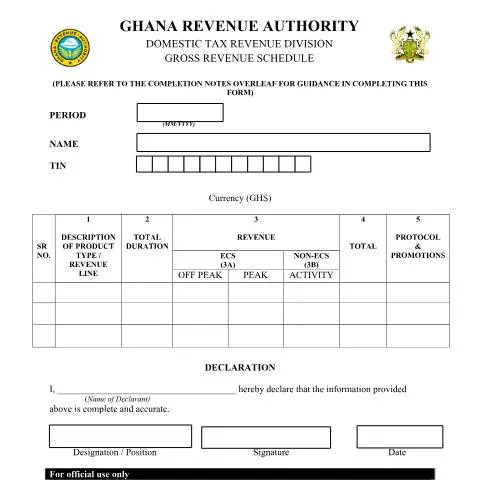
Step 2: Completing the Schedule
The form itself comprises various sections that need to be filled in meticulously:
- Column 1 - Description of Product Type / Revenue Line: Clearly specify the types of services offered within the accounting period.
- Column 2 - Total Duration: Report the total duration of services provided, measured in minutes or seconds.
- Column 3 - Revenue: Document the total revenue, splitting it into electronic communication services (ECS) and non-electronic communication services (NCS).
- Column 4 - Total: Provide the sum of ECS and NCS revenues.
- Column 5 - Protocol & Promotions: Note any services supplied without charge, which affects taxable amounts.
Positioning within Broader Tax Obligations
The submission of the Cst Gross Revenue Schedule is not an isolated task; it is part of a larger framework of tax obligations that businesses must navigate throughout their operational lifespan. Understanding this context is essential for compliance.
Interrelated Tax Responsibilities
Businesses must be aware of other tax obligations that may coincide with the submission of this schedule, including:
- Corporate Tax Returns: Annual returns that may include other revenue streams besides communication services.
- Value Added Tax (VAT): If applicable, companies must ensure VAT is accounted for in their pricing and revenue reporting.
- Withholding Taxes: Certain payments to subcontractors or suppliers may incur withholding tax responsibilities.
Unique Features of the Cst Gross Revenue Schedule
While various tax forms exist within the GRA framework, the Cst Gross Revenue Schedule has distinctive features that set it apart from related documents.
Comparison with Other Tax Forms
| Feature | Cst Gross Revenue Schedule | Annual Corporate Tax Return |
|---|---|---|
| Purpose | Report gross revenue from communication services | Summarize total income and expenses for the year |
| Frequency | Monthly or Quarterly | Annually |
| Detail Level | Specific to communication services | Comprehensive across all business activities |
| Regulatory Body | GRA Domestic Tax Revenue Division | GRA Corporate Tax Division |
Stakeholders: Who is Involved?
Understanding the stakeholders involved in the filling and submission of the Cst Gross Revenue Schedule is essential for ensuring compliance and facilitating the process.
Identifying Key Participants
- Service Providers: Primary entities responsible for completing and submitting the schedule.
- Ghana Revenue Authority (GRA): Regulatory body overseeing the submission and ensuring compliance with tax laws.
- Tax Advisors: Professionals who may assist service providers with accurate completion and compliance.
- Auditors: May review submitted forms during financial audits to verify the accuracy of reported revenues.
Considerations for Different Business Profiles
Not all businesses approach the Cst Gross Revenue Schedule with the same requirements or complexities. Specific profiles warrant special attention and considerations.
Small vs. Large Enterprises
Small enterprises may lack dedicated accounting departments, which can complicate the completion of the schedule. In such cases, utilizing accounting software or consulting with a tax advisor can greatly aid in the accuracy of reporting.
Service Diversification
Businesses offering a mix of electronic and non-electronic communication services must ensure that they categorize their revenues correctly. Mistakes in classification can lead to misreported taxes, resulting in penalties.
Post-Submission: What Happens Next?
Once the Cst Gross Revenue Schedule has been completed and submitted, understanding the next steps is critical for businesses.
Official Processing and Feedback
The GRA will review submitted schedules. Key actions that follow include:
- Verification: An internal review will confirm the accuracy of data provided.
- Feedback and Queries: If discrepancies are found, the GRA may reach out for clarification or additional information.
- Tax Assessments: Based on the data provided, the GRA will determine tax liabilities for the reporting period.
Record Keeping
It is advisable for businesses to maintain copies of all submitted documents for at least five years, as these may be required for future audits or inquiries by the GRA.
Conclusion: Ensuring Effective Compliance
Completing the Cst Gross Revenue Schedule is a crucial aspect of managing tax obligations for businesses operating within Ghana’s communication sector. By understanding the specific requirements, stakeholder roles, and the overall process, companies can navigate this responsibility with greater confidence. Engaging with tax professionals and maintaining accurate records will further enhance compliance, allowing businesses to focus on their core operations while remaining compliant with Ghanaian tax laws.
Understanding the CST Gross Revenue Schedule: Definition and Purpose
The CST (Commonwealth Standard Tax) Gross Revenue Schedule is a crucial document for businesses operating within Ghana’s tax framework. It serves as a comprehensive outline detailing the expected revenues that businesses should report to the Ghana Revenue Authority (GRA). The primary aim of this schedule is to standardize the revenue reporting process across various sectors, ensuring transparency and consistency within the tax system.
Businesses are required to provide an accurate estimation of their gross revenue, which is then utilized to determine applicable taxes. This aligns with the GRA's mandate to collect taxes effectively while promoting compliance among taxpayers. Understanding the intricacies of the CST Gross Revenue Schedule is essential for businesses, as it not only influences tax liability but also impacts financial forecasting and planning.
Requirements for Completing the CST Gross Revenue Schedule
Completing the CST Gross Revenue Schedule involves several key requirements that businesses must adhere to in order to ensure compliance with GRA regulations. Below are essential components that a business must account for:
- Accurate Financial Records: Businesses should maintain detailed and accurate records of all financial transactions throughout the year. This includes sales invoices, purchase receipts, and bank statements. The GRA often requires these records to verify the reported revenue figures.
- Revenue Categorization: It’s crucial for businesses to categorize their revenue correctly. Different types of revenue, such as product sales, service income, and investment income, may be subject to varying tax rates. A detailed breakdown will aid in precise reporting and compliance.
- Timely Submission: The CST Gross Revenue Schedule must be submitted to the GRA by the stipulated deadline, usually aligned with the fiscal year-end. Late submissions may attract penalties, emphasizing the importance of adhering to timelines.
- Engagement of Professional Accountants: While businesses can prepare the schedule independently, consulting with certified accountants can enhance accuracy. Professional accountants are familiar with current tax laws and can provide insights into compliance and optimal tax strategies.
Potential Penalties for Non-Compliance with the CST Gross Revenue Schedule
Failure to comply with the requirements set forth by the GRA regarding the CST Gross Revenue Schedule can lead to significant consequences for businesses. Understanding these penalties can help businesses proactively mitigate risks associated with non-compliance. Here are some potential repercussions:
- Financial Penalties: The GRA imposes fines for late or inaccurate submissions, which can vary based on the extent of the discrepancy. Businesses may face a percentage-based fine on the tax due, effectively increasing their tax burden.
- Legal Action: In severe cases of non-compliance or tax evasion, businesses may face legal repercussions, including court proceedings. This can lead to further penalties and damage to the business’s reputation.
- Increased Scrutiny: Non-compliance can trigger increased scrutiny from tax authorities, resulting in more frequent audits. This not only requires additional resources but also may impede business operations due to the distraction of resolving tax issues.
- Loss of Business Licenses or Permits: For businesses failing to meet tax obligations, the GRA may recommend suspension or revocation of business licenses, severely impacting operations.
Overall, understanding the implications of the CST Gross Revenue Schedule is paramount for businesses in Ghana. Compliance not only safeguards enterprises from penalties but also builds goodwill with tax authorities, fostering a cooperative relationship.