Understanding the Teachers Questionnaire: A Comprehensive Guide
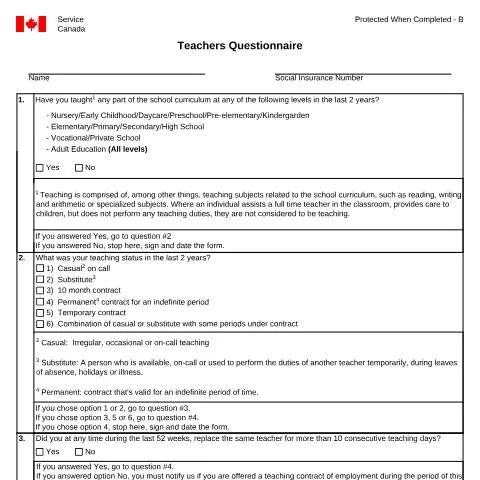
The Teachers Questionnaire (INS5234) serves a pivotal role in the Employment Insurance (EI) framework in Canada. This article will delve into its significance for educators, guiding you through the intricacies of the form, its completion, submission channels, and the subsequent process. Understanding this document is essential for teachers aiming to secure their benefits while navigating the challenging landscape of employment.
Why the Teachers Questionnaire Matters: A Look at Its Impact
For educators, the Teachers Questionnaire is not merely a bureaucratic hurdle but a critical component in determining eligibility for Employment Insurance benefits. Designed for those in the teaching profession, it helps Employment and Social Development Canada (ESDC) ascertain your teaching status, which directly influences your potential EI claim. A well-completed questionnaire can ease your path to financial support during periods of unemployment or underemployment.
The Historical Framework Behind INS5234
The Teachers Questionnaire emerged from the need to address specific employment patterns in the educational sector, especially among casual teachers and those with non-standard contracts. Over the years, teaching jobs have evolved, and many educators now operate in a gig economy where contracts are short-term and irregular. The form was established as a tool to facilitate the verification of employment statuses in line with the Employment Insurance Act and related regulations, thereby ensuring that the benefits system accurately reflects the unique circumstances of educators.
Step-by-Step: Filling Out the Teachers Questionnaire
Completing the Teachers Questionnaire requires attention to detail. Each section is designed to gather specific information that will inform your eligibility. Below is a breakdown of how to approach each question effectively.
Section 1: Teaching Experience in the Last Two Years
The first question addresses your teaching experience over the past two years, requiring you to indicate if you have taught at any educational level. It's crucial to answer accurately:
- If you have taught in various capacities, ensure you tick all applicable boxes.
- In case your teaching was sporadic or informal, consider how this fits into the EI framework.
Question 2: Your Teaching Status
This section is vital for categorizing your employment type. Whether you're casual, substitute, or on a permanent contract can significantly affect your EI eligibility. Be aware of the definitions provided for each category, as misclassification can lead to complications:
- Causal: Often irregular and on-call.
- Substitute: Filling in for other teachers temporarily.
- Permanent: An indefinite contract, providing more stability.
Question 3: Replacing Another Teacher
When answering whether you've replaced the same teacher for more than 10 consecutive days, think about your recent engagements. This information is pertinent to evaluate claims related to long-term substitutes.
Employment Offers and Decision-Making Process
Questions 4 through 12 revolve around offers of employment and your decisions regarding them. Here’s how to tackle this phase:
- Ensure you record the dates accurately, as these can influence your eligibility.
- Detail your reasoning for accepting or refusing offers, as this can help clarify your employment situation.
The Submission Channels: How to Submit Your Questionnaire
Understanding the different channels for submitting the Teachers Questionnaire can save you time and potential issues:
Online Submission
- Submitting online is the most efficient method. Use the Service Canada portal, ensuring you have your Social Insurance Number (SIN) ready.
- Online submissions often receive quicker processing times compared to paper submissions.
Paper Submission
If you prefer a paper form:
- Print the completed questionnaire and send it to the appropriate Service Canada address.
- Ensure you keep a copy for your records, as this may be needed for future reference.
In-Person Submission
For those who seek assistance or wish to submit in person:
- Visit your local Service Canada Centre.
- Bring your completed form along with any additional documentation that supports your claim.
After Submission: What to Expect
Once you’ve submitted the Teachers Questionnaire, the wait begins. Here’s a walkthrough of what typically happens next:
Processing Time and Communication
Generally, the processing of EI claims can take several weeks. During this time:
- Service Canada may contact you if additional information is required.
- Stay proactive: check your application status online or reach out directly to Service Canada.
Receiving Your Benefits
Upon approval, you’ll begin receiving benefits. It’s essential to understand:
- The duration and amount of benefits can vary based on your employment history and the specifics of your claim.
- Be mindful of the reporting requirements. You must update Service Canada on any changes in your employment situation.
Follow-up and Appeals
In some cases, your application may be denied. Here’s how to navigate that process:
- You have the right to appeal a denial—ensure you understand the reasons for rejection.
- Gather any documentation that supports your case for reconsideration.
Special Situations: Unique Cases Worth Noting
Although the Teachers Questionnaire is straightforward, unique situations can arise:
International Educators
If you are an international educator or have worked abroad, you may need to provide additional documentation regarding your teaching credentials and experience.
Temporary Contracts and Gaps in Employment
Many teachers face gaps between contracts. It’s crucial to detail these periods accurately, as they can impact your claim:
- Document any ongoing professional development or volunteer work during these gaps, as this may demonstrate ongoing engagement in the field.
Final Thoughts: Your Responsibilities and Rights
Completing the Teachers Questionnaire and navigating the EI system can feel overwhelming, but being informed about your rights and responsibilities makes a significant difference:
- Ensure that you provide accurate and truthful information; any discrepancies can lead to penalties.
- Familiarize yourself with the Employment Insurance Act and your rights as a claimant, including the confidentiality of your information.
By understanding the Teachers Questionnaire in detail and approaching the process with diligence, educators can better secure the support they need during transitional periods in their careers.
Understanding the Importance of the Teachers Questionnaire
The Teachers Questionnaire is a critical tool used by various educational bodies in Canada to gather essential data about teachers, their qualifications, and their professional experiences. This questionnaire serves multiple purposes, ensuring that both the government and educational institutions can better understand the landscape of education in Canada. By analyzing the information collected through these questionnaires, policymakers can make informed decisions regarding funding, curriculum development, and resource allocation.
Furthermore, the data helps in ensuring that teachers meet the necessary standards and qualifications, which ultimately impacts the quality of education provided to students. For aspiring teachers, a complete and accurate submission of the questionnaire is crucial, as it often plays a role in licensure and certification processes. This means that the questionnaire not only reflects a teacher's professional journey but also directly influences their career trajectory.
Common Challenges when Completing the Teachers Questionnaire
Filling out the Teachers Questionnaire may seem straightforward, but many educators face several challenges during this process. One common issue is the complexity of the questions, which may not always be intuitive or clear. Teachers may struggle to accurately represent their experiences, especially if they have taken non-traditional career paths or have worked in different jurisdictions within Canada. It’s essential to understand that the questionnaire is designed to capture a wide range of experiences, so taking the time to reflect on your professional history can be beneficial.
Another challenge is ensuring that all necessary documentation is available and correctly referenced. Many questions require supplementary information, such as proof of qualifications, teaching certificates, and records of professional development. It can be overwhelming to gather all this information, particularly for those who have been in the field for several years. It’s advisable to start early and maintain organized records throughout your teaching career to facilitate this process.
Additionally, time constraints can be a significant barrier. Teachers often have demanding schedules, balancing classroom responsibilities with administrative tasks and personal commitments. Setting aside dedicated time to complete the questionnaire, free from distractions, can enhance the quality and accuracy of your responses.
Tips for Successfully Navigating the Teachers Questionnaire
To help you complete the Teachers Questionnaire effectively, consider the following tips:
- Take Your Time: Don’t rush through the questionnaire. Read each question carefully and take the time to ponder your answers. It’s not uncommon for educators to underestimate the complexity of their own experiences.
- Be Thorough and Specific: When providing information about your professional experience, include specific details such as the grade levels you’ve taught, the subjects covered, and any unique teaching methods employed. This context adds depth to your responses and provides a clearer picture of your qualifications.
- Utilize Available Resources: Many provincial education ministries and regulatory bodies provide resources and guidelines for completing the questionnaire. Be sure to consult these materials for additional support and clarification.
- Double-Check Your Documentation: Before submitting your questionnaire, ensure all required documents are attached and correctly referenced. This step is critical for avoiding delays in processing your application.
- Seek Feedback: If possible, ask a fellow educator or mentor to review your completed questionnaire. Fresh eyes can catch errors or omissions you might have overlooked.