Understanding the Application for Openness Order (Form 34L) in Ontario
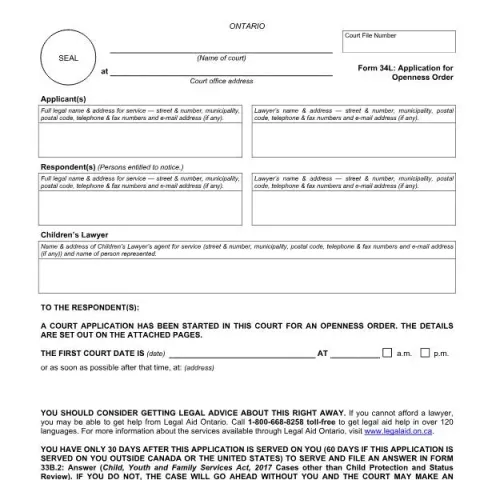
The Form 34L: Application for Openness Order is a crucial legal document used within the Ontario Court system, primarily in cases involving child welfare, family law, or child protection matters. This form facilitates requests for court orders that promote transparency and openness concerning a child's connections, cultural heritage, or relationships that are deemed beneficial for the child's well-being.
Purpose and Usage of the Form 34L
This application allows a party involved in a child-related legal proceeding—such as a parent, guardian, or children's aid society—to formally request an openness order. Such orders are intended to ensure that children maintain meaningful relationships with significant persons, including family members, or to preserve their cultural identity, especially in cases where these connections might otherwise be restricted or severed.
The form is typically used when the applicant believes that an openness order will serve the best interests of the child by allowing continued or enhanced contact with specific individuals or communities. It is also used to protect or promote the child's cultural heritage, particularly for children who are First Nations, Inuit, or Métis, ensuring their cultural identity remains intact.
Key Sections of the Application
1. Court and Case Details
- Court File Number: Unique identifier assigned to the case.
- Name and Address of the Court: Including the court's location and contact details.
- Applicant(s): Full legal names, addresses, contact information, and legal representatives if any.
- Respondent(s): Names and contact details of persons entitled to notice, including their legal representatives.
- Children’s Lawyer: Details of legal representation for the child, if involved.
2. Details About the Child
This section captures essential information about the child involved, including:
- Full Legal Name:
- Date of Birth:
- Sex:
- Cultural Identity: Whether the child identifies as First Nations, Inuit, or Métis, and details of their community or band affiliations.
3. Nature of the Openness Order Requested
The core of the application involves specifying the details of the openness order sought. This includes:
- Details of the Order: Clear description of what the applicant requests, such as ongoing contact, visitation rights, or cultural connection.
- Benefits to the Child: Explanation of how the order will support the child's relationship with specific persons or communities.
- Cultural Preservation: If applicable, how the order will help maintain or develop the child's cultural identity, especially for Indigenous children.
Legal Considerations and Eligibility
The application must demonstrate that granting the openness order aligns with the child's best interests, considering their emotional, developmental, and cultural needs. The form is often used in conjunction with sections 194, 196, or 197 of the Child, Youth and Family Services Act, 2017, which pertain to maintaining familial relationships and cultural connections.
Procedure for Filling Out and Submitting the Form
Filling out Form 34L requires careful attention to detail. You should:
- Provide accurate and complete information about all parties involved and the child.
- Specify the nature of the openness order being requested, including any specific conditions or restrictions.
- Attach any supporting documents or evidence that reinforce your application.
- Ensure the form is signed and dated by the applicant or their legal representative.
Once completed, the form must be filed with the appropriate Ontario court. The court will then schedule a hearing, which is usually the first court date indicated on the application. It is advisable to serve the respondent(s) with the application and any supporting documents within the specified timeframe, typically 30 days after service within Canada.
Fill in your form directly online
No printing: type your details into the boxes of the official form, tick, then download the PDF ready to send.
- 1Type into the form boxes
- 2Tick in one click
- 3Save and download the PDF
After Filing and Court Proceedings
Following submission, the court may schedule a hearing to review the application and hear any objections or submissions from involved parties. The court's primary consideration remains the child's best interests, including their emotional well-being and cultural identity. The court may grant, modify, or deny the openness order based on the evidence presented.
If the court approves the application, the order will specify the terms of contact or cultural connection, which must be followed by all parties. It is important to consult with a legal professional experienced in family law or child welfare matters to navigate this process effectively and ensure compliance with all legal requirements.