Understanding the Consent Order Form in British Columbia’s Small Claims Court
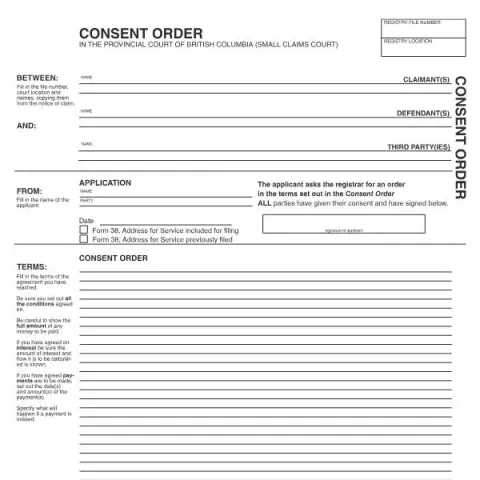
If you are involved in a legal dispute in the Small Claims Court of British Columbia, you may encounter the Consent Order form. This official document, designated as SCL 021, serves as a formal agreement between parties that have resolved their dispute through mutual consent. Knowing how to properly complete and submit this form is essential for ensuring your case is finalized efficiently and in accordance with court procedures.
What is the Purpose of the Consent Order?
The Consent Order is a legal document that records an agreement reached voluntarily by both the claimant and the defendant. It formalizes the terms of settlement, including any payments, actions, or conditions that the parties have agreed upon. Once signed by all involved parties and approved by a court registrar, it becomes an enforceable part of the court record, effectively resolving the case without the need for a trial.
Preparing the Consent Order
Gathering Necessary Information
Before filling out the form, ensure you have all relevant details at hand:
- Registry File Number: Found on your notice of claim or court documents.
- Court Location: The specific courthouse where your case is filed.
- Parties’ Names: Full names of the claimant(s) and defendant(s).
- Signatures and Dates: Signatures of all parties involved, along with the date of signing.
Completing the Form
The form is divided into several sections:
- Parties and Case Details: Fill in the registry file number, court location, and the names of the claimant(s) and defendant(s).
- Agreement Terms: Clearly state the terms of the settlement, including any monetary payments, interest, deadlines, or actions to be taken. Be specific about amounts, interest calculation, and payment schedules.
- Signatures: All parties must sign the form, confirming their agreement. The date of signing should be included as well.
Submitting the Consent Order
Once completed and signed by all parties, the Consent Order must be presented to the court registry. The process involves:
- Taking the signed order to the registry where the case was filed.
- Having the court registrar review and sign the order, officially approving it.
- Filing the signed order as part of the court record to formalize the settlement.
It is important to keep copies of the signed order for your records. The court may provide multiple copies, including:
- One for the court registry.
- One for each party involved.
- Additional copies for third parties, if applicable.
Key Considerations When Filling Out the Form
Ensure that all information is accurate and complete to prevent delays or issues with enforcement. Pay particular attention to:
Fill in your form directly online
No printing: type your details into the boxes of the official form, tick, then download the PDF ready to send.
- 1Type into the form boxes
- 2Tick in one click
- 3Save and download the PDF
- Full legal names and correct spelling.
- Precise description of the terms, including payment amounts, interest, and deadlines.
- Signatures from all parties, including the claimant, defendant, and any third parties involved.
Legal and Procedural Tips
The Consent Order is a binding legal document once approved by the court. It is advisable to review the terms carefully before signing, as it reflects the final agreement. If you have questions about the legal implications or the proper completion of the form, consider consulting a legal professional or contacting the court registry for guidance.
Remember, the deadline for submitting any settlement agreement or Consent Order is critical. Typically, once signed and filed, the case will be considered resolved, and further court proceedings will be unnecessary.