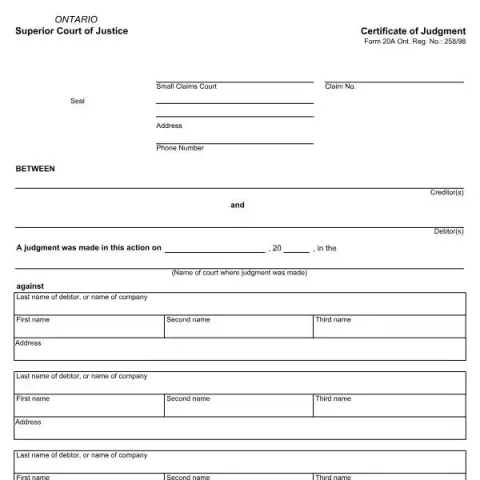
Understanding the Certificate of Judgment (Form 20A) in Ontario's Superior Court of Justice
If you are involved in a legal dispute that has resulted in a judgment against you or in favor of a creditor, you may need to obtain a Certificate of Judgment. This official document, issued by the Ontario Superior Court of Justice, serves as a formal record of a court's decision and the amount owed. Whether you are a creditor seeking to enforce a judgment or a debtor wanting to verify or challenge the judgment, understanding how to complete and use Form 20A is essential.
What is the Purpose of the Certificate of Judgment?
The Certificate of Judgment (Form 20A) is primarily used to:
- Provide official proof of a court judgment for enforcement purposes, such as garnishment or seizure of assets.
- Allow creditors to register the judgment with other agencies or courts to facilitate collection efforts.
- Help debtors verify the existence and details of a judgment against them.
This document is issued after a judgment has been made in a Small Claims Court or the Superior Court of Justice, summarizing the key financial details and identifying the parties involved.
When Should You Use Form 20A?
You should request a Certificate of Judgment in situations such as:
- Enforcing a judgment: To initiate collection actions like garnishments or liens.
- Verifying a judgment: To confirm the amount owed or the existence of a judgment against a debtor.
- Transferring a judgment: When registering the judgment in another jurisdiction or court.
Typically, the creditor or their legal representative will complete this form after obtaining a judgment in court. Debtors may also request a copy if they need to verify details or contest the judgment.
How to Complete Form 20A
Completing the Certificate of Judgment involves providing accurate and complete information in several sections:
1. Court and Case Details
- Name of the court: Indicate the court where the judgment was made.
- Claim number: The case number assigned to the claim.
- Date of judgment: The date when the court issued the judgment.
2. Parties Involved
- Creditor(s): The individual or entity owed money.
- Debtor(s): The individual or entity owing money, including any known aliases or additional debtors listed on attached forms.
- Addresses: Complete addresses for all parties involved.
3. Judgment Amounts and Interest
| Description | Amount |
|---|---|
| Amount of judgment (including pre-judgment interest) | $ |
| Costs to date of judgment | $ |
| Post-judgment interest rate | % per annum |
4. Signatures and Filing
The form must be signed by a court clerk and filed with the appropriate court registry. The requesting party’s name and address should be included to facilitate correspondence and further legal actions.
Transmitting and Using the Certificate
Once completed, the Certificate of Judgment can be transmitted to relevant parties or filed with other courts or agencies. It is often used as evidence of debt when pursuing enforcement actions like garnishments, liens, or registration of the judgment in other jurisdictions.
Fill in your form directly online
No printing: type your details into the boxes of the official form, tick, then download the PDF ready to send.
- 1Type into the form boxes
- 2Tick in one click
- 3Save and download the PDF
It is important to ensure all information is accurate and up-to-date before submitting the form, as errors can delay enforcement or lead to legal complications.
Points of Attention and Practical Tips
- Accuracy: Double-check all party details, amounts, and dates to avoid delays.
- Attachments: Include any additional debtor aliases or related information on attached forms if applicable.
- Filing deadlines: Submit the certificate promptly after judgment to facilitate enforcement.
- Legal advice: Consult a legal professional if you are unsure about the process or implications of the certificate.
Remember, the Certificate of Judgment is an official document that plays a crucial role in the enforcement and management of court judgments in Ontario. Proper completion and timely use of Form 20A can significantly impact the effectiveness of your legal and collection efforts.