Understanding the Amicable Settlement Form (SJ-1002A) of the Canada Court of Québec
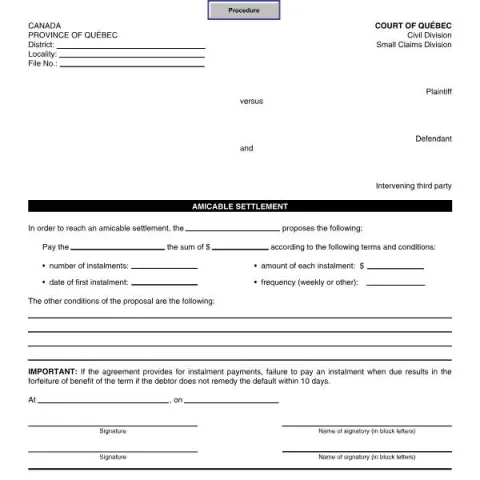
The Canada Court of Québec provides a specific official form, designated as SJ-1002A, titled Amicable Settlement. This form is a crucial procedural tool used within the Civil Division, Small Claims Division, to facilitate the resolution of disputes through mutual agreement. Whether you are a plaintiff, defendant, or intervening third party, understanding how to properly complete and submit this form is essential for ensuring your case progresses efficiently and in accordance with legal procedures.
Objective of the Form and Its Role in the Legal Process
The primary purpose of the Amicable Settlement form is to formalize an agreement between parties involved in a legal dispute. It allows parties to propose terms for resolving their case outside of a court judgment, often through payment plans or other mutually acceptable conditions. When both parties agree on the terms, the form acts as a written record of their settlement, which can then be homologated (approved) by the court to become enforceable as a judgment.
This process encourages amicable resolutions, reducing court workload and fostering agreements that better suit the parties' needs. The form is designed to be straightforward, guiding parties through the essential details of their settlement proposal, including payment amounts, schedules, and additional conditions.
Preparing and Completing the Form
Key Sections to Fill Out
- Parties Involved: Clearly identify the plaintiff, defendant, and any intervening third party. Include their names and roles in the case.
- Settlement Proposal: Specify the total amount to be paid, the number of installments, the amount of each installment, and the date of the first payment. Indicate the frequency (weekly, monthly, etc.) of payments.
- Additional Conditions: Outline any other terms or conditions relevant to the settlement, such as interest rates, collateral, or specific obligations.
- Signatures and Dates: Each party must sign and date the agreement, with their names printed in block letters. The signatures confirm the parties' consent to the proposed terms.
Important Considerations
If the settlement involves installment payments, note that failure to pay an installment when due can lead to the forfeiture of the benefit of the installment plan unless the default is remedied within 10 days. This stipulation emphasizes the importance of adhering to agreed-upon schedules.
Filing and Court Approval Process
Once the parties have signed the agreement, it must be filed with the court within 20 days of the notice of the application. Failure to do so may result in a judgment being rendered without further notice or extension. This step is critical to ensure that the settlement is recognized by the court and can be enforced as an official judgment.
Parties also have the option to request the court to homologate (approve) the settlement, transforming it into a court judgment. This is done by submitting an application for homologation, which must be signed by the parties and filed accordingly. The court clerk then reviews and, if satisfied, homologates the agreement, giving it the force of a judgment.
Fill in your form directly online
No printing: type your details into the boxes of the official form, tick, then download the PDF ready to send.
- 1Type into the form boxes
- 2Tick in one click
- 3Save and download the PDF
Submitting and Managing Your Settlement
Whether you are proposing an initial settlement or seeking homologation, accurate completion and timely filing of the SJ-1002A form are essential. It is advisable to keep copies of all signed documents and to confirm receipt of filings with the court. This ensures that your settlement process proceeds smoothly and reduces the risk of misunderstandings or delays.
Contact and Assistance
For further guidance on filling out the Amicable Settlement form or the homologation process, parties can contact the court clerk's office or consult official court resources. Legal advice may also be sought to ensure that the agreement complies with applicable laws and effectively protects your interests.