Understanding the Official Voting Letter (Division I Proposal) Form in Canada
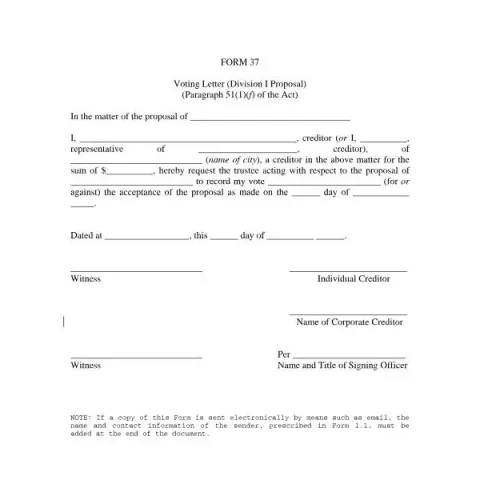
If you are a creditor involved in a bankruptcy proceeding under the Bankruptcy and Insolvency Act, the Form 37 - Voting Letter (Division I Proposal) is a crucial document. It is used to formally cast your vote on whether to accept or reject a proposed Division I proposal submitted by a debtor. This article explains when and how to use this form, what information it requires, and important points to consider when submitting it to the Office of the Superintendent of Bankruptcy Canada.
Purpose and When to Use Form 37
The primary purpose of the Voting Letter is to enable creditors to communicate their support or opposition to a debtor’s proposal. When a debtor files a Division I proposal—an alternative to bankruptcy designed to restructure debts—creditors have the opportunity to vote on its acceptance. The Form 37 provides a standardized way for creditors to record their vote, whether they are for or against the proposal.
This form is typically used after creditors have reviewed the proposal document and the trustee’s report. It is an essential step in the process, as the outcome depends on the collective support of creditors representing a specified percentage of the claims.
How to Complete the Form
Key Sections of the Voting Letter
- In the matter of the proposal of: Write the name of the debtor’s proposal.
- Creditor information: Indicate your name or the name of your organization if you are a corporate creditor.
- Location: State the city where you are located.
- Claim amount: Specify the total amount of your claim in dollars.
- Vote: Clearly state whether you are voting for or against the proposal.
- Date and signature: The form must be dated and signed by the creditor or their authorized representative.
Additional Details
If the voting is submitted electronically, such as via email, the form requires the inclusion of the sender’s name and contact information, as prescribed in Form 1.1. This ensures the authenticity and traceability of the vote.
Submitting the Voting Letter
The completed Form 37 must be sent to the trustee managing the proposal. It can be delivered physically or electronically, depending on the trustee’s instructions. Timeliness is critical: the form must be received by the trustee within the deadline specified in the proposal process to be considered valid.
It is advisable to keep a copy of the submitted form for your records. If you are representing a corporate creditor, the signature must be provided by an authorized officer, with their name and title clearly indicated.
Fill in your form directly online
No printing: type your details into the boxes of the official form, tick, then download the PDF ready to send.
- 1Type into the form boxes
- 2Tick in one click
- 3Save and download the PDF
Points of Attention and Tips
- Review the proposal thoroughly: Before voting, ensure you understand the terms of the proposal and its implications for your claim.
- Meet deadlines: Submit your vote before the deadline specified by the trustee to ensure your vote is counted.
- Use correct information: Fill out all sections accurately to avoid delays or rejection of your vote.
- Electronic submissions: When submitting electronically, include all required contact details as per Form 1.1 to avoid issues with verification.
- Consult legal advice: If uncertain about the implications of your vote, consider seeking legal counsel or financial advice.
Legal Context and Authority
The Voting Letter is governed by paragraph 51(1)(f) of the Bankruptcy and Insolvency Act. It provides a standardized method for creditors to participate in the decision-making process regarding a debtor’s Division I proposal. The Office of the Superintendent of Bankruptcy Canada oversees this process, ensuring transparency and fairness in creditor voting procedures.
In summary, the Form 37 - Voting Letter (Division I Proposal) is a vital document that allows creditors to exercise their voting rights in bankruptcy proceedings. Proper completion, timely submission, and adherence to legal requirements are essential to ensure your vote is effective and counted in the decision-making process.