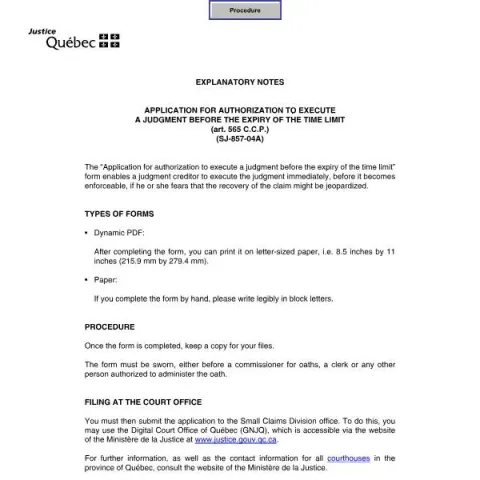
Understanding the Application for Authorization to Execute a Judgment Before the Expiry of the Time Limit in Québec
If you are a judgment creditor in the province of Québec and need to act quickly to recover a debt, the Application for Authorization to Execute a Judgment Before the Expiry of the Time Limit form (SJ-857-04A) offers a legal pathway to enforce your judgment before it becomes enforceable. This process is governed by article 565 of the Code of Civil Procedure (C.C.P.) and is designed to address situations where delaying enforcement could jeopardize recovery.
When to Use This Form
This application is appropriate when you have obtained a court judgment against a party (the defendant or another liable party) but are concerned that waiting until the judgment becomes enforceable might result in losing the opportunity to recover the owed amount. Typically, judgments become enforceable after a specified period unless an appeal or other legal action is filed. If you fear that the debtor might take actions to avoid payment or if there are urgent reasons to proceed immediately, this form allows you to request court permission to execute the judgment early.
Key Information Required in the Application
Completing the form involves providing specific details to justify your request. These include:
- Parties involved: Names of the plaintiff (creditor) and defendant (debtor).
- Judgment details: The date of the judgment and the court that issued it.
- Enforceability date: The date when the judgment will become enforceable.
- Reasons for early enforcement: Clear, factual reasons why delaying enforcement could jeopardize recovery. For example, evidence suggesting the debtor might hide assets or leave the jurisdiction.
- Request for authorization: A specific legal order allowing immediate execution against the defendant.
It is crucial to provide accurate and detailed information, as the court will evaluate the validity of your concerns based on the facts presented.
Filling Out and Swearing the Form
The form can be completed electronically as a dynamic PDF or handwritten in block letters if printed. After filling it out, you must swear or affirm the truth of the information before an authorized person such as a commissioner for oaths or a court clerk. This sworn statement affirms the accuracy of your claims and is necessary for the court to consider your application.
Submitting the Application
Once the form is completed and sworn, you should keep a copy for your records. The application must then be filed at the Small Claims Division office of the Canada Court of Québec. The court offers a digital platform, the Digital Court Office of Québec (GNJQ), accessible via the Ministère de la Justice’s website, which facilitates electronic submissions. Alternatively, you may submit a paper copy in person or by mail, depending on the court’s procedures.
Fill in your form directly online
No printing: type your details into the boxes of the official form, tick, then download the PDF ready to send.
- 1Type into the form boxes
- 2Tick in one click
- 3Save and download the PDF
Points of Attention and Practical Tips
- Legal costs: The application includes a request for legal costs, so be prepared to provide information related to these expenses if applicable.
- Timeliness: Ensure your application is filed before the judgment becomes enforceable to preserve your rights to early enforcement.
- Supporting evidence: Attach any relevant documents that support your claim that immediate enforcement is necessary.
- Legal advice: Consider consulting a legal professional if you are unsure about the grounds for your application or the proper way to complete the form.
Conclusion
The Application for Authorization to Execute a Judgment Before the Expiry of the Time Limit is a vital tool for judgment creditors in Québec seeking to protect their rights and ensure prompt recovery. By understanding the process, correctly completing the form, and providing compelling reasons, you can effectively request early enforcement of your judgment, helping to secure your legal rights efficiently and effectively.