Understanding the Official Affidavit Form (SJ-1139A) in Canada
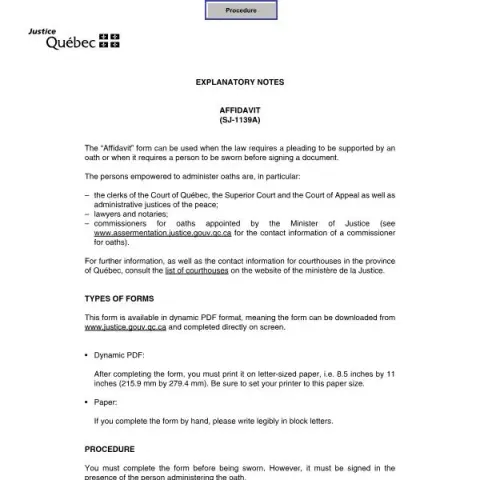
The Affidavit form, designated as SJ-1139A, is an essential legal document used within the Canadian justice system. It serves as a sworn statement of facts that must be supported by an oath or affirmation, depending on the legal requirements of the case. This article provides an overview of the form’s purpose, who can administer oaths, how to complete it properly, and the procedural steps involved in its use.
Purpose and Common Uses of the Affidavit Form
The primary purpose of the SJ-1139A Affidavit is to establish facts under oath in legal proceedings. It is often required in situations such as:
- Supporting applications for court orders or legal claims
- Providing evidence in civil or family law cases
- Affirming the truth of statements in administrative procedures
When a law or court rule mandates that a statement be sworn or affirmed, this form becomes a critical document to ensure the legal validity of the declaration.
Who Can Administer the Oath?
To make an affidavit legally binding, the document must be signed in the presence of a person authorized to administer oaths. In Canada, such persons include:
- Clerks of the Court of Québec, the Superior Court, and the Court of Appeal
- Lawyers and notaries
- Commissioners for oaths appointed by the Minister of Justice
For those in Québec, additional information and contact details for commissioners for oaths can be found on the official website.
How to Complete the Affidavit Form
The SJ-1139A is available as a dynamic PDF document, which can be downloaded and filled out electronically. Here are the key steps to ensure proper completion:
Step 1: Download and Prepare the Form
- Access the form at www.justice.gouv.qc.ca
- Open the form in a compatible PDF reader capable of editing dynamic PDFs
- Set your printer to letter size (8.5" x 11") if you plan to print the completed form
Step 2: Fill Out the Form
Complete all required fields legibly, preferably in block letters if handwriting. The form will ask for:
- Your full name and address
- File or case number, if applicable
- The facts or statements you are affirming or swearing to
- Date and location of signing
Step 3: Sign in the Presence of an Authorized Person
Before signing, ensure the affidavit is fully completed. You must sign the document in front of an authorized individual who will then administer the oath or affirmation. The signer’s signature must be witnessed and signed by the authorized person, who will also include their name, position, and commission number.
Fill in your form directly online
No printing: type your details into the boxes of the official form, tick, then download the PDF ready to send.
- 1Type into the form boxes
- 2Tick in one click
- 3Save and download the PDF
Post-Completion Procedures and Record Keeping
After signing, it is advisable to keep a copy of the signed affidavit for your records. The original, sworn document should be provided to the requesting authority or filed with the relevant court or agency as required.
It is important to note that the affidavit is a sworn statement; providing false information can have serious legal consequences, including charges of perjury.
Summary
The SJ-1139A Affidavit form is a vital legal instrument used across various judicial and administrative contexts in Canada. Proper completion, signing before an authorized official, and adherence to procedural requirements ensure that the affidavit is valid and legally binding. Whether used in court proceedings, administrative claims, or legal declarations, this form helps establish the truth of statements under oath, reinforcing the integrity of legal processes.