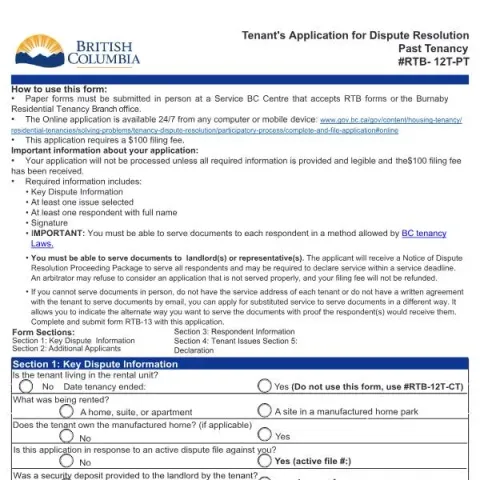
Understanding the Tenant’s Application for Dispute Resolution in Past Tenancy
If you are a tenant involved in a dispute with your landlord regarding a previous tenancy in British Columbia, the Residential Tenancy Branch provides a formal process to resolve these issues. One essential document in this process is the Tenant's Application for Dispute Resolution - Past Tenancy (form RTB-12T-PT). This article explains when and how to use this form, what information it requires, and key points to consider during the process.
When to Use the RTB-12T-PT Form
This application form is specifically designed for tenants who want to initiate a dispute resolution process concerning a past tenancy. It is applicable in cases where the tenancy has already ended, and the tenant seeks remedies such as the recovery of deposits, reimbursement for damages, or other issues related to the previous rental period. If the tenancy is still active, or if the dispute relates to ongoing issues, different procedures or forms may be required.
It’s important to note that if the tenancy has not ended, or if the dispute involves current tenancy issues, tenants should refer to the appropriate forms and procedures outlined by the Residential Tenancy Branch.
Key Information Required on the Application
The form is divided into several sections, each capturing vital details necessary for processing your dispute:
- Section 1: Key Dispute Information — Includes whether the tenant was living in the unit, the end date of tenancy, and the type of rental (home, suite, manufactured home site).
- Section 2: Additional Applicants — If there are co-applicants or representatives, their contact details are recorded here.
- Section 3: Respondent Information — Full legal names and contact details of the landlord or property manager involved in the dispute.
- Section 4: Tenant Issues — Specifies the nature of the dispute, such as security deposit recovery, pet damage deposit, or reimbursement for emergency repairs.
- Section 5: Declaration — The applicant’s signature confirming the accuracy of the information provided.
Additional details, such as amounts claimed or specific damages, should be clearly described. If you are requesting the return of deposits, specify the amount and how the deposit was originally paid.
How to Submit the Application
Applicants have two options for submitting their dispute resolution application:
Fill in your form directly online
No printing: type your details into the boxes of the official form, tick, then download the PDF ready to send.
- 1Type into the form boxes
- 2Tick in one click
- 3Save and download the PDF
- In Person — Submit the completed form at a Service BC Centre that accepts RTB forms or at the Burnaby Residential Tenancy Branch office.
- Online — The application can be filed digitally 24/7 via the official government website dedicated to tenancy dispute resolution.
Note that there is a filing fee of $100 which must be paid at the time of submission. Your application will only be processed if all required fields are completed legibly, and the fee is received.
Important Points and Tips for Applicants
- Proper Service of Documents: You must be able to serve all respondents with the Notice of Dispute Resolution Proceeding package in accordance with BC tenancy laws. Proper service is crucial; otherwise, your application may be dismissed.
- Substituted Service: If direct service is not possible (e.g., respondent cannot be reached in person), you can apply for substituted service by submitting form RTB-13, which allows alternative methods of serving documents.
- Completeness and Legibility: Ensure all sections are filled out accurately and clearly. Missing or illegible information can delay processing or result in rejection.
- Legal and Procedural Awareness: Be aware that the dispute resolution process involves an arbitrator who will review your case based on the submitted documentation and service compliance.
Conclusion
The Tenant's Application for Dispute Resolution - Past Tenancy form is an essential tool for tenants seeking resolution of disputes related to a previous tenancy in British Columbia. Proper completion, timely submission, and adherence to service requirements are critical to ensuring your case is heard. For detailed instructions, assistance, or to access the form online, visit the official government resources dedicated to BC residential tenancy dispute resolution.