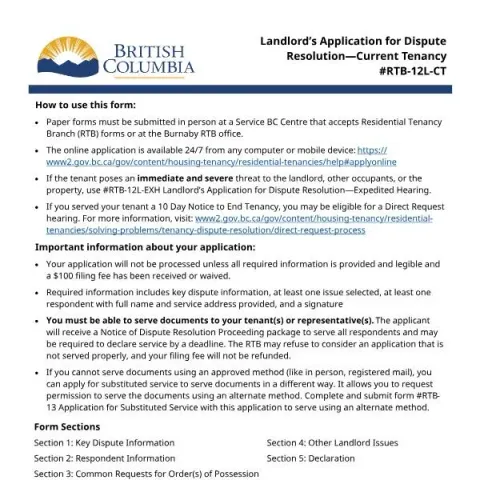
Understanding the Landlord’s Application for Dispute Resolution—Current Tenancy (Form RTB-12L-CT)
If you are a landlord involved in a dispute with a tenant regarding your current rental agreement, you may need to submit an official application to resolve the matter through the Residential Tenancy Branch (RTB). The Form RTB-12L-CT — Landlord’s Application for Dispute Resolution—Current Tenancy — is the formal document used for this purpose. This article explains when and how to use this form, what information it requires, and some key points to keep in mind during the process.
When to Use this Form
This form is applicable when a landlord seeks resolution for a dispute involving an active tenancy. Common situations include:
- Enforcing a notice to end tenancy, such as a 10-day notice for unpaid rent or utilities.
- Applying for an order of possession following a notice served to the tenant.
- Addressing other ongoing issues related to the tenancy that require the RTB’s intervention.
It is important to note that this form is not suitable if:
- The tenant has already vacated the unit (use the appropriate form for possession after vacancy).
- The dispute involves a different legal process (e.g., eviction for cause under specific circumstances).
How to Complete the Form
The form is designed to gather detailed information about the dispute, the parties involved, and the specific orders or remedies sought. It can be submitted either in person or online:
- In person: At a Service BC Centre that accepts RTB forms or the Burnaby RTB office.
- Online: 24/7 via the official government portal at https://www2.gov.bc.ca/gov/content/housing-tenancy/residential-tenancies/help#applyonline.
Key Information Required
To ensure your application is processed, you must provide:
- Details about the dispute, including the nature of the issue and whether it relates to a notice to end tenancy.
- Information about the respondent(s), including full name and service address.
- Identification details such as your name, contact information, and whether you are an individual or a business.
- Details of any security or pet damage deposits paid by the tenant, including amounts.
- The address of the rental unit or site involved.
- Your signature confirming the accuracy of the information provided.
Serving the Respondent and Filing Fees
One critical aspect of the application process is the service of documents to the tenant or respondent. You must be able to serve all relevant documents properly, using approved methods such as in person, registered mail, or other permitted means. If you cannot serve documents through standard methods, you may request permission for substituted service by submitting a separate application.
Fill in your form directly online
No printing: type your details into the boxes of the official form, tick, then download the PDF ready to send.
- 1Type into the form boxes
- 2Tick in one click
- 3Save and download the PDF
Additionally, a filing fee of $100 is required for processing the application unless it is waived under specific circumstances. The fee must be paid when submitting the form, and your application will only be processed once payment is received and all required information is complete and legible.
Important Points to Consider
- Completeness: Ensure all sections are filled out accurately, including dispute details, respondent information, and your signature.
- Service of Documents: Proper service is essential; incomplete or improper service can result in your application being rejected and your fee being forfeited.
- Issue Selection: Clearly identify at least one issue you want the RTB to address, such as possession or a specific order related to unpaid rent.
- Deadlines and Follow-up: Be aware of deadlines for serving documents and responding to notices from the RTB.
Final Advice
Before submitting your application, review all information carefully to avoid delays. If your dispute involves urgent or severe threats, consider using the expedited hearing process. For any uncertainties, consult the official RTB resources or seek legal advice to ensure your application aligns with the current regulations and procedures.