Understanding the "Tenant Notice: Exercising Right of First Refusal" Form (RTB-28)
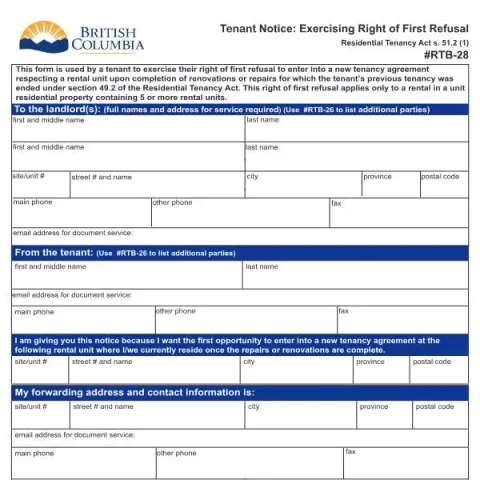
The "Tenant Notice: Exercising Right of First Refusal" form is an official document issued by the Residential Tenancy Branch of British Columbia. It serves as a formal communication from a tenant to a landlord, indicating the tenant's intention to retain their right to rent a unit after renovations or repairs are completed. This form is essential for tenants who wish to exercise their legal right to be offered a new tenancy before the property is leased to another prospective tenant.
Purpose of the Form and Its Legal Context
This form is used specifically when a landlord has issued a notice to end a tenancy under section 49.2 of the Residential Tenancy Act due to renovations or repairs. When the property contains five or more rental units, tenants have a statutory right of first refusal, meaning they have the opportunity to re-enter into a new tenancy agreement once the work is finished. The form formalizes this intention and ensures both parties are aware of their rights and obligations.
Who Should Fill Out This Form?
The tenant who wishes to exercise their right of first refusal must complete and submit this form to the landlord. It is important that the form is filled out in full, including details such as the rental unit address, contact information, and signature. The landlord's details are also required to ensure proper delivery and record-keeping.
How to Complete the Form
Tenant Information
- Provide your full name and contact details, including email and phone numbers.
- Specify the rental unit address where you currently reside.
- Sign and date the form to confirm your intention to exercise your right of first refusal.
Landlord Information
- List the full names and addresses of all landlords or property managers involved.
- Include contact details such as phone numbers and email addresses for service purposes.
Additional Details
- Indicate your forwarding address and contact information for future correspondence.
- Ensure all sections are completed accurately to avoid delays or misunderstandings.
Important Deadlines and Timing
The form must be submitted before the tenant vacates the unit. Once received, the landlord is obligated to provide a Notice of Availability at least 45 days before the unit becomes available for rent. This notice should specify the date the unit will be ready for occupancy and include a new tenancy agreement for the tenant to sign if they choose to exercise their right.
Depositing the Form
The completed form can be delivered to the landlord via several methods:
- In person, directly handing it to the landlord or their agent.
- By mail, using registered or regular mail to the landlord’s address.
- By fax or email, if the landlord has provided a contact for electronic service.
- By leaving a copy in a conspicuous place, such as a mailbox or on the door.
Common Errors to Avoid
To ensure your notice is valid, avoid these frequent mistakes:
Fill in your form directly online
No printing: type your details into the boxes of the official form, tick, then download the PDF ready to send.
- 1Type into the form boxes
- 2Tick in one click
- 3Save and download the PDF
- Failing to complete all required fields, especially contact details and signatures.
- Submitting the form after vacating the unit or outside the required timeframe.
- Using incorrect contact information or methods not accepted by the landlord.
- Not signing or dating the form properly, which can invalidate the notice.
Legal and Practical Considerations
Failure by the landlord to comply with the obligations outlined in the Residential Tenancy Act, such as providing the Notice of Availability or a new tenancy agreement, may result in the landlord being required to pay compensation equivalent to 12 months’ rent, unless extenuating circumstances apply. It is crucial for both tenants and landlords to understand their rights and responsibilities under this process to ensure a smooth transition and avoid legal disputes.
Additional Resources and Support
For further information about this process, tenants and landlords can consult the official website or contact the Public Information Lines provided by the Residential Tenancy Branch. These resources offer guidance on completing the form correctly and understanding legal obligations under the Residential Tenancy Act.