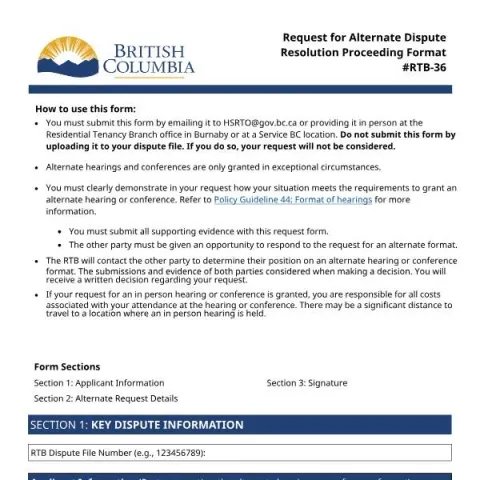
Understanding the RTB-36: Request for Alternate Dispute Resolution Proceeding Format
The RTB-36 form is an official document used by tenants or landlords involved in a dispute under the Residential Tenancy Act in British Columbia. Its primary purpose is to request a different format for a dispute resolution hearing or conference, especially when exceptional circumstances prevent participation in a standard in-person hearing. This guide explains when and how to use this form, what information it requires, and important points to consider to ensure your request is properly submitted.
When to Use the RTB-36 Form
This form is intended for parties who wish to request an alternative format for their dispute resolution hearing or conference. Common reasons include:
- Physical or mental disabilities: If health issues hinder attendance or participation in a traditional setting.
- Geographic or language barriers: When distance, travel difficulties, or language differences prevent effective participation.
- Large number of participants: Situations where multiple parties or witnesses make a standard hearing impractical.
- Legal representation: When both parties are represented by legal counsel, and a different format may be more appropriate.
It's important to note that requests for alternate hearings or conferences are considered only in exceptional circumstances. The Residential Tenancy Branch (RTB) evaluates each request based on the evidence provided.
How to Submit the RTB-36 Request
The form must be completed and submitted via email or in person:
- Email: [email protected]
- In person: At the RTB office in Burnaby or a Service BC location.
It is crucial not to upload the form directly to your dispute file, as this will result in your request not being considered. Supporting evidence must be attached with your submission, but note that evidence cannot be sent by email—original documents should be provided in person or via other accepted methods.
Completing the Form: Key Sections and Required Information
Section 1: Dispute and Applicant Details
You must provide:
- Dispute file number: Found in your dispute resolution package.
- Applicant information: Name, address, and whether you are a tenant or landlord.
- Dispute address: The property involved in the dispute.
- Hearing date and time: As scheduled in your dispute package.
Section 2: Grounds for Request
Here, you must clearly specify the reasons for your request, selecting all applicable grounds such as:
- Physical or mental disability
- Geographic or language barriers
- Both parties have legal representation
- Large number of participants
Supporting evidence must be provided to substantiate these claims, such as medical documentation or proof of language barriers.
Fill in your form directly online
No printing: type your details into the boxes of the official form, tick, then download the PDF ready to send.
- 1Type into the form boxes
- 2Tick in one click
- 3Save and download the PDF
Section 3: Type of Hearing Requested
You can specify whether you are requesting an in-person hearing or another format, such as a conference call or video hearing, if available.
Important Points and Tips for a Successful Request
- Timeliness: Submit your request as soon as possible, ideally before the scheduled hearing date. For expedited hearings, the request must be made within three days of receiving the notice.
- Complete Evidence: All supporting documents should be attached to your request to demonstrate the need for an alternative format.
- Response from the Other Party: The RTB will notify the opposing party and consider their response when making a decision.
- Costs: If your request is granted, you are responsible for any additional costs associated with participating in the alternative format, such as travel or technology fees.
Final Steps and Decision
Once your request is reviewed, the RTB will send you a written decision with reasons. If approved, arrangements for the new hearing format will be made, and both parties will be notified accordingly. It is essential to keep copies of all correspondence and evidence submitted for your records.
By understanding the purpose and proper completion of the RTB-36 form, you can effectively seek an alternative dispute resolution process that accommodates your circumstances, ensuring your voice is heard in the resolution of your tenancy dispute.