Understanding the Official Notice of Lease Termination Due to Allocation in Low-Rental Housing
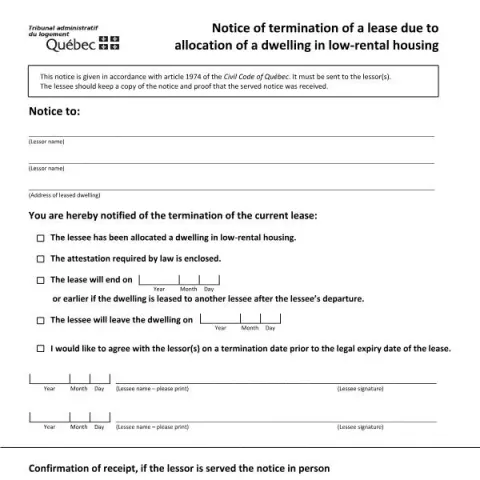
If you are a tenant in Quebec and have recently received a Notice of termination of a lease due to allocation of a dwelling in low-rental housing, it is important to understand the purpose of this document, the legal framework behind it, and how to properly respond or prepare your case. This official form, identified as Code: TAL-812A-E, is issued by the Tribunal administratif du logement (TAL) and plays a crucial role in the tenant-landlord relationship when a tenant is allocated a subsidized or low-rental dwelling.
What Is the Purpose of This Form?
This form serves as an official communication from the landlord to the tenant, informing them that their current lease will be terminated because they have been allocated a dwelling in low-rental housing. Such housing is typically managed by the Société d’habitation du Québec (SHQ) or other authorized entities that operate under subsidies or specific regulations. The notice ensures that both parties are aware of the upcoming lease end, and it provides a legal basis for the termination, in accordance with article 1974 of the Civil Code of Québec.
When and Why Is This Notice Issued?
The notice is issued when a tenant qualifies for a subsidized or low-rental housing unit. This could happen if:
- The tenant is officially allocated a dwelling in low-rental housing by the appropriate authority.
- The tenant is relocated due to a decision by the Tribunal administratif du logement.
In either case, the notice must be accompanied by an attestation from the relevant authority confirming the allocation or relocation. This document is essential to validate the legal grounds for ending the current lease.
How to Prepare and Submit the Notice
Preparing this notice involves filling out the official form accurately. You should include:
- The name(s) of the lessor(s) and their address.
- The date when the tenant received the notice.
- The date when the lease will end, which is generally two months after the notice if the lease term is 12 months or more, or one month if less than 12 months or of indeterminate duration.
- The tenant’s name(s), printed and signed.
- Optional agreement on an earlier termination date, if both parties agree.
It is advisable for tenants to keep a copy of the notice and proof of receipt, especially if served in person or by mail, for their records and potential future reference.
Modalities of Delivery and Legal Effects
The notice can be sent via mail or delivered in person. Once received, the lease will typically terminate two months after the notice if the lease is for 12 months or more, or after one month if shorter or of indeterminate duration. The lease may end earlier if the dwelling is re-leased to another tenant during this period or if both parties agree to an earlier date.
Tenants are required to continue paying rent until the official termination date. If part of the rent covers specific services, tenants are only responsible for paying for those services provided before vacating. Conversely, landlords must cease charging for services after the tenant moves out.
Fill in your form directly online
No printing: type your details into the boxes of the official form, tick, then download the PDF ready to send.
- 1Type into the form boxes
- 2Tick in one click
- 3Save and download the PDF
Important Legal Considerations
The form references the relevant legal provisions, notably article 1974 of the Civil Code of Québec, which governs lease terminations related to allocation in subsidized housing. It also emphasizes the importance of the attestation from the appropriate authority and the legal deadlines for notice, which vary depending on the lease duration.
Follow-Up and Contact Information
After sending the notice, tenants should verify receipt and keep documentation of the process. If there are disputes or questions about the termination, tenants can contact the Tribunal administratif du logement for guidance or assistance. The TAL can also provide information about rights and obligations during the lease termination process.
In summary, this official notice form is a vital document ensuring transparency and legality when a tenant’s lease is terminated due to allocation in low-rental housing. Proper understanding and adherence to legal procedures will help both tenants and landlords manage this transition smoothly.