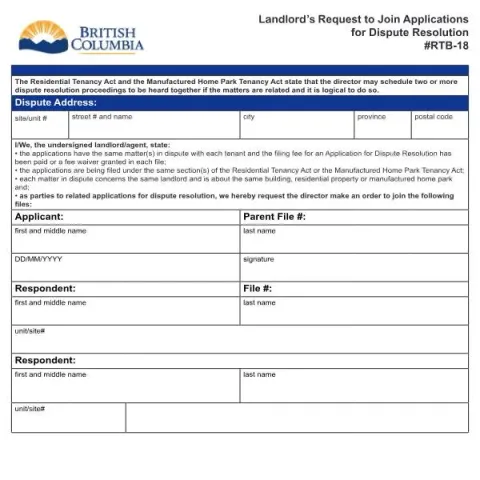
Understanding the Landlord’s Request to Join Applications for Dispute Resolution (Form RTB-18)
If you are a landlord involved in multiple disputes with tenants that are related, you may consider requesting to have these cases heard together. The Landlord’s Request to Join Applications for Dispute Resolution (Form RTB-18) is the official document used in British Columbia’s residential housing system to facilitate this process. This article provides an overview of the form’s purpose, eligibility criteria, and the step-by-step procedure for completing and submitting it.
Purpose and Scope of Form RTB-18
The Residential Tenancy Act and the Manufactured Home Park Tenancy Act empower the director to consolidate related dispute resolution proceedings. When multiple applications involve the same landlord and concern similar issues—such as rent disputes, maintenance, or eviction matters—joining these cases can streamline the process and promote judicial efficiency.
Form RTB-18 is used by landlords or their agents to formally request that the Residential Tenancy Branch (RTB) combine two or more related applications. This consolidation can save time and resources for all parties involved, provided the cases meet specific criteria outlined by the legislation.
Eligibility Criteria for Joining Applications
Before completing the form, ensure that the following conditions are met:
- The applications involve the same matter(s) in dispute with each tenant, and the applicable filing fee has been paid or a fee waiver has been granted for each application.
- The applications are filed under the same section(s) of the Residential Tenancy Act or the Manufactured Home Park Tenancy Act.
- All disputes concern the same landlord and relate to the same residential property, building, or manufactured home park.
- The cases are sufficiently related to justify being heard together, such as overlapping issues or common legal questions.
If these conditions are satisfied, you may proceed with submitting the RTB-18 form to request consolidation.
Step-by-Step Procedure for Filling Out the RTB-18 Form
1. Complete the Dispute Address Section
Provide the full address of the dispute location, including:
- Site or unit number
- Street number and name
- City, province, and postal code
2. Identify the Parties
Fill in your details as the landlord or agent:
- Print your first and middle names, last name
- Sign and date the form
Similarly, list each respondent (tenant) involved in the related applications:
- For each respondent, indicate the file number assigned to their application
- Provide their full name and the unit or site number
3. Specify the Files to be Joined
Clearly list all the file numbers of the applications you wish to consolidate. Ensure that each file pertains to a related dispute involving the same landlord and property.
4. Review and Submit
After completing the form, review all information for accuracy. Submit the completed RTB-18 form to the Residential Tenancy Branch through the designated channels, which may include online submission via the official government platform or in person, depending on current procedures.
Fill in your form directly online
No printing: type your details into the boxes of the official form, tick, then download the PDF ready to send.
- 1Type into the form boxes
- 2Tick in one click
- 3Save and download the PDF
Important Considerations and Deadlines
The RTB-18 form should be submitted promptly once you determine that multiple applications are related and should be heard together. While there is no explicit deadline specified for filing the request, timely submission can help avoid delays in dispute resolution. Keep in mind that the director will review your request and decide whether consolidation is appropriate based on the provided information and legal criteria.
After Submission: What to Expect
Once the RTB-18 is received, the Residential Tenancy Branch will assess whether the applications can be joined. You will be notified of the decision, and if approved, the cases will be scheduled to be heard together. This process aims to ensure a fair and efficient resolution of disputes involving related issues.
For further information or assistance, you can visit the official government website or contact the Public Information Lines provided in the official instructions accompanying the form.