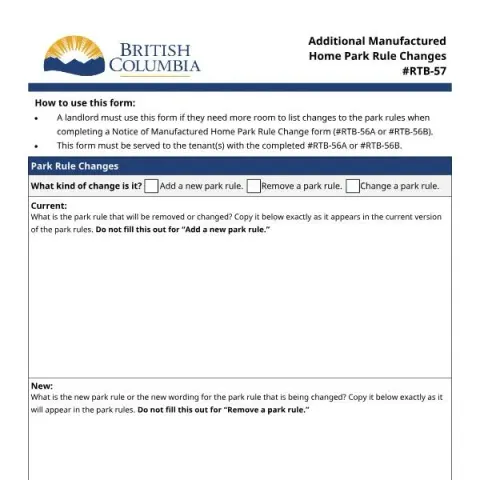
Understanding the RTB-57 Form: Additional Manufactured Home Park Rule Changes
If you are a landlord managing a manufactured home park in British Columbia, the Residential Tenancy Branch provides specific procedures for modifying park rules. The RTB-57 form, titled Additional Manufactured Home Park Rule Changes, is an essential document to ensure that any updates to park rules are properly communicated and legally compliant. This article guides you through the purpose, eligibility, and step-by-step process of completing this form.
Purpose and Scope of the RTB-57 Form
The RTB-57 form is designed for landlords who need to include additional details or changes to park rules when submitting a Notice of Manufactured Home Park Rule Change using either form #RTB-56A or #RTB-56B. It serves as an appendix to specify modifications such as adding new rules, removing existing ones, or amending current rules.
Proper use of this form ensures that the park’s rules remain transparent and enforceable, aligning with the Residential Tenancy Act and related regulations. It also guarantees that tenants are fully informed of the changes, which is critical for maintaining good landlord-tenant relations and avoiding disputes.
Who Should Use the RTB-57 Form?
This form is mandatory for landlords who:
- Need to expand on the details of rule changes when submitting a notice (#RTB-56A or #RTB-56B).
- Are updating existing park rules by adding, removing, or modifying rules.
It is not necessary to fill out the RTB-57 if you are only adding a new rule without referencing existing rules or making changes to current rules. The form must be served directly to tenants along with the notice of change to ensure they are informed of the updates.
Step-by-Step Procedure for Filling Out the RTB-57 Form
1. Identify the Type of Change
Begin by selecting the appropriate category for your rule change:
- Add a new park rule
- Remove an existing park rule
- Change an existing park rule
2. Document the Current Rule
Copy the exact wording of the current rule as it appears in the existing park rules. This helps clarify which rule is being modified or removed and maintains transparency.
Note: Do not fill this section if you are adding a new rule.
3. Specify the New or Modified Rule
Provide the exact wording of the new rule or the revised version of the existing rule. This should match the language that will appear in the updated park rules.
Note: Do not complete this section if you are removing a rule without replacement.
4. Complete the Form and Serve to Tenants
After filling out the form, ensure it is served to all tenants as part of the notice process. This step is crucial to meet legal requirements and to keep tenants informed of the specific changes affecting their tenancy.
Fill in your form directly online
No printing: type your details into the boxes of the official form, tick, then download the PDF ready to send.
- 1Type into the form boxes
- 2Tick in one click
- 3Save and download the PDF
Important Deadlines and Legal Considerations
While the RTB-57 form itself does not specify deadlines, it must be submitted along with the Notice of Park Rule Change (forms #RTB-56A or #RTB-56B). The notice period for rule changes typically aligns with the requirements set out in the Residential Tenancy Act, which often involves providing tenants with a minimum of 30 days' notice before the changes take effect.
It is advisable to review the latest guidelines from the Residential Tenancy Branch to ensure compliance with all procedural and timing requirements. Proper documentation and timely communication help prevent disputes and ensure enforceability of the new rules.
After Submitting the RTB-57 Form
Once the form is served and the notice period expires, landlords can implement the changes as outlined. It is recommended to keep copies of all submitted documents and proof of service to demonstrate compliance if needed.
In summary, the RTB-57 form is a key tool for landlords to clearly communicate and document modifications to manufactured home park rules, ensuring transparency and legal adherence throughout the process.