Understanding the Official Notice for Change of Dwelling Use in Quebec
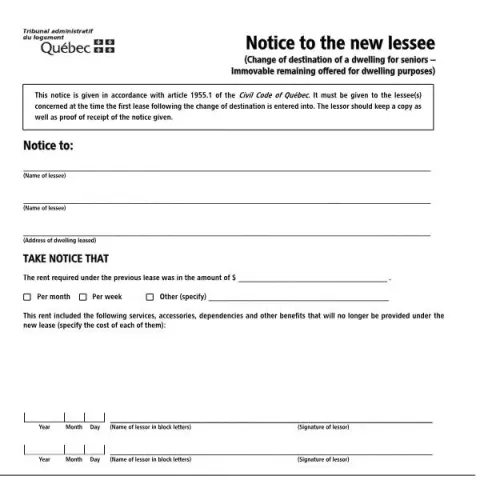
If you are a landlord or a tenant involved in a private seniors’ residence or similar lodging facility in Quebec, it’s important to understand the requirements when the property’s use changes but remains available for dwelling purposes. The Notice to the new lessee (Change of destination of a dwelling for seniors – Immovable remaining offered for dwelling purposes) form, issued by the Tribunal administratif du logement (TAL), plays a crucial role in this process.
When to Use This Notice
This official form must be completed and provided to the new tenant when a dwelling’s purpose shifts within a seniors’ residence or similar facility, but the unit continues to be offered as a residence. For example, if a unit transitions from a specialized service-oriented use to standard dwelling use, the lessor is required to notify the prospective tenant about the rent previously charged and the services that will no longer be included.
It is essential to use this notice at the moment of entering into the first lease following the change in the dwelling’s destination. The law stipulates that the lessor must keep a copy of the notice and proof of delivery or receipt, ensuring transparency and legal compliance.
Key Information Required in the Notice
Details About the Previous Lease
- The rent amount under the previous lease, specified in dollars.
- Services, accessories, dependencies, and benefits included in the previous rent that will no longer be provided. The form requires a detailed list, including the cost of each item or service.
Information About the New Lease
The rent for the new lease must reflect the previous rent minus the value of the services or benefits that are no longer included. The form allows for adjustments to the rent based on regulations concerning rent setting, but the initial amount must be clearly communicated to the tenant.
Legal Obligations and Points of Attention
The Notice to the new lessee is mandated by article 1955.1 of the Civil Code of Quebec. Its purpose is to inform the tenant accurately about the changes in rent and services, ensuring transparency and legal protection for both parties.
If the rent charged under the new lease appears to be non-compliant with legal standards, the tenant has the right to apply to the Tribunal administratif du logement within one month of signing the lease. Conversely, if the landlord fails to give the notice, the tenant can make an application within two months of the lease start date or upon discovering any misrepresentation in the notice.
How to Complete and Transmit the Form
The form must be filled out in full, including the names of both the lessor and the lessee, the address of the dwelling, and the detailed rent and service information. Signatures from both parties are required to acknowledge receipt and agreement.
Fill in your form directly online
No printing: type your details into the boxes of the official form, tick, then download the PDF ready to send.
- 1Type into the form boxes
- 2Tick in one click
- 3Save and download the PDF
Once completed, the lessor should deliver the notice directly to the tenant, either in person or by another approved method, and retain a copy along with proof of delivery. The tenant’s acknowledgment of receipt should also be documented with signatures and dates.
Conclusion
This official TAL-824A-E form serves as a vital legal document that ensures transparency during a change of use within seniors’ residences or similar facilities. Both landlords and tenants benefit from clear communication regarding rent adjustments and the removal of services or benefits. Adhering to these legal requirements helps prevent disputes and ensures that the rights of both parties are protected under Quebec law.