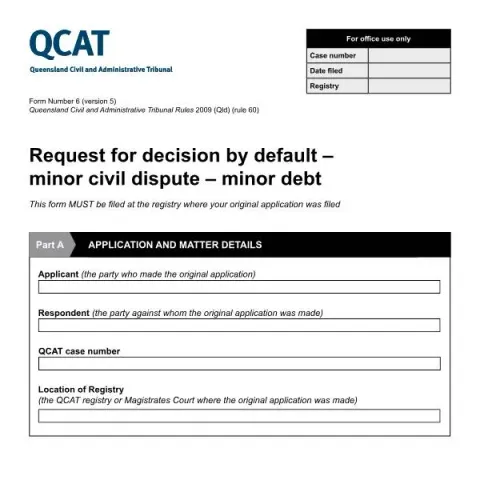
Understanding Queensland Civil and Administrative Tribunal Form 6: Request for Decision by Default in Minor Civil Disputes
If you've been involved in a minor civil dispute in Queensland, particularly regarding a small debt, you may need to request a decision by default. This process is formalized through Form 6, which is used to ask the Queensland Civil and Administrative Tribunal (QCAT) to make a decision because the respondent has not responded or participated in the case. This guide explains what this form is, who should fill it out, how to complete it, and the key steps involved in the process.
What is the purpose of Form 6?
Form 6 serves as a formal request for a decision by default when the respondent in a minor civil dispute, typically involving a debt, has failed to respond or participate in the proceedings. The form is essential for applicants who wish to proceed with their case without the respondent's involvement, provided they can demonstrate that the respondent was properly served with the relevant documents. It streamlines the process, allowing the tribunal to resolve disputes efficiently when the respondent does not contest the claim.
Who should complete this form?
This form is intended for applicants who have already filed an initial application with QCAT and are seeking a default judgment because the respondent:
- Has not responded to the original application within the required timeframe, or
- Has failed to appear or participate in the hearing, despite being served.
It is crucial that the applicant has properly served the respondent with the relevant documents, and proof of service must be attached or included in the application.
How to fill out Form 6
Part A: Application and Matter Details
Complete the details of your original application, including the QCAT case number, the registry location where the case was filed, and your details as the applicant. This section ensures the tribunal can locate your case and verify your claim.
Part B: Affidavit of Service
This section must be filled out to confirm that the respondent was properly served with the documents. You need to specify:
- How the respondent was served (personal delivery, service on a company, interstate service, etc.),
- The date and time of service,
- Details of the person who served the documents, including their signature and address.
For example, if you personally delivered the documents, you should tick the relevant box and provide details of the delivery. If serving a company, you must specify the method of service, such as leaving the documents at the registered office or delivering them to a director.
Part C: Affidavit of Debt
This section confirms the amount claimed and whether the respondent has paid any part of it. You need to declare:
Fill in your form directly online
No printing: type your details into the boxes of the official form, tick, then download the PDF ready to send.
- 1Type into the form boxes
- 2Tick in one click
- 3Save and download the PDF
- The nature of the claim (e.g., a debt or liquidated demand),
- The amount owed,
- Whether the respondent has paid part of the claim, and if so, how much.
Additionally, if you have spoken with someone who has custody of the records, you can include details about what they have informed you regarding payments received or outstanding.
Key steps after completing the form
- Attach proof of service: You must provide evidence that the respondent was served correctly, such as an affidavit of service.
- File the form: Submit the completed Form 6 at the same registry where your original application was filed. This can often be done in person or via the tribunal's online system if available.
- Pay any applicable fees: Check with the tribunal for current fee requirements for requesting a decision by default.
- Await the tribunal's decision: If the tribunal is satisfied that service was properly completed and the respondent did not respond, it may grant a default judgment, allowing you to enforce your claim.
Common errors to avoid
To ensure your application is successful, avoid these frequent mistakes:
- Failing to serve the respondent correctly or providing incomplete proof of service.
- Not completing all sections of the affidavit accurately, especially regarding the amount owed and payment history.
- Submitting the form without the necessary supporting documents or evidence.
- Omitting details such as the case number or registry information, which can delay processing.
Conclusion
Form 6 is a vital tool for applicants seeking a quick resolution in minor civil disputes involving debts, especially when the respondent fails to respond. Proper completion, accurate proof of service, and adherence to tribunal procedures are essential for obtaining a default decision. If you are unsure about any part of the process, consider consulting the Queensland Civil and Administrative Tribunal's resources or seeking legal advice to ensure your application is correctly prepared and filed.