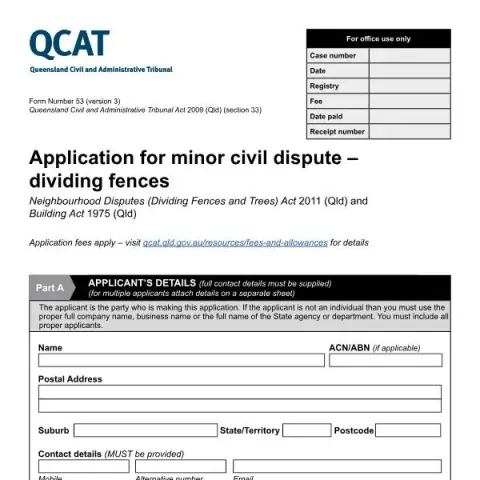
Understanding the Queensland Civil and Administrative Tribunal Form 53 for Dividing Fences
If you are involved in a dispute with a neighbour over a dividing fence in Queensland, you may need to submit a formal application to the Queensland Civil and Administrative Tribunal (QCAT). The official document for initiating such a case is known as Form 53 – Application for minor civil dispute – dividing fences. This guide explains the purpose of this form, who should fill it out, and how to do so correctly.
What is the purpose of Form 53?
Form 53 is designed to help property owners resolve disputes about dividing fences under Queensland law. It covers issues such as building a new fence, repairing an existing one, or determining contributions towards fencing costs. This form is used when negotiations with a neighbour have failed, and legal intervention through QCAT is necessary to reach an agreement or obtain an order.
Who should complete this form?
This form must be filled out by the person initiating the dispute, known as the applicant. The applicant can be an individual property owner or an organization with land interests in Queensland. If there are multiple applicants, they need to attach details on a separate sheet. The respondent is the party against whom the application is made, typically the neighbour involved in the fencing issue.
How to fill out Form 53
Applicant Details
Provide full contact details, including your name, postal address, phone number, and email. If you identify as Aboriginal or Torres Strait Islander, you should indicate this on the form. You must also specify whether you are acting as an individual or on behalf of a company or government agency. For representation, you may need to complete additional forms, such as Form 56, if you wish to be legally represented before the tribunal.
Respondent Details
Similarly, include the full contact details of the neighbour or party you are disputing with. Remember, applications regarding fencing can only be made against landowners; tenants are not eligible unless they own the land or have specific legal rights under tenancy laws.
Details of the Dispute
Specify what the dispute concerns. Common issues include:
- A new dividing fence to replace an existing one
- The construction of a new dividing fence
- Other related issues, such as repairs or contributions
Indicate the exact street addresses of the properties involved. This information helps the tribunal understand the location and scope of the dispute.
Notice to the Respondent
Before applying, you should have served the respondent with a notice about the fencing work. The form asks whether this notice was given, the type of notice used (such as a Notice to Contribute for non-urgent or urgent fencing work), and the date it was served. If no notice was served, you must attach a letter explaining why.
Fill in your form directly online
No printing: type your details into the boxes of the official form, tick, then download the PDF ready to send.
- 1Type into the form boxes
- 2Tick in one click
- 3Save and download the PDF
Important considerations when completing the form
- Jurisdiction limitations: If the dispute involves a retaining wall rather than a fence, the tribunal may not have jurisdiction. Retaining walls often involve engineering and planning considerations beyond fencing laws.
- Accurate information: Ensure all contact details are correct and complete. Inaccurate or incomplete forms can delay or dismiss your application.
- Attachments: Include copies of notices served to the respondent or any relevant correspondence, especially if the tribunal requires proof of notice.
- Application fees: Be aware that submitting this form involves a fee, which varies depending on the case. Check the current fee schedule on the QCAT website.
Where and how to submit the form
Once completed, the form can be lodged via the QCAT online portal through myGov, in person at a QCAT registry, or by mail. Ensure all sections are filled out accurately to prevent processing delays. After submission, the tribunal will review your application and notify both parties of the next steps.
Common errors to avoid
- Failing to serve the respondent with the required notices before applying
- Providing incomplete or incorrect property addresses
- Not attaching necessary supporting documents, such as notices or correspondence
- Submitting the form without paying the applicable fee
In summary, Form 53 is a vital document for property owners in Queensland seeking tribunal assistance to resolve fencing disputes. Proper completion and adherence to procedural requirements are essential for a smooth process and fair resolution.