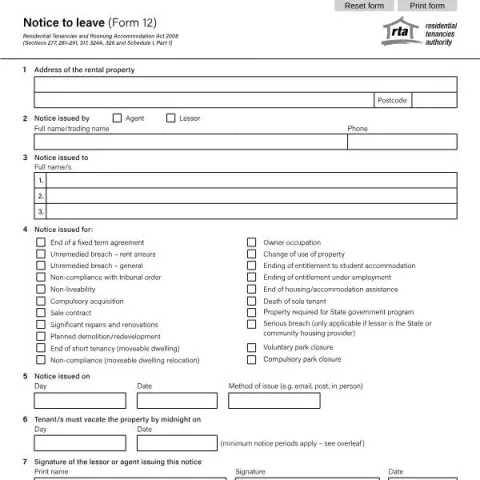
Understanding the Notice to Leave (Form 12) by the Residential Tenancies Authority
The Notice to Leave (Form 12) is an official document issued under the Residential Tenancies and Rooming Accommodation Act 2008 in Queensland, Australia. It serves as a formal notification from a landlord or their agent to a tenant, indicating that the tenant must vacate the rental property by a specified date. This form is a crucial part of the tenancy termination process, outlining the grounds for ending the tenancy and ensuring compliance with legal notice periods.
Purpose and Scope of the Form
The primary purpose of the Form 12 is to inform tenants that they are required to leave the property within a certain timeframe, based on the reason for termination. It covers various grounds, such as the end of a fixed-term agreement, breach of tenancy obligations, sale of the property, owner occupation, or planned renovations. The form ensures that both parties are aware of the reasons for the notice and the legal obligations involved.
This notice is applicable to both periodic and fixed-term agreements, as well as to tenants residing in moveable dwellings. It is a legal requirement to serve this notice properly to avoid disputes or delays in the eviction process.
Who Should Fill Out the Form?
The lessor (landlord) or their authorised agent is responsible for completing and issuing the Form 12. It must be filled out accurately, including details about the rental property, the tenant(s), the reason for termination, and the date by which the tenant must vacate. The form must be signed and dated by the issuer, confirming its authenticity.
How to Complete the Notice to Leave
Step 1: Fill in the Property Details
Provide the full address of the rental property, including the postcode. This ensures clarity about which property the notice pertains to.
Step 2: Identify the Issuer
Enter the full name or trading name of the landlord or agent issuing the notice, along with their contact phone number.
Step 3: Identify the Tenant
List the full name(s) of the tenant(s) receiving the notice. Multiple tenants should be named if applicable.
Step 4: Specify the Grounds for Notice
Select the appropriate reason for ending the tenancy, such as the end of a fixed-term agreement, breach, sale, or owner occupation. The form provides a list of grounds, each with specific notice period requirements.
Step 5: Indicate the Issue Date and Method
Record the date the notice is issued and the method of delivery (e.g., email, postal service, in person). Proper documentation of how the notice was served is essential.
Step 6: Set the Vacate Date
Specify the date and time (midnight) by which the tenant must vacate the property. The minimum notice periods vary depending on the grounds for termination and tenancy type, as outlined in the legislation.
Fill in your form directly online
No printing: type your details into the boxes of the official form, tick, then download the PDF ready to send.
- 1Type into the form boxes
- 2Tick in one click
- 3Save and download the PDF
Step 7: Sign and Date
The issuer must sign and date the form, confirming its validity and adherence to legal requirements.
Important Considerations
- Notice Periods: The legislation prescribes minimum notice periods, which depend on the reason for termination and tenancy type. For example, 2 months’ notice is generally required for ending a fixed-term agreement or owner occupation, whereas shorter periods apply for breaches or non-compliance.
- Service of Notice: The notice must be delivered via a method that allows proof of service, such as registered post or in person. When sent by mail, additional days should be allowed for delivery.
- Dispute Resolution: If tenants dispute the reason for the notice or refuse to vacate, they can seek assistance from the Residential Tenancies Authority dispute resolution service or apply to the Queensland Civil and Administrative Tribunal (QCAT).
- Legal Compliance: The landlord or agent must not send this form to the RTA directly; it should be given to the tenant and retained for records. Failure to follow proper procedures can result in delays or legal challenges.
Next Steps After Issuance
If tenants do not vacate by the specified date, the landlord or agent can apply to QCAT for a termination order. It is important to note that tenants cannot be forcibly evicted without a warrant of possession issued by the tribunal. The process ensures that tenants’ rights are protected while allowing landlords to regain possession legally.
In summary, the Notice to Leave (Form 12) is a vital document for managing tenancy terminations in Queensland. Its correct completion and proper service are essential to ensure a lawful and smooth transition for both landlords and tenants.