Understanding the Entry Notice (Form 9) for Residential Tenancies in Australia
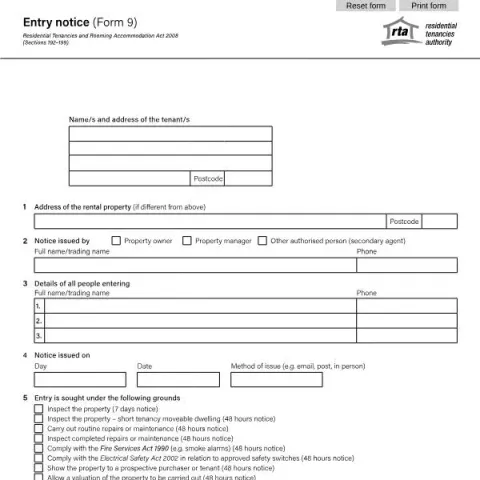
The Entry Notice (Form 9) is an official document issued under the Residential Tenancies and Rooming Accommodation Act 2008 in Queensland. Its primary purpose is to inform tenants when their landlord, property manager, or another authorized person intends to enter the rental property. This form is essential for both landlords and tenants to ensure proper communication and compliance with legal requirements surrounding property access.
Purpose and Importance of the Form 9
The main objective of the Form 9 is to provide tenants with advance notice of entry, specifying the date, time, and grounds for entry. This ensures tenants are aware of when and why their privacy will be temporarily interrupted, aligning with legal obligations to balance property rights and tenants’ privacy rights. The notice also helps tenants prepare for the visit, whether for inspections, repairs, or other reasons outlined in the legislation.
How to Prepare and Fill Out the Form
Completing the Form 9 involves several key steps:
- Details of the tenant(s): Include full names and addresses, as well as postcodes.
- Property information: Specify the address of the rental property if different from the tenant’s address.
- Issuer information: Indicate whether the notice is issued by the property owner, property manager, or another authorized person. Provide their full name or trading name and contact details.
- Details of all persons entering: List all individuals who will be entering the property, including their full names and contact numbers.
- Reason for entry: Select the appropriate grounds from options such as inspections, repairs, showing the property, or suspected abandonment. Each reason has specific notice periods and conditions.
- Entry scheduling: Specify the date, time, and duration of the entry. Note that entry outside of standard hours (before 8am or after 6pm) requires tenant agreement.
- Signature: The form must be signed and dated by the property owner, manager, or authorized person.
Modalities of Delivery and Record Keeping
The Form 9 must be given directly to the tenant, not sent to the Residential Tenancies Authority (RTA). Acceptable methods of issue include in person, email, or postal mail, provided the tenant receives the notice within the required timeframe. It is recommended for landlords and agents to keep copies of the completed form for their records, as proof of notice given.
Timing and Legal Considerations
The legislation specifies different notice periods depending on the reason for entry:
- Inspection (standard or short tenancy): 7 days or 48 hours respectively, with restrictions on frequency.
- Repairs, maintenance, or safety checks: 48 hours’ notice, with some exceptions for urgent or remote repairs.
- Showing the property or valuation: At least 48 hours’ notice, with a reasonable time lapse since the last entry.
- Suspected abandonment or breach remediation: 48 hours’ notice.
- Emergency or imminent damage: No notice required.
It is important for tenants and landlords to understand these timeframes to ensure legal compliance and avoid disputes. If tenants believe the notice has been improperly issued or the grounds are invalid, they should attempt to resolve the matter directly or seek dispute resolution through the RTA’s services.
Fill in your form directly online
No printing: type your details into the boxes of the official form, tick, then download the PDF ready to send.
- 1Type into the form boxes
- 2Tick in one click
- 3Save and download the PDF
Additional Support and Contact Information
For assistance in completing or understanding the Form 9, tenants and landlords can contact the Residential Tenancies Authority at 1300 366 311 during business hours. The RTA also offers interpreter services and guidance on their official website. Both parties are encouraged to communicate clearly and maintain records of all notices issued and received to ensure transparency and compliance with tenancy laws.
Summary
The Entry Notice (Form 9) is a vital document that facilitates lawful and respectful access to rental properties. Proper completion, timely delivery, and understanding of the legal grounds and notice periods help maintain good landlord-tenant relationships and ensure adherence to Queensland’s tenancy legislation.