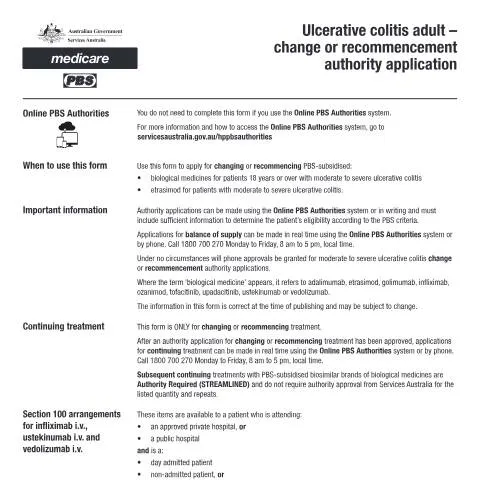
Navigating the PB245: A Vital Step for Ulcerative Colitis Patients
For many individuals diagnosed with ulcerative colitis, the journey through the healthcare system can be fraught with challenges. One crucial document that plays an integral role in accessing necessary healthcare services is the PB245 form, formally known as the "Ulcerative colitis adult - change or recommencement authority application form." This document is not just a formality; it serves as a gateway for patients to articulate their needs and seek appropriate treatment adjustments. Understanding the nuances of this form can empower patients to effectively advocate for their health and well-being.
The Significance of PB245 in Healthcare Management
The PB245 form is essential for those who are on specific treatments for ulcerative colitis and need to request changes or recommencement of their medication under the framework provided by Services Australia. Patients often find themselves in situations where their treatment regimen requires modification due to various factors such as adverse effects, effectiveness issues, or changes in medical advice.
By submitting the PB245, individuals signal a shift in their treatment needs. This document not only highlights the medical necessity but also ensures that healthcare professionals are kept informed about the patient's evolving condition. It is through this process that patients can receive the most effective treatments tailored to their specific circumstances, ultimately leading to better health outcomes.
Who Needs to Fill Out the PB245?
The PB245 is specifically designed for adult patients diagnosed with ulcerative colitis who are currently receiving treatment but require a change or recommencement of their medication. However, understanding whether you fall under this category can sometimes be complex. Here are a few scenarios that may necessitate the completion of this form:
- Adverse Reactions: If a patient experiences significant side effects from their current medication, they may need to request an alternative.
- Change in Symptoms: An escalation of symptoms or a shift in disease activity can warrant a reevaluation of the treatment plan.
- Medical Advice: Recommendations from healthcare providers for changes in medication due to new clinical guidelines or personal health assessments.
It's crucial for patients to engage with their healthcare providers to determine the necessity of this form based on their individual health scenarios.
Decoding the PB245: Key Sections Explored
To effectively complete the PB245, patients must understand the various sections of the form. Here’s a detailed breakdown of the primary components, highlighting potential pitfalls and important considerations:
Patient Information
The first section requires basic patient details. Ensure that all information is accurate and up-to-date:
- Full Name: This should match the name on official health records.
- Date of Birth: Use the format DD/MM/YYYY to avoid confusion.
- Contact Information: Provide current and reliable contact details.
Double-check for typographical errors that could lead to delays in processing.
Medical History and Current Treatment
This section is critical as it provides healthcare professionals with insight into the patient’s treatment journey:
- Current Medications: List all medications being taken, including dosages and frequency.
- Previous Treatments: Include information about past medications that were administered, particularly those that were ineffective or caused side effects.
Be thorough but concise; too much information can obscure the key issues.
Reason for Change or Recommencement
Articulating a clear and specific reason for the requested change or recommencement is vital:
- Clear Description: Explain why a change is necessary (e.g., ineffectiveness, side effects).
- Supporting Evidence: Attach any relevant medical documentation or letters from healthcare providers that support the request.
Articulating your situation clearly will assist in expediting the review process.
Submitting the PB245: Your Responsibilities
Once the PB245 is completed, careful submission is the next step. Here are key considerations:
- Review and Sign: Ensure that the form is signed and dated where indicated. An unsigned form may result in automatic rejection.
- Attachments: If required, include any supplementary documentation that reinforces your application.
- Submission Methods: The PB245 may need to be submitted via specific channels as outlined by Services Australia.
For precise submission guidelines, consult the Services Australia website or contact their support services directly.
Follow-Up: What Happens After Submission?
After submitting the PB245, patients often wonder about the timeline and next steps. Typically, the processing time can vary based on the complexity of the case and the volume of applications being handled:
- Processing Time: Generally, you should allow a reasonable timeframe for processing. Specific delays can occur in peak periods.
- Notification: Patients will usually be notified via their registered contact method regarding the outcome of their application.
It’s advisable to keep track of your application status and reach out to Services Australia if no updates are received within the expected timeframe.
Handling Refusals and Next Steps
Receiving a refusal can be disheartening, but it’s essential to understand the options available:
- Request for Reconsideration: If a request is denied, you may have the option to ask for a review or reconsideration of the decision. This usually involves providing further evidence or clarification.
- Appeal Process: If the reconsideration does not yield a favorable outcome, you can escalate the matter to the Administrative Appeals Tribunal (AAT) for a formal review.
It is advisable to seek assistance from a healthcare provider or an advocate when navigating appeals to ensure a comprehensive understanding of the process.
Insights for Health Professionals: Completing the Process
Healthcare professionals play a pivotal role in ensuring that patients complete the PB245 accurately. Here are pointers for practitioners:
- Patient Education: Educate patients about the importance of the form and assist in filling it out where necessary.
- Thorough Documentation: Ensure that all supporting documents are well-organized to facilitate a smooth application process.
- Follow-Up Assistance: Remain available for follow-ups and assist patients in understanding any communication from Services Australia.
By actively participating in this process, healthcare professionals can enhance patient outcomes and contribute to a more effective healthcare system.
Conclusion: Empowering Patients Through Documentation
The PB245 is more than just a form; it represents a crucial step towards personalized care for those living with ulcerative colitis. By understanding the intricacies of the form, potential pitfalls, and navigating the subsequent processes, patients can take charge of their healthcare journey. With the right preparation and support, the challenges associated with ulcerative colitis can be managed more effectively, paving the way for improved health outcomes.
Understanding the Ulcerative Colitis Authority Application Process
When navigating the Ulcerative Colitis Authority Application process in Australia, it's essential to understand the specific steps involved to ensure a successful outcome. The application form, commonly referred to by its code PB245, is a critical document for patients seeking access to necessary medications and support from services like Medicare and Centrelink. This form is designed to assist individuals who are diagnosed with Ulcerative Colitis and require ongoing treatment, often involving expensive medications that may not be available without prior approval.
To begin, patients must gather relevant medical documentation, including a comprehensive report from their treating physician that outlines their diagnosis, treatment history, and the expected benefits of the medication for their condition. This documentation is fundamental as it provides medical evidence that underpins the application.
Next, applicants need to ensure they’re familiar with the specific eligibility criteria set forth by the Department of Health Australia. Patients must have a confirmed diagnosis from a specialist, and the medication prescribed must be listed under the Pharmaceutical Benefits Scheme (PBS). It's crucial to complete all sections of the PB245 form accurately, as any inconsistencies or omissions can lead to delays or potential rejection of the application.
In addition, consider utilising the resources available through patient advocacy groups or community health services. These organizations may offer assistance in completing the application, providing guidance on best practices, and helping to navigate the complexities of the healthcare system. Given the emotional and physical toll Ulcerative Colitis can take on individuals, having support can make the application process less daunting.
Appealing a Decision: What to Know About Your Rights
If your application for a Ulcerative Colitis Authority has been denied, it's essential to understand your rights and the options available for appeal. Under the Administrative Decisions (Judicial Review) Act 1977 (Cth), individuals have the right to seek a review of the decision, ensuring that your case is considered fairly.
The first step in appealing a denial is to request a merits review through the Administrative Appeals Tribunal (AAT). You will need to submit a written application, which typically involves explaining why you believe the decision should be overturned. This is an opportunity to present further evidence or clarify any misunderstandings that may have influenced the initial decision.
It's vital to adhere to the timeline for submitting an appeal, as there are specific deadlines that must be met. Generally, you have 28 days from receiving the decision letter to lodge your appeal with the AAT. During this period, it may be beneficial to gather additional medical opinions or documentation that can strengthen your case. Consider consulting with a legal professional who specializes in health-related appeals to ensure you’re adequately prepared.
Furthermore, if you believe there were procedural errors in how your initial application was handled, you can also raise these concerns during the review process. The AAT aims to provide a fair opportunity for applicants to present their case, and if you can demonstrate that the initial assessment was flawed, it may lead to a successful appeal.
During the review hearing, applicants may be allowed to present their case in person, which can be a vital opportunity to explain the impact of Ulcerative Colitis on your life directly. Bring along all relevant documents, and be prepared to answer questions regarding your condition and treatment history.
Financial Support Options for Ulcerative Colitis Patients
In addition to the medical aspects of managing Ulcerative Colitis, financial considerations play a significant role in the overall treatment experience. The costs associated with medication, specialists, and potential hospital visits can accumulate rapidly. Understanding available financial support options is crucial for patients and families facing the challenges of this chronic illness.
Patients diagnosed with Ulcerative Colitis may be eligible for various forms of financial assistance through Centrelink. For instance, if the condition severely affects your ability to work, you might qualify for the Disability Support Pension (DSP). To apply for this support, you will need to demonstrate how your condition impairs your daily activities and ability to maintain employment. This typically involves submitting medical evidence and any relevant assessments from healthcare professionals.
Moreover, the Medicare system provides access to subsidised treatments, including consultations with specialists and necessary medical procedures. Patients should ensure they are registered for Medicare and have their Medicare card ready when attending appointments, as this can significantly reduce out-of-pocket expenses.
Beyond government support, numerous patient foundations and non-profit organizations offer financial assistance or grants that can aid in covering treatment costs. Researching these resources can provide additional relief and support during challenging times. Many of these organizations can offer not only financial aid but also community support, connecting you with others who are experiencing similar challenges.
Navigating the healthcare and financial systems can be overwhelming, but understanding the available resources can empower patients and their families in managing Ulcerative Colitis effectively.