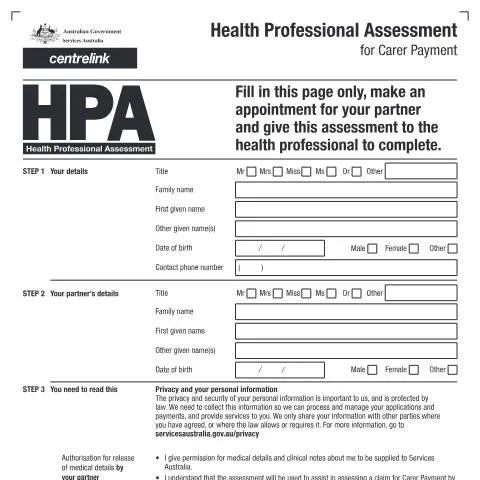
Understanding the Health Professional Assessment for Carer Payment
When a loved one requires consistent care due to a disability, illness, or age-related issue, family members often take on the responsibility of being their primary caregivers. This role can be emotionally rewarding but also financially and physically challenging. To support such caregivers, the Australian government has a system in place, specifically through Services Australia. One key document in this process is the Health Professional Assessment for Carer Payment (AUS156A).
Navigating the Application Process: Key Steps to Success
Applying for Carer Payment involves several critical steps, starting from understanding the criteria to submitting the AUS156A form. Each stage is crucial for ensuring that your application is processed without unnecessary delays.
Assessing Eligibility: Who Should Apply?
Before diving into the application process, it’s essential to determine whether you meet the eligibility criteria for the Carer Payment. Below are general conditions:
- Primary Caregiver Role: You must be the primary caregiver for a person who has a permanent disability, a medical condition, or is aged.
- Care Needs: The care recipient must require significant care that could impact your ability to work or study.
- Residency Status: You must be an Australian resident or hold a qualifying visa.
Understanding the AUS156A Form
The AUS156A form is a comprehensive document that requires detailed input about both the caregiver and the person receiving care. Understanding the specific components of the form is essential for accurate completion.
Sections of the Form:
- Caregiver Details: Provide personal information, including Tax File Number (TFN) and contact details.
- Recipient Information: Detailed information about the care recipient, including their health condition and how it impacts daily living.
- Health Professional Endorsement: A section that needs verification from a licensed health professional corroborating the care needs.
Documentation Essentials: Gathering Your Supporting Evidence
Completing the AUS156A form accurately is only part of the process; you must also provide supporting documentation to strengthen your application. Here’s a breakdown of what might be required:
Types of Supporting Documents
Different situations may necessitate varying documentation. Here’s how to prepare:
- Medical Reports: A report from a health professional detailing the care recipient’s condition.
- Assessment Records: Any previous assessments conducted by a healthcare provider that highlight the individual's care needs.
- Personal Statements: A personal statement from the caregiver explaining their relationship with the care recipient and the nature of the care provided.
Preparing Your Documents
It’s crucial to organize your documents carefully, ensuring that each one is up to date and relevant. Consider the following:
- Gather all necessary reports and statements.
- Check that all documents are signed and dated by the appropriate professionals.
- Make copies of all documents for your records before submission.
Timeline: From Application to Outcome
Understanding the timeline associated with the application for Carer Payment can help set expectations. Here’s what you can generally anticipate:
Submission Process
Once you have completed the AUS156A and gathered all supporting documentation, it’s time to submit your application. This can often be done online through myGov, streamlining the process significantly.
Processing Times
After submission, the processing of your application may take several weeks. During this time, Services Australia may contact you for additional information or clarification on any points. It’s vital to respond promptly to these requests.
Receiving a Decision
Upon completion of the assessment process, you will receive a notification regarding the outcome of your application. If approved, this will detail the payment arrangement. If denied, the notice will include reasons for the decision and information on how to appeal if necessary.
What If Things Don’t Go as Planned? Addressing Refusals and Errors
Receiving a rejection or discovering an administrative error in your application can be disheartening. However, it is important to know that there are steps you can take to address these situations.
Dealing with a Refusal
If your application for Carer Payment is denied, take the following steps:
- Review the reasons provided in the denial letter.
- Gather additional documentation or evidence that addresses those reasons.
- Consider lodging an appeal to the Administrative Appeals Tribunal (AAT) if you believe the decision was incorrect.
Correcting Errors
In cases where there are mistakes in your application or the processing of your claim, follow these guidelines:
- Contact Services Australia as soon as possible to report the error.
- Provide clear information about the mistake and any supporting documents that may help clarify your case.
- Keep a record of all communications for future reference.
The Legal Framework: Understanding Your Rights and Protections
To navigate the complexities of the Carer Payment system, it is beneficial to be aware of the legal framework that supports these processes.
Relevant Legislation
The Administrative Decisions (Judicial Review) Act 1977 (Cth) provides the basis for applicants to challenge decisions made by government agencies, including Services Australia. This acts as a safeguard, ensuring fairness and accountability in administrative processes.
Review Mechanisms
Should you feel that your application has not been handled properly, the AAT offers a pathway for merit review. This allows for a reconsideration of the facts and circumstances surrounding your application, providing an opportunity for a more favorable outcome.
Profiles of Caregivers: Unique Situations and Considerations
The AUS156A form is designed to accommodate a variety of caregiver situations, acknowledging the diverse realities faced by those in caregiving roles.
Case Study: Young Carers
Young individuals taking on caregiving responsibilities may face unique challenges. These caregivers often balance education with their caregiving duties, which can impact their personal development and emotional well-being. The AUS156A form can provide support that acknowledges their situation and offers respite options.
Working Caregivers
For those who remain in the workforce while providing care, the nuances of their circumstances must be carefully articulated in the application. This may include evidence of how caregiving affects their job performance or availability, requiring detailed documentation to support their claim for assistance.
Elderly Caregivers
Older adults in caregiving roles face their own set of challenges, particularly regarding their health and physical capability to provide care. The AUS156A form allows for an assessment of their situation, which can lead to alternative forms of support, ensuring they do not compromise their well-being in the process of caring for others.
Conclusion: The Importance of Diligence in Seeking Support
The Health Professional Assessment for Carer Payment (AUS156A) is more than just a form; it represents a vital lifeline for caregivers across Australia. Navigating its requirements and understanding the associated processes is key to ensuring that you receive the support you deserve. Whether dealing with the nuances of documentation, timelines, or the legal framework, staying informed and proactive will enhance your application experience. For personalized guidance, consider connecting with Services Australia directly, as they can provide insights tailored to your specific situation.
Understanding the Carer Payment: Who Qualifies?
The Carer Payment is a crucial financial support system for Australians who provide care to someone with a severe disability or medical condition. To qualify for this payment, you must meet specific criteria, including but not limited to the following:
- Care Recipient's Needs: The person you care for must require a significant level of assistance with daily living activities due to their disability, illness, or age. This could include tasks like bathing, dressing, or managing medications.
- Care Hours: You must provide care for at least 20 hours a week. This commitment is essential for the Australian Government to assess the intensity of your caregiving role.
- Residency Status: Both the carer and the person receiving care must be Australian citizens, permanent residents, or hold a specific visa. Temporary visa holders generally do not qualify.
- Age Restrictions: The carer must usually be over 16 years of age. There are provisions for younger carers, but they must meet additional requirements.
- Income and Assets Test: Your and the care recipient's income and asset levels will be evaluated. If you exceed certain thresholds, you may receive a reduced payment or not be eligible at all.
Once you determine whether you qualify, the next step involves undergoing the Health Professional Assessment, which verifies the care recipient's condition and needs.
The Health Professional Assessment Process
The Health Professional Assessment is a pivotal part of the Carer Payment application process. This assessment serves as verification that the person you are caring for meets the necessary criteria. Here’s how the process typically unfolds:
- Initial Application: Begin by applying for the Carer Payment through Services Australia. This can be done online via your myGov account. You'll need to provide personal details, including your Tax File Number (TFN) and information about the care recipient.
- Issuing the Assessment Request: After your application is submitted, Services Australia will send a request for a Health Professional Assessment. This request details the specific information required from the health professional.
- Selecting a Health Professional: The assessment must be completed by a qualified health professional. This can be a doctor, psychologist, or any other relevant specialist who is familiar with the care recipient’s condition. Make sure to choose someone who understands the specific complexities and requirements of the disability or illness.
- Completing the Assessment: The health professional will fill out the necessary forms, detailing the severity of the individual’s condition. This can include information on mobility, communication abilities, and the level of assistance needed for daily activities.
- Submitting the Assessment: Once the health professional completes the assessment, they will submit it directly to Services Australia. You should ensure that this is done promptly to avoid delays in your payment processing.
- Outcome Notification: After Services Australia reviews the assessment, they will inform you of the outcome. If approved, you will start receiving your Carer Payment based on the eligibility criteria met.
It’s essential to ensure that the assessment is comprehensive and accurately reflects the care recipient’s needs. Insufficient information or unclear assessments can lead to delays or even denial of your Carer Payment.
Appealing a Decision: What You Need to Know
If your application for Carer Payment is denied or your assessment is found insufficient, you have the right to appeal the decision. The appeals process can be daunting, but understanding your options can empower you to advocate effectively for yourself or your loved one.
- Request a Review: You can request a review of the decision directly from Services Australia. This requires you to provide additional evidence or clarification to support your case. Ensure that your request is submitted within 13 weeks of receiving the decision.
- Prepare Documentation: Gather all relevant documents, including medical records, assessments, and any other supporting evidence that can strengthen your case. A well-prepared submission can significantly impact the outcome of your review.
- Seek Help if Needed: If you're unsure about how to navigate the appeals process, consider seeking assistance from advocacy services or community organizations that specialize in disability rights. They can provide valuable guidance and support.
- Administrative Appeals Tribunal (AAT): If the internal review does not yield a satisfactory outcome, you may escalate your case to the Administrative Appeals Tribunal. This tribunal conducts a review based on the merits of the case and can either uphold the original decision or overturn it, granting you the Carer Payment if warranted.
- Keep Records: Throughout the appeals process, maintain meticulous records of all communications, submissions, and decisions. This will help you stay organized and provide a clear trail of your advocacy efforts.
Being aware of your rights and the appeals process can make a significant difference in your experience with the Carer Payment system. Remember that persistence is often key in navigating the complexities of administrative decisions.