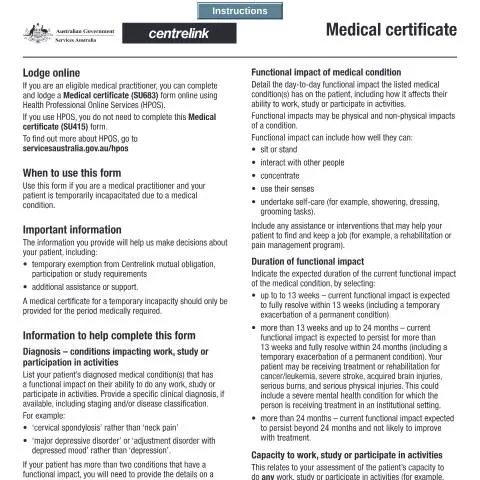
The Significance of the Centrelink Medical Certificate (SU415)
In the realm of Australian social support systems, the Centrelink Medical Certificate (SU415) serves as an essential document for individuals requiring financial assistance due to health-related issues. This certificate acts as a formal acknowledgment from a registered medical professional regarding a person's inability to work or study as a result of health concerns, thereby influencing their eligibility for various Centrelink payments.
The value of this document lies not only in its capacity to validate a claim but also in its potential to impact the trajectory of an individual’s financial stability during challenging times. Understanding the implications and nuances of this certificate is critical for those navigating the complex landscape of social services in Australia.
Navigating the Process: Obtaining Your SU415
Obtaining the Centrelink Medical Certificate requires a well-defined process that involves collaboration between the individual seeking support and a qualified health professional. Here’s a detailed breakdown of the steps involved:
- Consultation with a Health Professional: The individual must first schedule an appointment with a registered medical practitioner. This could be a general practitioner, psychiatrist, or other specialists depending on the nature of the health issue.
- Assessment: During the consultation, the health professional will assess the individual's medical condition, discuss its impact on their ability to work or study, and determine the need for a medical certificate.
- Completion of the SU415 Form: If deemed necessary, the health professional will fill out the SU415 form, providing details about the individual's condition, the expected duration of the incapacity, and any relevant medical history.
- Submission: The individual must then submit the completed certificate to Services Australia, typically through their myGov account. However, submission can also be made via post if required.
- Follow Up: After submission, it is prudent to follow up with Services Australia to ensure that the documentation has been processed.
Understanding Validity: How Long Does the SU415 Last?
The Centrelink Medical Certificate is not a one-size-fits-all document; its validity is contingent upon several factors, including the nature of the health issue and the specific recommendations made by the medical practitioner. Typically, the certificate may cover a period ranging from a few weeks to several months, depending on the assessed capacity of the individual.
It’s vital to note that:
- The duration specified on the certificate is based on the medical professional's judgment of the individual's condition and recovery prospects.
- Renewals or extensions may require a new consultation appointment and a fresh certificate if the individual's circumstances change.
- Changes in health status must be promptly communicated to Services Australia, as they may affect ongoing eligibility for payments.
Eligibility Criteria: Who Can Access the SU415?
The issuance of the SU415 is primarily dependent on the individual’s health condition and its impact on their capacity to earn an income. Here are the primary conditions under which individuals may qualify for this medical certificate:
- Incapacity Due to Medical Conditions: Individuals suffering from chronic illnesses, acute medical conditions, or mental health issues that significantly hinder their ability to work or study are eligible.
- Age Limitations: Generally, the certificate can be issued for adults. Minors may require additional consent and involvement from guardians.
- Previous Engagement with Centrelink: Individuals already receiving Centrelink support may find it easier to obtain the SU415, as their cases are already registered and monitored.
Rectifying Issues: What If You Lose Your Certificate?
In the event of losing the Centrelink Medical Certificate, it is crucial to act swiftly to mitigate any delays in financial support. Here’s what to do:
- Contact Your Health Professional: Reach out to the practitioner who issued the certificate. They can provide a duplicate or reissue a new certificate if necessary.
- Document the Loss: Keep a record of when and how the certificate was lost. This may be helpful if further verification is required by Services Australia.
- Notify Services Australia: Inform the agency about the loss of the certificate to prevent any misunderstandings regarding your payment status.
In cases of erroneous information on the certificate, individuals must contact their health professional for corrections. If the discrepancies are significant, it may necessitate a new consultation and certificate issuance.
Practical Applications: Where and How Is the SU415 Used?
The Centrelink Medical Certificate has several practical applications beyond confirming incapacity. It plays a pivotal role in various interactions with government bodies and other organizations:
- Access to Financial Support: The primary function of the SU415 is to secure various Centrelink payments such as JobSeeker, Disability Support Pension, and others dependent on the individual’s situation.
- Employment Protection: In some instances, employers may request a medical certificate for sick leave or workplace accommodations, providing a legitimate basis for absence from work or reduced hours.
- Educational Institutions: Students may use the certificate when applying for extensions on assignments or exams, affirming their need for additional support due to health issues.
Legal Standing: The Administrative Framework Surrounding the SU415
The Centrelink Medical Certificate holds significant legal standing within the framework of Australian administrative law, particularly under the Administrative Decisions (Judicial Review) Act 1977 (Cth). This means that the decisions made based on the information within the SU415 are subject to review and scrutiny.
Key points to consider include:
- Merits Review: Should there be disputes regarding the application of the SU415 or its implications on payment eligibility, individuals can seek merits review through the Administrative Appeals Tribunal (AAT).
- Rights to Appeal: If a claim is denied based on the information provided in the medical certificate, individuals have the right to appeal the decision, requiring a thorough understanding of the documentation involved.
- Compliance with Regulations: Medical professionals issuing the SU415 must comply with the guidelines set by Services Australia to ensure that the certificate meets all necessary criteria for validity.
Final Insights: Maximizing the Benefits of Your Centrelink Medical Certificate
To fully leverage the benefits of the Centrelink Medical Certificate, individuals are encouraged to stay informed and proactive throughout the process. Here are some recommendations:
- Maintain Open Communication: Regularly discuss any changes in health status with your medical professional and keep Services Australia updated.
- Document Everything: Keep thorough records of all medical consultations, correspondence with Services Australia, and any other relevant paperwork.
- Utilize Available Resources: Access support services offered by community organizations or health services that can assist with paperwork or provide guidance on navigating the system.
Understanding the nuances surrounding the Centrelink Medical Certificate (SU415) can significantly ease the burden during challenging times. With precise knowledge and proper documentation, individuals can optimize their access to necessary financial support, paving the way for improved health and stability.
Understanding the Centrelink Medical Certificate Form (SU415)
The Centrelink Medical Certificate Form, known as SU415, plays a crucial role in the assessment of eligibility for various benefits and payments. It is primarily used when a recipient is unable to work due to illness or injury and seeks to apply for paid leave or other assistance through Centrelink. Understanding this form and the process surrounding it is vital for individuals who are navigating their health challenges while managing their financial responsibilities.
When completing the SU415, it's essential to recognize what information is required from both the individual applying for assistance and the treating medical practitioner. The form requires details such as the applicant's personal information, the nature and duration of the illness or injury, and how it impacts their ability to work. Medical practitioners must also include their registration details, confirming their authority to provide the required medical assessment.
It’s important to ensure that the SU415 is completed accurately. Inaccuracies or omissions can lead to delays in processing claims or even rejections. For this reason, individuals should work closely with their health care providers to ensure that the information provided reflects their medical circumstances and aligns with their Centrelink obligations.
Common Issues When Submitting the SU415
Submitting the Centrelink Medical Certificate Form SU415 can bring about a series of challenges for applicants. One of the most common issues is the potential for misunderstandings regarding the nature of the medical condition. Applicants may feel that their medical condition is obvious or easily understood. Still, it is critical that the medical certificate clearly articulates the specifics of the condition and how it affects the individual's capacity to work.
Moreover, incomplete forms can lead to complications. Centrelink has strict requirements for documentation, and an incomplete SU415 can result in requests for further information. This not only delays the application process but can also cause undue stress for applicants who are already dealing with health issues. It is advisable to review the form thoroughly before submission, ensuring that all sections are filled out with the requisite detail.
Another prevalent issue is the timing of submission. Centrelink requires that the SU415 be submitted promptly to avoid any gaps in payment. Delays in obtaining a medical certificate from a healthcare provider can result in missed payments. Therefore, it's wise to communicate with your healthcare provider about the urgency of needing the SU415 completed to align with your financial needs.
Additional Support Services for Centrelink Applicants
Navigating the Centrelink system can be daunting, especially for those who are unwell. Fortunately, there are numerous support services available to assist individuals in completing their application for benefits—including the submission of the Medical Certificate Form SU415. These services vary by region but generally include community health organisations, local councils, and support groups dedicated to specific health conditions.
Community health organisations often provide free consultations to assist individuals in understanding their rights and responsibilities regarding Centrelink benefits. They can help you gather the necessary documentation, including the SU415, and provide guidance on how to articulate your circumstances effectively on the form.
Additionally, local councils may have welfare officers who can offer tailored support for residents navigating Centrelink applications. These officers can often assist with scheduling appointments with medical practitioners or recommending services that can expedite the process of obtaining required medical documentation.
Support groups focused on particular health issues can also be a valuable resource. Those who have similar experiences can offer advice and share coping strategies, which can be particularly helpful when dealing with the stress of applying for benefits. They may also provide recommendations for healthcare professionals familiar with completing the SU415 who can provide thorough and supportive documentation.
It’s also important to remember that legal aid services are available for individuals facing challenges with their Centrelink applications, particularly in cases where claims are denied. Legal aid can provide assistance in appealing decisions, which is especially beneficial under the Administrative Decisions (Judicial Review) Act 1977 (Cth). If your application for assistance is denied, accessing these resources early can help you navigate the appeals process more smoothly.