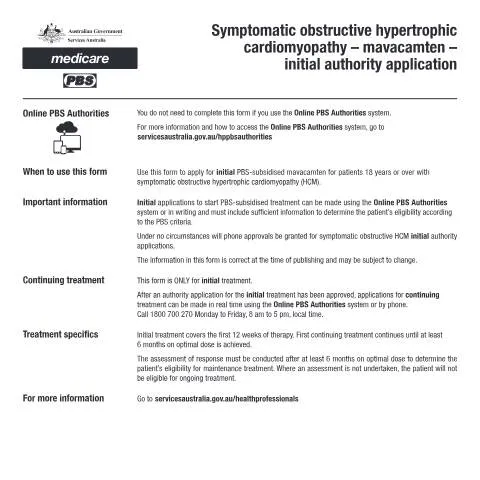
Understanding the PB360 Form: A Vital Step for Treatment of Symptomatic Obstructive Hypertrophic Cardiomyopathy
For health professionals in Australia, the PB360 form plays a crucial role in facilitating access to the medication mavacamten for patients suffering from symptomatic obstructive hypertrophic cardiomyopathy (HCM). This form is designed to initiate the authority application process, allowing eligible patients to receive necessary treatment under the Pharmaceutical Benefits Scheme (PBS). Understanding how to effectively navigate this form is essential for both practitioners and patients alike.
The Regulatory Framework Surrounding HCM Treatments
The management of hypertrophic cardiomyopathy has evolved significantly over the years, with advancements in pharmacological treatments such as mavacamten. These developments are supported by a regulatory framework aimed at ensuring patient safety and equitable access to essential medications. Under Australian law, particularly the provisions of the Pharmaceutical Benefits Scheme, medications like mavacamten can be accessed through a structured application process.
This framework is not just about the medications themselves; it encompasses the broader healthcare landscape, requiring healthcare providers to navigate numerous bureaucratic processes. It is within this context that the PB360 form emerges as a pivotal document.
Navigating the PB360 Form: A Step-by-Step Guide
Completing the PB360 form requires careful attention to ensure that all relevant patient information is accurately submitted. Here’s how to approach filling out this authoritative document:
-
Gather Patient Information:
- Patient’s full name, address, and contact details.
- Relevant medical history, including previous diagnoses and treatments.
- Details regarding the patient's current health status.
-
Document Specific Medical Indicators:
- Clear documentation of the symptomatic obstructive HCM diagnosis.
- Any test results or imaging studies that support the diagnosis.
- Evidence of past treatment attempts and their outcomes.
-
Physician Details:
- Include the healthcare provider's information who is overseeing the treatment.
- Ensure that appropriate signatures and date fields are completed.
-
Submission Channels:
- Check whether the application can be submitted electronically or needs to be mailed.
- Retain a copy for your records after submission.
What Happens After Submission? Understanding the Review Process
Once the PB360 form is submitted to Services Australia, the application undergoes a thorough review process. Understanding this phase is critical for both health professionals and patients awaiting approval:
- Initial Review: The application is first screened to ensure all requisite information is provided. Incomplete applications may lead to delays.
- Clinical Review: Medical experts evaluate the clinical justifications for the requested medication. This phase is where the quality of the documentation becomes essential.
- Decision Notification: After the review, the healthcare provider will be notified of the decision. If approved, the patient can access the medication, while a refusal will require further steps.
Addressing Refusals and Errors: A Guide to Next Steps
Receiving a refusal notice can be disheartening, but it is essential to know the next steps to take:
-
Understand the Reason for Refusal:
- Carefully review the notification to identify specific areas of concern.
- Common reasons may include missing documentation or insufficient evidence of need.
-
Rectify and Resubmit:
- Gather any additional required information or documentation that addresses the concerns outlined in the refusal letter.
- Complete a new PB360 form if significant changes are made, ensuring all new evidence is included.
-
Request a Review:
- In some cases, it may be necessary to request a merit review through the Administrative Appeals Tribunal (AAT) if you believe the decision was unfounded.
- Familiarize yourself with the review process and timelines to ensure timely action.
Differentiating the PB360 Form from Similar Documentation
It's important for healthcare providers to distinguish the PB360 from other related forms that may seem similar but serve different purposes. The PB360 form specifically targets the initial authority application for mavacamten, unlike forms that may pertain to other medications or treatments related to hypertrophic cardiomyopathy or different conditions altogether.
| Form Code | Purpose | Applicability |
|---|---|---|
| PB360 | Initial authority application for mavacamten | Specifically for symptomatic obstructive hypertrophic cardiomyopathy |
| PBXXX | Authority application for another HCM treatment | May apply to different medications or conditions |
| PBYYY | General PBS application | Broad range of medications, not specific to HCM |
Special Cases: Navigating Unique Situations
While the PB360 is intended for a standard patient profile, there are instances that necessitate special consideration. Here are several unique scenarios that healthcare providers may encounter:
- Patients Under 18: Extra care must be taken in the application process, ensuring parental consent and appropriate medical oversight are documented adequately.
- Non-Citizen Patients: Different rules may apply for permanent residents versus temporary visa holders. It’s crucial to understand the implications of the patient’s immigration status on their treatment eligibility.
- Emergency Situations: In urgent cases, where immediate treatment is necessary, it may be possible to fast-track the application. Clear communication of the urgency within the form is vital.
Effective Follow-up Strategies with Services Australia
After submitting the PB360, maintaining communication with Services Australia can help ensure a smooth process. Here are some effective strategies:
- Document Everything: Keep meticulous records of all communications and documentation submitted. This includes email correspondence and confirmation of receipt for mailed forms.
- Check MyGov Regularly: Utilize your myGov account to track the status of your application. This platform provides real-time updates and may offer insights into any issues that arise.
- Be Proactive in Communication: If delays occur, don't hesitate to follow up. Contact Services Australia directly to inquire about the status and offer any additional information if needed.
By understanding and effectively navigating the PB360 form, healthcare professionals can significantly improve their patients' chances of accessing necessary treatments for symptomatic obstructive hypertrophic cardiomyopathy. Mastery of the procedural details, along with proactive follow-up and communication, can pave the way for successful applications and ultimately better patient outcomes.
Understanding Symptomatic Obstructive Hypertrophic Cardiomyopathy
Hypertrophic cardiomyopathy (HCM) is characterized by the abnormal thickening of the heart muscle, primarily affecting the left ventricle. In symptomatic obstructive hypertrophic cardiomyopathy, this thickening leads to an obstruction in blood flow, which can result in various symptoms such as shortness of breath, chest pain, and palpitations. This condition can be inherited and may manifest at any age, but it is often diagnosed in young adults or children. Understanding the pathophysiology of HCM is crucial for appropriate management and treatment. The obstruction occurs because the thickened muscle interferes with the normal functioning of the heart, leading to compromised cardiac output and increased pressures within the heart chambers.
Patients may experience a range of symptoms that vary in severity, and some may even lead to serious complications such as heart failure or sudden cardiac arrest. The diagnosis typically involves a combination of clinical evaluation, family history assessment, and imaging studies such as echocardiograms. Genetic testing may also be recommended to identify specific mutations associated with HCM, which can have implications for family members. Effective management often requires a multidisciplinary approach, including cardiology specialists, genetic counselors, and primary care providers to ensure comprehensive care.
Accessing Mavacamten Through the Initial Authority Application (PB360)
Mavacamten is a novel therapeutic agent specifically designed for patients with symptomatic obstructive hypertrophic cardiomyopathy. As of October 2023, it's essential for healthcare professionals to be familiar with the Initial Authority Application (PB360) process to facilitate patient access to this medication. The initial authority application is a critical step for gaining approval for mavacamten under the Pharmaceutical Benefits Scheme (PBS) in Australia, particularly for patients who meet specific eligibility criteria.
To initiate an application, prescribers must complete the PB360 form, which requires detailed information regarding the patient’s medical history, current symptoms, and prior treatment attempts. It's also crucial to include baseline measurements such as echocardiogram results that indicate the presence of left ventricular outflow tract obstruction, as these are vital in demonstrating the patient's need for treatment with mavacamten.
When filling out the PB360 application, it's important to provide thorough and accurate details, as the application will be scrutinized by the relevant authorities. Any discrepancies or incomplete information can lead to delays or denials. The application should clearly outline the inadequacies of the patient's current management and justify why mavacamten is the recommended therapeutic option. This includes addressing prior therapies that have been ineffective or associated with adverse effects.
Once submitted, the application will undergo a review process, and healthcare providers should be prepared to respond promptly to any requests for additional information from Services Australia. Furthermore, understanding the timelines associated with the approval process can help manage patient expectations, though specific turnaround times can vary based on the volume of applications and the complexity of individual cases.
Patient Support and Resources for Managing HCM
For patients diagnosed with symptomatic obstructive hypertrophic cardiomyopathy, navigating the healthcare system and treatment options can be overwhelming. It is essential for patients and their families to have access to adequate support and resources. Establishing a strong support network can significantly impact the patient's experience and adherence to treatment regimens. Several organizations and resources are dedicated to providing education, emotional support, and practical guidance for patients living with HCM.
Patient advocacy groups play a crucial role in connecting individuals with shared experiences. They often offer educational materials in accessible formats, including brochures, webinars, and support groups. These resources can provide valuable insights into managing symptoms, lifestyle modifications, and coping strategies. Furthermore, they may facilitate connections with healthcare providers who specialize in HCM, ensuring that patients receive tailored and up-to-date care.
In addition to advocacy groups, online platforms and forums may serve as valuable spaces for patients to share their experiences and gather collective wisdom. Engaging with others facing similar challenges can foster a sense of community and reduce feelings of isolation. Furthermore, healthcare providers are encouraged to direct patients to reputable sources of information that can empower them to take an active role in their care.
For ongoing management, patients should consider regular follow-ups with their cardiologist to monitor the progression of the condition and efficacy of treatment strategies. Comprehensive management plans often include lifestyle modifications, such as dietary adjustments, exercise recommendations, and education on recognizing warning signs that warrant immediate medical attention. By fostering a proactive approach, patients can better manage their condition and improve their quality of life.