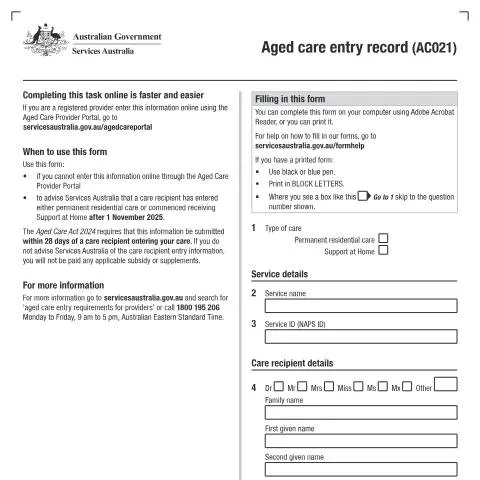
Understanding the Aged Care Entry Record Form (AC021)
The Aged Care Entry Record Form (AC021) stands as a crucial element in accessing aged care services across Australia. This document plays a pivotal role in the assessment, enabling health professionals to gather necessary information about individuals seeking aged care support. Navigating this process can seem daunting, but with the right information, it becomes a manageable task.
Who Needs to Complete the Form?
This form is typically completed by health professionals who are assisting individuals in their transition to aged care services. The target demographics include:
- Older adults who may be facing challenges in daily living.
- Individuals seeking assistance due to health issues or disabilities.
- Family members acting on behalf of their elderly relatives.
Special circumstances may arise where specific cases require tailored advice or additional forms. Health professionals must assess each situation on a case-by-case basis.
Step-by-Step Process for Filling Out the AC021
Completing the Aged Care Entry Record Form requires attention to detail and an understanding of the individual's situation. Here’s a structured approach:
- Gather Information: Collect all relevant details about the individual, including personal identification, medical history, and care preferences.
- Complete the Form: Fill out each section carefully, ensuring that all information is accurate. This includes providing contact details, health assessments, and existing support arrangements.
- Review for Completeness: Double-check the form for any missing information or potential errors that could delay processing.
- Submit the Form: Choose the appropriate submission method, which can include online options or physical submission.
The Submission Pathways: Online vs. Paper
Submitting the AC021 form can be done through various channels. Each method has its nuances:
Online Submission via myGov
The online submission pathway through myGov is the most efficient way to submit the form. Health professionals should encourage clients to set up a myGov account if they have not done so already. This platform allows for:
- Immediate confirmation of submission.
- Direct communication with Services Australia for any follow-ups.
Paper Submission
For individuals who may be less comfortable with technology, submitting a paper form is still an option. Ensure the form is:
- Completely filled out and signed.
- Sent to the correct postal address as specified by Services Australia.
Understanding the Form Sections
The Aged Care Entry Record Form is divided into several sections, each with specific requirements. Understanding these sections can prevent common mistakes:
| Section | Description | Common Pitfalls |
|---|---|---|
| Personal Information | Includes name, address, and contact details. | Missing contact information or typos can lead to delays. |
| Medical History | Details of existing health conditions and treatments. | Inaccuracies in health conditions can affect eligibility for services. |
| Care Needs Assessment | Evaluation of the individual’s daily living needs. | Underestimating care needs can lead to inadequate support. |
Preparing Justifications: Supporting Documents Needed
When submitting the AC021, it's essential to compile relevant supporting documents that verify the information provided. Common documents may include:
- Medical records that illustrate the individual's health status.
- Letters from health professionals recommending aged care services.
- Any existing care plans or assessments from previous services.
These documents not only substantiate the information on the form but also aid in expediting the assessment process.
Timelines: When to Submit and What Happens Next
Understanding the timeline associated with the Aged Care Entry Record Form submission can alleviate anxiety about the process. After submission, the following occurs:
- The processing time can vary depending on the completeness of the form and the current workload of Services Australia.
- Typically, applicants can expect to receive feedback or additional requests for information within a few weeks of submission.
- Once approved, the next steps towards aged care placement will commence.
Monitoring Your Application: Keeping Track of Progress
After submitting the form, it’s important to stay engaged with the process. Here are ways to monitor the application:
- Utilize your myGov account to check the status of your application regularly.
- Set reminders to follow up with Services Australia if you haven’t received updates within the expected timeframe.
For any concerns or need for clarification, contacting Services Australia directly can provide further guidance on the status of the application.
Complex Situations: What to Do If You Face Challenges
Some cases may not fit neatly into the standard mold for Aged Care Entry Record Form submissions. Here are some scenarios that might require special attention:
- International Applicants: Individuals coming from overseas may have different documentation requirements.
- Minors Seeking Care: Special provisions exist for younger individuals needing aged care services, often necessitating additional forms of consent.
- Emergency Situations: In urgent cases, different procedures may expedite the assessment process to ensure timely care.
Always consult with a professional for insights tailored to these unique situations to ensure compliance and appropriate care is provided.
Understanding the Aged Care Entry Record Form (AC021)
The Aged Care Entry Record Form (AC021) is a vital document for individuals seeking access to aged care services in Australia. This form is specifically designed to collect essential information about a person’s needs, preferences, and health conditions, ensuring that the aged care services they receive are tailored to their unique circumstances. Understanding how to fill out this form accurately is crucial for a smooth entry into the aged care system.
When completing the AC021 form, it is important to provide detailed responses to each section, as this will help aged care providers create a suitable care plan. The form includes sections on personal details, current living conditions, medical history, and support needs. Individuals are encouraged to involve family members or support persons in this process, especially if they have complex health needs. Additionally, certain medical documents or assessments might need to be attached to the form, such as hospital discharge summaries or reports from health professionals.
One critical aspect of this form is its impact on funding and support entitlements. The information provided can influence the level of care and types of services that an individual qualifies for, including home care packages or residential aged care. Therefore, accuracy and thoroughness in completing the AC021 cannot be overstated.
Eligibility Criteria for Aged Care Services
Before applying for aged care services, individuals should be aware of the eligibility criteria that govern access to such services. Generally, an individual must be an older person with care needs due to age-related issues, illness, or disability. However, several specific factors can affect eligibility:
- Age: Typically, individuals aged 65 years and older (or 50 years and older for Aboriginal and Torres Strait Islander people) qualify for aged care services.
- Health Status: The level of health and support required is assessed through the AC021 form and subsequent evaluations by aged care coordinators. Pre-existing medical conditions, mobility issues, and cognitive impairments are critical factors in determining care needs.
- Living Situations: Whether a person lives alone, with family, or in a community setting can affect their eligibility and the type of services available to them. The aged care system aims to support those who are isolated or have limited access to informal care.
- Financial Assessment: Individuals applying for certain types of aged care may undergo a financial assessment to determine their ability to contribute to the cost of care. This assessment is conducted by the Department of Health and may influence the financial arrangements and packages available to the applicant.
Understanding these eligibility criteria is vital as it helps applicants gather necessary documentation and prepare for possible assessments that will follow the submission of the AC021 form.
Navigating the Aged Care Assessment Process
Once the Aged Care Entry Record Form (AC021) has been submitted, individuals will enter the aged care assessment process, which is crucial for determining the level of care required. This process is facilitated by trained aged care assessors who conduct a thorough evaluation based on the information provided in the AC021 form.
Assessments typically consist of a face-to-face interview, where the assessor will discuss the applicant’s health, social preferences, and specific care requirements. It is advisable for applicants to have relevant medical documents, such as a recent health assessment, medication lists, and any specialist reports, readily available during this meeting. This documentation can offer insights into the individual’s health and ensure that the assessment accurately reflects their needs.
Additionally, the assessment will consider the individual’s social support networks, living conditions, and any cultural or linguistic needs they may have. For instance, if the person requires assistance in a particular language, the assessor can facilitate the involvement of an interpreter. After the assessment, the individual will receive a letter outlining the outcomes, including the recommended level of care and any potential service providers that can meet their needs.
It is important to note that if an individual does not agree with the assessment findings, they have the right to request a review. This process is governed by the Administrative Decisions (Judicial Review) Act 1977, allowing individuals to seek a merit review through the Administrative Appeals Tribunal (AAT). This review mechanism ensures that applicants have a fair opportunity to contest decisions related to their aged care eligibility and services.