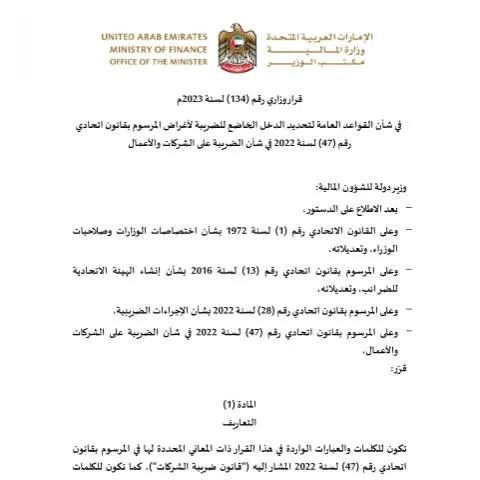
Overview of the Ministerial Decision No. 134 of 2023 on General Rules for Determining Taxable Income in the UAE
The United Arab Emirates (UAE) has recently issued Ministerial Decision No. 134 of 2023, which establishes the comprehensive framework for defining taxable income for corporate and business taxation purposes. This regulation is part of the country's ongoing efforts to enhance tax transparency, compliance, and alignment with international standards, following the provisions of Federal Decree-Law No. 47 of 2022 on Corporate Tax.
Scope and Objectives of the Regulation
This decision aims to provide clear, consistent guidelines on how taxable income should be calculated for entities subject to corporate tax in the UAE. It applies to all businesses and legal persons operating within the country that are liable for corporate tax, regardless of their size or sector. The regulation emphasizes the importance of aligning taxable income determination with internationally accepted accounting principles while considering specific UAE legal and economic contexts.
Core Principles and Definitions
The regulation clarifies key concepts related to taxable income, including the differentiation between gross income, deductible expenses, and allowable deductions. It underscores the need for accurate and transparent financial reporting, emphasizing that taxable income should reflect the actual economic activities of the entity, adjusted for specific tax rules.
Additionally, the regulation defines the scope of income that is subject to tax, including income derived from business operations, investments, and other sources within the UAE. It also specifies what constitutes deductible expenses, such as operational costs, salaries, and other necessary expenses, provided they meet the criteria set out in the regulation.
Principles of Income Calculation and Adjustments
The decision sets out the general rules for calculating taxable income, including the necessity of maintaining proper accounting records and supporting documentation. It emphasizes that all income and expenses must be properly documented and verifiable to ensure compliance during audits.
Furthermore, the regulation provides guidance on adjustments that may be necessary to account for specific circumstances, such as transfer pricing, related-party transactions, and cross-border income. These adjustments aim to prevent tax base erosion and ensure fair taxation aligned with international standards.
Implications for Businesses and Taxpayers
Businesses operating in the UAE should review their financial practices to ensure alignment with the new rules outlined in Ministerial Decision No. 134 of 2023. Proper record-keeping and adherence to the defined principles will be essential for accurate tax reporting and to avoid potential penalties or disputes with tax authorities.
Taxpayers are encouraged to consult with tax professionals or legal advisors to interpret the regulation's provisions in the context of their specific operations. This proactive approach will facilitate compliance and optimize tax planning within the legal framework established by the UAE authorities.
Integration with Existing Tax Legislation
This regulation complements the broader legal framework established by Federal Decree-Law No. 47 of 2022, which introduced the UAE corporate tax regime. It provides detailed guidance on the practical application of the legal provisions, ensuring consistency and transparency across different sectors and entities.
It is important for entities to stay updated on any further clarifications or amendments issued by the Federal Tax Authority (FTA) or other relevant authorities to maintain compliance and benefit from the clarity provided by this regulation.
Conclusion
The issuance of Ministerial Decision No. 134 of 2023 marks a significant step towards a more structured and transparent corporate tax system in the UAE. By establishing clear rules for determining taxable income, the regulation aims to foster a compliant business environment, facilitate international cooperation, and support the UAE’s economic diversification goals.
Entities should ensure their financial practices align with these new rules and seek professional guidance when necessary to navigate the evolving tax landscape effectively.