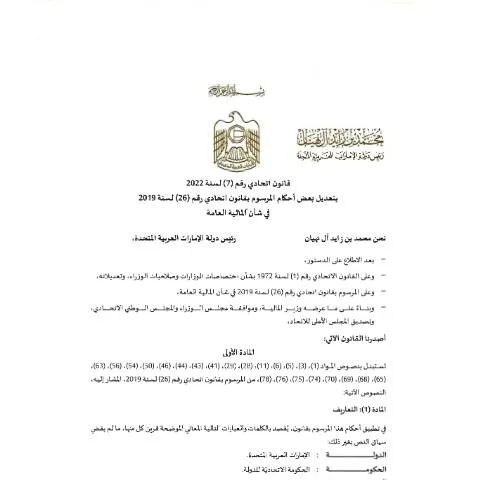
Understanding Federal Law No (7) of 2022: Amendments to the UAE Public Finance Framework
Federal Law No (7) of 2022 represents a significant legislative update within the United Arab Emirates’ financial legal landscape. This law amends Federal Decree-Law No (26) of 2019 concerning public finance, reflecting the UAE government’s ongoing efforts to enhance fiscal governance, transparency, and compliance in line with the country’s strategic economic objectives.
Context and Scope of the Legislation
The UAE’s legal framework for public finance is designed to establish clear guidelines for managing government revenues, expenditures, and financial planning. Federal Law No (7) of 2022 introduces amendments aimed at strengthening these areas by refining existing provisions, aligning them with current economic realities, and ensuring adherence to international best practices.
This law is part of the broader legal ecosystem governed by the UAE Constitution, which balances federal authority with the autonomy of individual emirates. It is implemented through the federal authorities responsible for financial regulation, including the Ministry of Finance (MOF), which oversees public financial management policies and procedures.
Who Is Affected by the Amendments?
The amendments primarily impact federal and emirate-level government entities involved in public financial management. This includes ministries, financial departments, and public institutions responsible for budgeting, expenditure, and revenue collection. Additionally, the amendments influence entities involved in compliance, auditing, and financial reporting processes, ensuring they align with the updated legal framework.
Financial professionals, policymakers, and legal practitioners engaged in public finance are also affected, as they must adapt to new regulations and procedural changes introduced by the law.
Key Aspects of the Amendments
Enhancement of Financial Governance
- The law emphasizes the importance of transparency and accountability in public financial operations.
- It introduces stricter controls on financial reporting and audit procedures to prevent irregularities and ensure compliance with established standards.
Reinforcement of Budgetary Procedures
- Amendments clarify and streamline the processes related to budget preparation, approval, and execution.
- They promote the adoption of digital tools and systems to facilitate real-time monitoring and reporting of fiscal data.
Regulation of Revenue and Expenditure Management
- The law sets forth updated guidelines for revenue collection, including customs duties, taxes, and other sources of income.
- It also delineates procedures for expenditure management, emphasizing efficiency and fiscal discipline.
References and Responsible Authorities
The primary authority overseeing the implementation and ongoing updates related to Federal Law No (7) of 2022 is the Ministry of Finance (MOF). The Ministry ensures that all public financial management practices align with the amended legal provisions, fostering a robust fiscal environment.
For legal professionals and entities involved in compliance, the Federal Tax Authority (FTA) and other relevant bodies provide guidance and support to ensure adherence to the updated regulations.
Conclusion
Federal Law No (7) of 2022 exemplifies the UAE’s commitment to modernizing its public finance legal framework. By refining existing laws, the UAE aims to promote fiscal stability, transparency, and efficient resource management across all levels of government. Stakeholders involved in public financial management should stay informed about these legislative changes and ensure compliance with the new provisions to support the country’s economic resilience and sustainable development.