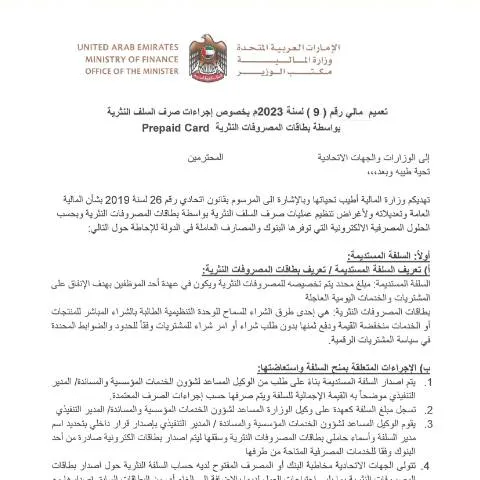
Overview of Financial Circular No (9) of 2023 on Petty Cash Payments via Prepaid Cards
The Financial Laws, Policies and Procedures department in the United Arab Emirates has issued Financial Circular No (9) of 2023, which introduces updated guidelines regarding the management and processing of petty cash payments through prepaid cards. This circular aims to streamline financial operations within federal and emirate-level entities, ensuring compliance with established fiscal policies and enhancing the efficiency of petty cash disbursements.
Scope and Objectives of the Circular
This circular applies to all government departments and entities authorized to handle petty cash transactions. Its primary objective is to standardize the procedures associated with petty cash payments made via prepaid cards, thereby promoting transparency, reducing cash handling risks, and facilitating audit processes. The circular emphasizes the importance of leveraging digital financial tools in line with the UAE's broader digital transformation initiatives.
Key Provisions and Requirements
Implementation of Prepaid Cards for Petty Cash
Entities are encouraged to adopt prepaid cards as the preferred method for petty cash disbursements. These cards are to be issued through authorized financial service providers and integrated with the entity’s financial management systems. The use of prepaid cards aims to replace traditional cash payments, minimizing physical cash handling and enhancing transaction traceability.
Authorization and Usage Limits
Prepaid cards must be issued under strict authorization protocols, with designated personnel responsible for their management. The circular stipulates that the cards should be used solely for approved petty cash transactions, with predefined limits set in accordance with the nature of expenses and organizational policies. Any transactions exceeding the established limits require prior approval from relevant authorities.
Procedures for Transactions
- Employees requesting petty cash should submit digital requests through the official financial management system, referencing the prepaid card.
- All transactions must be documented with supporting electronic receipts and aligned with the entity’s financial policies.
- Reconciliation of prepaid card transactions should be conducted regularly, with reports submitted to the finance department for audit purposes.
Compliance and Audit
Strict adherence to the circular is mandatory. Entities are responsible for maintaining accurate records of all prepaid card transactions and ensuring compliance with internal controls. Regular audits will be conducted to verify the proper use of prepaid cards and to prevent misuse or fraud.
Implications for Public Sector Entities
The introduction of this circular signifies a shift towards more digitalized and transparent petty cash management practices. Public sector entities are expected to integrate prepaid card systems into their existing financial infrastructure, which may involve updating internal policies and training staff on new procedures. The move aims to facilitate real-time monitoring of petty cash expenses and improve financial accountability across government departments.
Additional Guidance and Support
For further details and implementation guidance, entities should refer to the official communications issued by the Financial Laws, Policies and Procedures department. Support and training sessions are often provided to assist organizations in transitioning to the new procedures. It is essential for all relevant personnel to stay informed about updates to ensure full compliance with the circular’s provisions.
Conclusion
Financial Circular No (9) of 2023 reinforces the UAE’s commitment to digital transformation and fiscal discipline within the public sector. By standardizing petty cash transactions through prepaid cards, the government aims to enhance operational efficiency, improve financial oversight, and uphold transparency in public financial management. Entities are encouraged to review their current procedures and adopt the outlined guidelines promptly to align with this new framework.