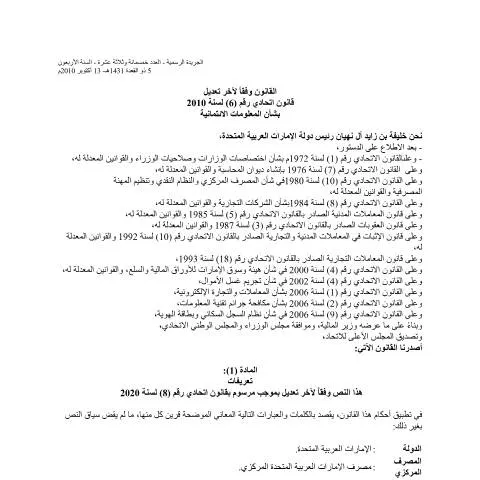
Understanding the Federal Law No (6) of 2010 on Credit Information in the United Arab Emirates
Object of the Legislation
The Federal Law No (6) of 2010, titled Federal Law No (6) of 2010 on Credit Information, establishes a comprehensive legal framework for the collection, management, and dissemination of credit information within the UAE. Its primary objective is to regulate the activities of credit bureaus and financial institutions involved in credit reporting, ensuring transparency and reliability in credit data exchange. This law aims to support financial stability and foster responsible lending by providing accurate and timely credit information to authorized entities.
Scope and Applicability
This legislation applies to all entities engaged in the activities of collecting, processing, and sharing credit information, including:
- Credit bureaus operating within the UAE
- Financial institutions such as banks, finance companies, and other credit providers
- Legal entities involved in credit reporting activities
It also defines the scope of credit data that can be collected and shared, emphasizing the importance of data accuracy, confidentiality, and compliance with established standards. The law applies to credit information related to individuals and corporate entities, with specific provisions for the handling and protection of such data.
Main Provisions of the Law
The law sets out detailed regulations governing various aspects of credit information management:
- Data Collection and Processing: Entities must collect credit data in a manner consistent with legal and ethical standards, ensuring the information is accurate, complete, and up-to-date.
- Data Sharing and Confidentiality: Credit bureaus are authorized to share credit information with other licensed entities, provided confidentiality and data protection measures are maintained.
- Authorization and Consent: The law stipulates that credit data can only be shared with entities that have obtained appropriate authorization, and in some cases, explicit consent from the data subjects.
- Reporting and Transparency: Credit bureaus are required to provide regular reports and maintain transparency regarding their activities, including data accuracy and dispute resolution mechanisms.
- Legal Compliance and Penalties: Non-compliance with the provisions may result in penalties, including fines and suspension of licensing privileges, enforced by the competent authorities.
Implications for Financial and Credit Institutions
The law significantly impacts how financial institutions handle credit information. They are mandated to:
- Register with licensed credit bureaus before accessing or sharing credit data
- Ensure the accuracy and security of the credit information they provide or receive
- Implement internal controls to prevent unauthorized access or misuse of credit data
- Participate in the system of credit reporting to support responsible lending practices
Furthermore, these institutions must adhere to the legal obligations concerning data privacy and confidentiality, with oversight from the UAE Central Bank and other relevant authorities.
Impact on Consumers and Corporate Data Subjects
For individuals and companies, this law enhances the reliability of credit reports, which are crucial for obtaining loans, credit cards, or other financial services. It establishes clear rights regarding access to their credit data, dispute resolution procedures, and the correction of inaccurate information. The legislation underscores the importance of protecting personal and corporate data, aligning with broader UAE initiatives on data privacy and digital security.
Conclusion
Federal Law No (6) of 2010 on Credit Information represents a pivotal step in formalizing credit data management in the UAE. It provides a legal foundation that promotes transparency, data integrity, and responsible credit activities across the financial sector. As digital financial services expand, compliance with this law becomes increasingly vital for maintaining trust and stability within the UAE’s financial ecosystem.