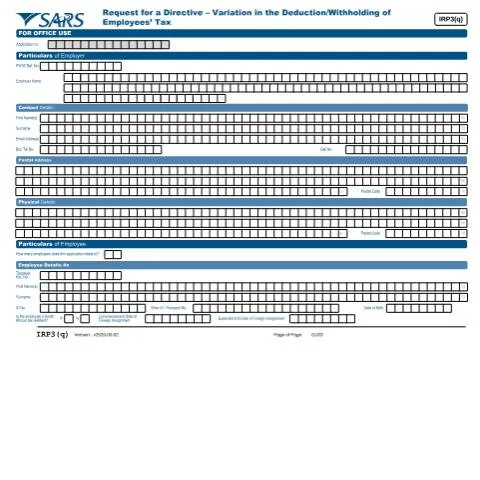
Navigating the IRP3(q) – Variation of Employees Tax – External Form
Understanding the IRP3(q) form is essential for employers in South Africa who require adjustments in the tax withholding of their employees. This form is particularly relevant when there are foreign assignments involved, as it allows adjustments to be made based on potential foreign tax credits. It is crucial to approach the completion of this document with diligence, given its implications for both employer and employee tax liabilities.
Understanding the Context: When is the IRP3(q) Relevant?
The IRP3(q) form comes into play when an employer needs to request a directive for a variation in the withholding of employees' tax. This situation is most common for employers who have employees working abroad, particularly in countries where they might be subject to double taxation. By filing this form, employers can request that the South African Revenue Service (SARS) allows for potential foreign tax credits, thus avoiding an over-deduction of tax.
For clarity, it’s wise to consult the SARS website to understand the current regulations pertaining to foreign tax credits and employee taxes.
Form Structure and Key Sections: A Deep Dive
The IRP3(q) form is structured into several key sections that require precise attention. Each section serves a specific purpose and requires particular information.
Section 1: Employer Details
- PAYE Reference Number: Ensure this is current to avoid complications.
- Contact Information: Provide accurate email and phone numbers for clarity.
- Employer Name: Confirm exact legal name as registered with SARS.
Section 2: Details of Employees Affected
One of the most critical sections, this requires details for each employee the request relates to, including their full name, taxpayer reference number, ID number, and contact information.
- Foreigner Status: Indicate whether the employee is a South African tax resident or not (Yes/No).
- Assignment Dates: Clearly document the commencement and expected end date of any foreign assignments.
Section 3: Directive Application Reasons
This section requires you to mark applicable reasons under which the directive application is being submitted. Be specific; vague submissions can lead to delays.
Section 4: Summary and Supporting Documentation
This is where you detail the reasoning behind your request. A comprehensive letter should accompany the form, explaining the basis for the variation in tax withholding. This letter is crucial and should clearly highlight:
- Why you believe a variation is necessary.
- Details of any foreign tax liabilities that may affect the employee's South African tax obligations.
The Fulfilment of Requirements: Documentation and Supporting Evidence
To successfully complete the IRP3(q) form, additional documentation is often required. Preparing these documents in advance can streamline the application process. Here’s what you typically need:
| Document Required | Description | Relevance |
|---|---|---|
| Employee Tax Residency Proof | Documentation confirming whether the employee is a South African tax resident. | Essential for correctly assessing tax liabilities. |
| Foreign Assignment Contract | Copy of the employment contract for the foreign assignment. | Helps determine duration and nature of assignment. |
| Foreign Tax Liability Details | Evidence of tax paid in the foreign country if applicable. | Justifies the claim for potential foreign tax credits. |
Submission Channels: Where to Submit the IRP3(q)
Once you have completed the IRP3(q) form along with all necessary supporting documents, it's time to consider the submission channels available.
- Online Submission: The SARS eFiling system allows for quick submission and tracking.
- In-Person at SARS Offices: You can also submit the form directly at your nearest SARS branch; however, this might require an appointment.
- Postal Submission: While possible, postal submissions can lead to delays and are not recommended unless necessary.
It's recommended to validate the preferred submission method as regulations may evolve, and electronic submissions are often processed faster.
Unique Considerations: Special Cases and Exceptions
Certain scenarios may necessitate special attention when completing the IRP3(q). If the employee is a foreign national or if the assignment is to a country with complex tax treaties, additional considerations apply.
- Foreign Nationals: If the employee is not a South African citizen, ensure their tax residency status is correctly represented.
- Double Taxation Agreements (DTAs): Familiarize yourself with any DTAs that may impact the employee's tax obligations.
Clarifying Distinctions: The IRP3(q) Compared to Similar Forms
The IRP3(q) form is often confused with other tax-related forms. Understanding the differences can prevent mix-ups that may lead to incorrect submissions.
- IRP5: This is an annual tax certificate issued to employees, detailing total earnings and tax withheld; the IRP3(q) focuses solely on variations in withholding.
- IRP3(a): Used for applications related to the withholding tax for non-resident employees, while the IRP3(q) focuses more on variations for resident employees.
Final Steps: What Happens After Submission?
Post-submission, employers await feedback from SARS regarding their application. Typically, a directive will be issued upon approval of the request for an indefinite period. However, if there are changes in facts or circumstances, a new application might be required.
Employers should monitor their email and any communication from SARS closely to ensure compliance with any new directives that may arise from their application. Additionally, it is important to maintain accurate records of all submissions and communications for future reference.
For any inquiries, it is beneficial to contact the SARS call center or consult the SARS website, ensuring that you receive the most current and relevant advice regarding the IRP3(q) form and employee tax matters.
Understanding the IRP3(q) Form: Key Components and Requirements
The IRP3(q) form, known as the Variation of Employees Tax, is a critical document for employers in South Africa. It allows employers to apply for a variation in the amount of employees' tax (PAYE) they are required to withhold from their employees' salaries, based on their specific circumstances. One of the primary reasons for submitting an IRP3(q) is to accommodate changes in employee income, such as bonuses, allowances, or other forms of remuneration that may impact tax liability. Understanding the components of the form is essential for proper completion.
The IRP3(q) form comprises several sections, including details about the employer, the employee, and the requested variation. Employers must provide their 13-digit tax reference number, the employee's ID number, and a detailed explanation for the requested variation. It's crucial to accurately assess the employee's earnings over the tax year, as incorrect estimations can lead to penalties or adjustments later on.
Another critical element of the IRP3(q) is the supporting documentation required to justify the variation request. This documentation may include payslips, contracts, or any correspondence that verifies changes in employment conditions. Failure to attach the appropriate documents can result in rejection of the application, delaying any potential tax relief.
The Benefits of Submitting an IRP3(q) Form for Employers
Submitting an IRP3(q) form can offer numerous advantages for employers handling payroll responsibilities. One of the primary benefits is improved cash flow management. By adjusting the tax withheld from employee salaries, employers can better align their payroll expenses with actual earnings, preventing over-withholding that could strain cash flow.
Moreover, submitting the IRP3(q) can also enhance employee satisfaction. If employees are not over-taxed, they may have more take-home pay, leading to improved morale and productivity. This also fosters a positive work environment, as employees feel their financial needs are being considered by their employer.
Another advantage is the potential for minimizing tax liabilities in the long run. By proactively managing the employees' tax deductions, employers can ensure that they are not facing hefty tax bills at the end of the fiscal year. This foresight can lead to more manageable tax obligations and a smoother financial operation for the business.
Furthermore, staying compliant with the South African Revenue Service (SARS) regulations by submitting an IRP3(q) can prevent penalties associated with non-compliance. Regular submissions and updates reflect a commitment to good governance and responsible financial practices, thereby safeguarding the employer against potential audits or reviews by SARS.
Navigating the Submission Process: Timelines and Best Practices
Understanding the submission timeline for the IRP3(q) form is essential for employers aiming to maximize their benefits. Employers should be aware that the IRP3(q) can be submitted at any point during the tax year, particularly when there is a significant change in employee earnings or tax circumstances. However, it is wise to submit it as soon as the need for adjustment is identified, ensuring that employees benefit from any changes in tax deductions promptly.
Best practices for submitting the IRP3(q) form include thorough preparation before submission. Employers should maintain accurate and up-to-date payroll records, which will aid in completing the form with correct information. Regularly reviewing employee earnings and tax deductions also ensures that any adjustments needed are identified early, allowing ample time for submission.
Moreover, utilizing online submission options through the SARS eFiling system can streamline the process. This not only enhances efficiency but also ensures that records of submission are easily accessible for future reference. Ensuring that all supporting documentation is attached and verifying all information for accuracy prior to submission can significantly reduce the likelihood of complications or rejections from SARS.
Lastly, employers should be proactive in communicating with their employees regarding the implications of the IRP3(q) process. Consistent communication can help manage expectations and alleviate any concerns regarding changes in tax deductions. By fostering transparency in the payroll process, employers can enhance trust and cooperation within their workforce.