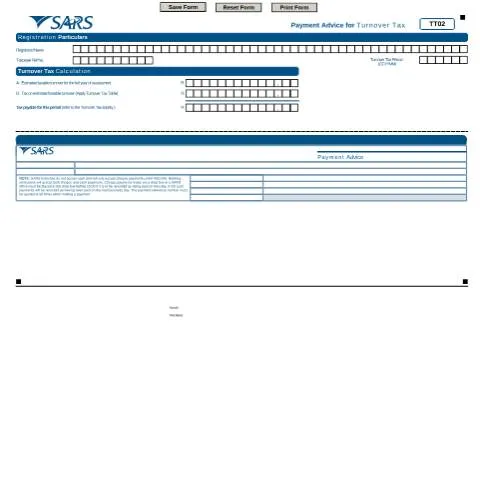
Understanding the Significance of the TT02 Payment Advice Form
In the realm of South African tax compliance, the TT02 – Payment Advice for Turnover Tax – stands as an essential document for businesses under the turnover tax regime. It serves as a pivotal tool that not only facilitates the payment process but also ensures adherence to tax regulations set forth by the South African Revenue Service (SARS). Understanding its intricacies is vital for business owners seeking to navigate the complexities of tax obligations while maximizing their compliance efficiency.
Who Needs to Engage with the TT02 Form?
The TT02 form is primarily aimed at small businesses and micro-enterprises that have opted for turnover tax as their taxation method. Under this system, businesses with annual gross income not exceeding R1 million can simplify their tax processes. Here are specific profiles that might find themselves needing to utilize this document:
- Small Business Owners: Individuals operating within the revenue limits set by SARS, who prefer a simplified tax structure.
- Partnerships: Partnerships that meet the stipulated revenue threshold and have mutually agreed to the turnover tax regime.
- Corporations: Companies registered under the Companies Act that opt for turnover tax, ensuring they meet the required guidelines.
Exceptions exist for specific sectors, such as those involved in financial services or where turnover tax is not applicable. It is essential to confirm eligibility before proceeding.
Understanding the Turnover Tax Framework
Turnover tax was introduced to simplify the taxation of small businesses, allowing them to pay a single tax based on their turnover rather than filing complex returns. This initiative aimed at fostering the growth of small enterprises by reducing the regulatory burden. The TT02 form plays a crucial role in this framework, acting as a notification and payment advice tool.
Moving Through the TT02 Form: Step by Step Breakdown
Filling out the TT02 form might seem daunting, yet understanding its components can demystify the process. Each section of the form contains specific fields that require careful attention. Here’s a detailed breakdown:
1. Registration Particulars
This section demands crucial identification details:
- Turnover Tax Period: Enter the relevant period in the format CCYYMM.
- Registered Name: The official name under which the business is registered.
- Taxpayer Reference Number: A unique identifier assigned by SARS.
2. Estimating Taxable Turnover
Accurate estimation is essential, as it directly influences the tax payable:
- A. Estimated Taxable Turnover: Enter the projected taxable turnover for the entire assessment year.
- B. Tax on Estimated Taxable Turnover: Use the Turnover Tax Table provided by SARS to calculate the applicable tax rate based on the turnover amount.
3. Payment Details
This section details the tax payable for the period:
- Tax Payable: Clearly state the total tax amount due for that particular period.
- Payment Reference Number: This must be quoted whenever making payments to ensure accurate tracking and allocation of funds.
It is important to note that SARS does not accept cash payments over R50,000 and has set guidelines for cheque payments. Payments should ideally be made through secure banking channels to avoid potential complications.
Consequences of Non-Compliance: What Happens If You Forget?
Neglecting to submit the TT02 form or making payments late can have serious repercussions. These may include:
- Penalties and Interest: The imposition of automatic penalties and interest on outstanding amounts can significantly increase financial liabilities.
- Compliance Audits: Non-compliance can trigger audits or additional scrutiny from SARS, leading to further complications.
- Legal Actions: In extreme cases, persistent failure to comply may result in legal action against the business.
It is advisable for taxpayers to take their responsibilities seriously and ensure timely submissions.
Addressing Errors: Navigating Mistakes on the TT02
Errors can occur at any stage, whether during the estimation of turnover or in calculation. Here’s how to manage mistakes:
Steps to Rectify Errors
- Identify the Mistake: Review the form thoroughly to locate inaccuracies.
- Contact SARS: Reach out to SARS directly to discuss the identified errors. They can provide guidance on the best course of action.
- Submit a Revised TT02 Form: If necessary, submit a corrected form in conjunction with any requested supporting documentation.
- Monitor for Updates: After submitting corrections, keep track of communications from SARS to ensure successful resolution.
Integrating the TT02 Form into Wider Business Processes
The TT02 form does not exist in isolation; it is part of a broader financial management system within a business. Understanding where it fits in the larger picture is critical for effective management:
1. Financial Planning
By accurately estimating turnover, businesses can plan better for future investments and operational needs. The TT02 form serves as a crucial tool in aligning tax obligations with overall financial strategy.
2. Cash Flow Management
Timely payments can help maintain positive cash flow, which is vital for small businesses. Using the TT02 form efficiently ensures that businesses can manage their finances without unexpected disruptions.
Timelines: From Submission to Tax Clearance
The timeline surrounding the TT02 form and turnover tax compliance can be critical. Understanding the flow from submission to tax clearance helps in planning:
| Stage | Description | Timeline |
|---|---|---|
| Filing the TT02 | Businesses submit their TT02 form with tax estimates. | Before the end of the tax period. |
| Payment Due | Tax payment based on the estimated taxable turnover. | Within 30 days of filing. |
| Tax Clearance | Following payment, businesses may request a tax clearance certificate. | Usually within a month of payment confirmation. |
Staying aware of these timelines ensures that businesses do not miss critical deadlines, which could lead to compliance issues.
Final Thoughts: The Road Ahead
Successfully navigating the TT02 – Payment Advice for Turnover Tax is not just about completing a form; it’s about understanding the overarching tax landscape in South Africa. As small businesses continue to thrive, leveraging this document will be a key component in ensuring compliance and strategic financial planning. With the right knowledge and proactive approach, entrepreneurs can avoid pitfalls and focus on growing their enterprises.
Understanding the Turnover Tax: Who Qualifies?
The Turnover Tax in South Africa is designed to ease the tax burden for small businesses with annual gross earnings not exceeding R1 million. This simplified tax system is particularly advantageous for micro and small enterprises, as it allows them to pay a single tax rather than multiple taxes that would typically apply to larger corporations.
Eligibility for turnover tax is primarily assessed through a few key criteria. Firstly, businesses must be registered as a small business corporation or be an individual operating a sole proprietorship or partnership. Additionally, businesses that predominantly engage in any form of primary production, such as agriculture or mining, may also qualify, provided they fall under the R1 million threshold.
It’s crucial to note that while the turnover tax can significantly reduce the complexity of tax compliance, certain exclusions apply. For instance, companies that are tax-resident but earn income through foreign operations may not be eligible. Similarly, businesses earning income from investments or passive income streams like rental income, dividends, or interest do not qualify for turnover tax.
For small business owners, understanding eligibility is crucial, especially when considering the potential savings on compliance costs and taxes. Engaging with a tax professional or leveraging resources from the South African Revenue Service (SARS) can provide guidance tailored to specific business situations, ensuring that entrepreneurs can fully capitalize on this simplified tax structure.
Step-by-Step Process to Submit Payment Advice for Turnover Tax
Filing your Turnover Tax Payment Advice (TT02) can seem daunting, but breaking it down into manageable steps can clarify the process. The TT02 form must be completed accurately to ensure compliance and avoid penalties. Here’s how to navigate the submission process effectively:
Gather Required Information: Before you begin filling out the TT02 form, ensure you have all necessary information at hand. This includes your 13-digit ID number, business registration details, and accurate figures on your gross earnings for the tax period.
Access the TT02 Form: Visit the official SARS website to access the TT02 form. You can choose between a downloadable PDF format or the interactive eForm, which allows for easier completion online.
Complete the Form: Fill out the TT02 form by entering your business’s financial information. Pay particular attention to the gross income section; underreporting can lead to complications.
Review and Validate: Double-check all entries for accuracy and completeness. Ensure that all required fields are filled and that the figures tally with your financial records. An error here can lead to processing delays.
Submit Your Payment Advice: Once you have completed the form, submit it through the SARS eFiling portal for an efficient processing experience. Alternatively, you may also submit it via post or in person at your nearest SARS branch.
Keep Records: After submission, retain a copy of the TT02 form and any correspondence with SARS. This is important for record-keeping, especially if you need to reference your submission in the future.
By following these steps meticulously, small business owners can ensure that their Turnover Tax is submitted correctly and on time. Additionally, staying informed about deadlines is vital as failure to adhere could result in penalties or interest accruing on overdue amounts.
Common Mistakes and How to Avoid Them When Filing TT02
Filing the TT02 form is often fraught with challenges that can lead to mistakes, impacting your business’s tax standing. Being aware of common pitfalls can save time and prevent unnecessary penalties. Here are some frequent errors and tips to avoid them:
Incorrect Income Reporting: One of the most significant mistakes small business owners make is misreporting their gross income. This can occur due to misunderstanding which revenue streams to include; for instance, some might incorrectly tally non-taxable income. To prevent this, maintain accurate financial records throughout the year, and consult with an accountant if in doubt about what constitutes gross earnings.
Missing Deadlines: Failing to submit your TT02 on time can lead to penalties. It’s essential to mark your calendar with tax submission dates and set reminders well in advance. Keep track of your business’s fiscal year and be aware that the tax year typically ends in February/March.
Neglecting to Update Business Information: If there are any changes in your business structure, address, or contact details, these must be updated with SARS. Many taxpayers overlook this step, leading to communication issues. Regularly review and update your business information to ensure that SARS has the correct details.
Failure to Keep Supporting Documentation: When you submit your TT02 form, it’s essential to keep all supporting documents, such as invoices and receipts. These may be required for verification. Maintaining organized records makes it easier to respond to any queries from SARS.
Not Using SARS eFiling Features: Many users are not fully utilizing the advantages of the SARS eFiling system, such as auto-calculation features. Familiarize yourself with the system to leverage these tools effectively, which can help minimize errors in your submission.
By being proactive about these common mistakes, small business owners can ensure a smoother filing process for the TT02 form. A careful approach not only eases the compliance burden but also enhances financial accuracy and integrity in tax reporting.