Understanding the DA 185 4A5 Form: A Critical Tool for Automotive Enterprises
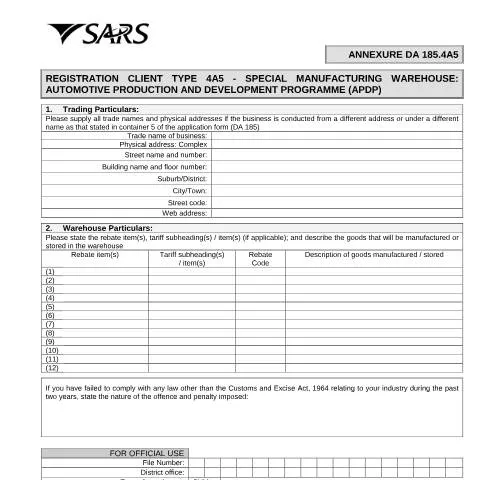
For businesses involved in the automotive sector, particularly those engaged in manufacturing, the DA 185 4A5 form serves as a pivotal document within the Automotive Production and Development Programme (APDP). This form is designed specifically for clients registering as “Special Manufacturing Warehouse” operators. Navigating through this form accurately is essential for compliance with South African customs regulations and can directly influence the operational capabilities of an automotive business.
The Journey Begins: Triggers for Completing the DA 185 4A5
Understanding when and why to complete the DA 185 4A5 form is crucial. The necessity usually arises when a business intends to establish a special manufacturing warehouse that engages with the APDP. For instance, if you are an automotive manufacturer aiming to benefit from rebates on materials or components imported for manufacturing purposes, the registration of your warehouse is a prerequisite.
- Business Expansion: If a business expands its operations, necessitating additional manufacturing capacity, completing this form is vital.
- New Product Lines: Introducing new automotive products may require a fresh registration to confirm compliance with APDP standards.
Key Elements Required for Registration
The DA 185 4A5 form demands that applicants provide specific details about their business and operations, which includes:
- Trading Name and Address: This must align with the official registration of the business.
- Warehouse Particulars: Details about the goods manufactured or stored, including relevant tariff headings.
Filling these elements correctly is crucial, as inaccuracies can lead to processing delays or even denials of your application.
Comprehensive Walkthrough: Completing the DA 185 4A5
Completing the DA 185 4A5 form may seem daunting, but a structured approach can make the process manageable. Here’s a step-by-step breakdown:
Step 1: Business Information
The initial section of the form requires the applicant to enter:
- Trade name of the business
- Physical address details including street name, building name, and suburb
- Website address, if applicable
Step 2: Warehouse Specifics
Here, you must outline the goods that will be stored or manufactured in the warehouse. This includes:
- Rebate items and tariff headings
- Descriptive details of the goods involved
Step 3: Compliance History
An essential part of your application is declaring whether your business has complied with laws other than those specified in the Customs and Excise Act. Previous legal issues must be disclosed, which typically include any penalties incurred within the last two years.
Submission Process: From Form Completion to Review
Once the DA 185 4A5 form is completed, the next steps involve submission and monitoring. Here's how to navigate this process effectively:
Where to Submit
The completed form must be submitted to the appropriate customs office handling your area or sector. Ensure that you check whether online submission is an option, as the South African government is increasingly encouraging digital processes.
Confirmation of Receipt
Upon submission, you should receive an acknowledgment. This document or message serves as confirmation and should be retained for your records. If you do not receive this acknowledgment, consider following up with the office to ensure your application is progressing.
Understanding the Review Timeline and Process
The review of the DA 185 4A5 form can take time. Understanding how the process operates can help manage expectations:
- Initial Review: The customs office will undertake a preliminary review to check for completeness and accuracy.
- Further Inquiries: If there are discrepancies or unclear sections, the reviewing officer may contact you for clarification.
- Final Decision: After thorough examination, you will receive the final decision regarding your application.
What Happens Next: Post-Submission Outcomes
Once your form has been reviewed and a decision is made, several outcomes are possible:
- Approval: If approved, you will receive a registration number and any relevant documentation. This is crucial for your operational legitimacy.
- Request for Additional Information: Sometimes, the reviewing authority may require further information to finalize the decision. This request must be addressed promptly.
- Denial: Should your application be denied, you will receive a detailed explanation. At this juncture, understanding the grounds for denial is essential for reapplication.
Next Steps Following Approval
Once your application is approved, ensure you:
- Maintain compliance with APDP regulations to avoid penalties.
- Regularly renew any registrations or permits as required.
Addressing Potential Challenges: What If Your Application Faces Issues?
In the event of complications, being well-informed about your options is crucial:
In Case of Denial
If your application is denied, you have the right to appeal. The appeal process typically requires you to:
- Gather necessary documentation to address the reasons for denial.
- Submit a formal appeal to the designated authority within a stipulated timeframe.
Addressing Missing Information
Should your application be returned due to missing or unclear information, ensure you:
- Respond promptly to any requests for additional documentation.
- Thoroughly review your application to prevent future omissions.
Unique Aspects of the DA 185 4A5 Form Compared to Similar Documents
While various forms exist under the APDP umbrella, the DA 185 4A5 is distinct in its focus on special manufacturing warehouses. This specificity delineates it from other forms primarily focused on import/export activities or general business registrations. Understanding this distinction can prevent confusion and ensure proper compliance.
Consequences of Oversights: What to Avoid
Every detail in the DA 185 4A5 form is significant. Oversights can lead to repercussions that may affect your business operations:
- Regulatory Penalties: Non-compliance with APDP requirements can lead to fines or operational restrictions.
- Operational Delays: Errors in the form can result in significant delays in the approval process, impacting production schedules.
Rights and Obligations of Applicants
As an applicant, it’s essential to be aware of both your rights and duties:
- Right to Fair Process: Under the Promotion of Administrative Justice Act, you are entitled to a fair review of your application.
- Obligation for Accuracy: You must provide truthful and accurate information, as any discrepancies can lead to penalties.
Staying Informed: How to Monitor Your Application Status
Keeping track of your application can alleviate anxiety. Here are ways to stay informed:
- Direct Communication: Maintain contact with the relevant customs office to inquire about the status of your application.
- Online Tools: Utilize government portals that provide tracking features for applications submitted electronically.
Raising Queries
If you have questions during the application process, do not hesitate to reach out to the department responsible for APDP. Clear communication can prevent misunderstandings and enhance the efficiency of your application process.
Your Roadmap to Success with DA 185 4A5
Navigating the complexities of the DA 185 4A5 form can be transformative for automotive businesses looking to leverage the benefits of the APDP. By understanding the nuances of this document, from completion to potential challenges, businesses can position themselves for success in a competitive industry.
Understanding the DA 185 4A5 Form
The DA 185 4A5 form serves as a crucial document for businesses seeking registration as a Client Type under the Special Manufacturing Warehouse scheme, specifically tailored for the Automotive Production and Development Programme (APDP) in South Africa. This form is designed to facilitate the registration process, enabling manufacturers to access various incentives and benefits associated with the APDP.
When filling out the DA 185 4A5, it's essential to provide accurate and comprehensive information regarding the nature of your automotive manufacturing operations. This includes detailing your production capacity, relevant technologies used, and compliance with safety and environmental regulations. Accurate data submission not only expedites the approval process but also ensures eligibility for available incentives.
Moreover, applicants must be aware that the application for the DA 185 4A5 form is a step towards broader compliance with the Department of Trade, Industry and Competition (DTIC) requirements. As part of the registration process, businesses may be required to submit additional documentation, such as proof of business registration, financial statements, and tax compliance certificates. This underscores the importance of maintaining organized records and documentation to facilitate a smooth registration process.
Navigating the Application Process
Filing the DA 185 4A5 form requires a strategic approach to ensure all necessary steps are diligently followed. Businesses should first ensure they meet the eligibility criteria for the APDP, which focuses on promoting local manufacturing and enhancing the automotive sector's competitiveness. Initial eligibility checks should include a review of the production processes and the projected economic impact on the South African automotive industry.
Once eligibility is confirmed, applicants can obtain the DA 185 4A5 form from the DTIC website or through the designated government portals. It is recommended to meticulously follow the instructions provided, as any discrepancies or missing information can lead to delays or rejections of the application. Additionally, applicants should consider seeking assistance from industry experts or consultants familiar with the APDP, who can provide insights into best practices and common pitfalls in the application process.
Upon submission, applicants should remain proactive in tracking the status of their application. The DTIC may require further information or clarifications, so maintaining open communication channels with the department is vital. A well-prepared application can significantly decrease processing times, allowing businesses to quickly benefit from the incentives offered under the APDP.
Incentives Offered Under the Automotive Production and Development Programme
The APDP is structured to enhance the competitiveness of South African automotive manufacturing by offering various incentives that can significantly impact a company’s bottom line. Understanding these incentives is essential for businesses looking to maximize their benefits from the program.
One of the key incentives is the Production Incentive, which is a cash benefit linked to the number of vehicles produced and sold in the local market. This incentive is particularly beneficial for manufacturers with high production volumes, as it directly correlates with increased sales performance. Another important aspect of the APDP is the Development Incentive aimed at supporting companies that invest in new technologies, product development, and skills training for employees. This incentive not only fosters innovation but also enhances the overall skill set within the industry, leading to sustainable growth.
Additionally, the APDP promotes local content production, offering incentives for businesses that source components and materials locally. This not only contributes to the economic development of South Africa but also helps in reducing the overall costs associated with imports. Manufacturers can leverage these incentives to create a more resilient supply chain, enhancing their operational efficiency and competitiveness in both local and global markets.
Furthermore, companies involved in research and development activities can benefit from the R&D Tax Incentive, providing significant tax reductions for qualifying expenditures. This encourages manufacturers to innovate, thereby contributing to a more technologically advanced automotive sector.
Businesses should carefully assess their eligibility and consider the broader implications of these incentives on their operational strategies. Engaging with the DTIC for detailed guidance can help in identifying which incentives can be best leveraged based on the specific context of the business operations.