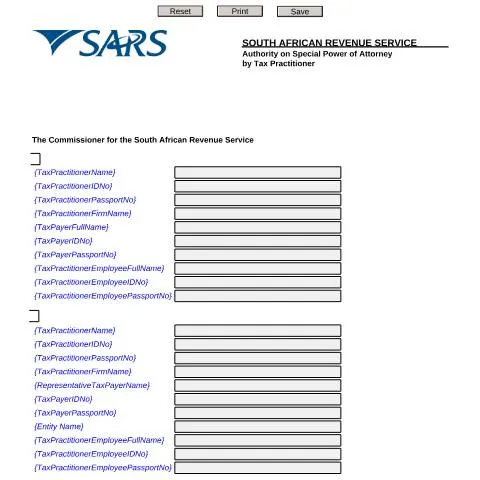
Navigating the ASPOA: Understanding the Essential Role of the Authority on Special Power of Attorney by Tax Practitioner
In the intricate landscape of South Africa's tax system, the Authority on Special Power of Attorney by Tax Practitioner (ASPOA) form plays a pivotal role. This document is particularly crucial for taxpayers who opt to have a tax practitioner act on their behalf during tax matters. Understanding the nuances of this form is essential for both practitioners and taxpayers alike, ensuring that the process remains smooth and effective.
The Lifecycle of the ASPOA Form: From Initiation to Outcome
Understanding the timeline associated with the ASPOA form is crucial for both tax practitioners and taxpayers. The process typically unfolds as follows:
- Preparation Phase: The taxpayer must first engage a registered tax practitioner who will assist in the completion of the ASPOA form.
- Completion of the Form: The tax practitioner will fill out the ASPOA, requiring detailed information about both the practitioner and the taxpayer.
- Submission: The completed ASPOA form must be submitted to the South African Revenue Service (SARS) for processing.
- Processing Time: Once submitted, SARS will typically process the form within a period defined by their operational guidelines.
- Decision Notification: After processing, SARS will communicate the outcome to the taxpayer and the practitioner.
This timeline illustrates the importance of adhering to deadlines, ensuring that all parties are informed and comply with the necessary legal requirements stipulated by the tax authority.
Key Participants: Who Needs the ASPOA?
The ASPOA form is relevant for various stakeholders within the tax landscape:
- Individual Taxpayers: Those who wish to authorize a tax practitioner to manage their tax affairs.
- Tax Practitioners: Professionals who require an official mandate to represent taxpayers in dealings with SARS.
- Businesses: Entities that engage tax practitioners for managing corporate tax obligations must also utilize the ASPOA for compliance.
Each participant has unique responsibilities and should ensure that the ASPOA is completed accurately to avoid administrative complications.
Completing the ASPOA: A Step-by-Step Guide
For effective navigation of the ASPOA form's requirements, it is critical to follow a systematic approach:
- Gather Required Information: The tax practitioner should obtain essential details such as:
- Tax practitioner’s name, ID number, and passport number
- Taxpayer’s full name, ID number, and passport number
- Firm name of the tax practitioner, if applicable
- Fill Out the Form: Ensure all fields are completed with accurate information. Double-check for typographical errors, which could lead to processing delays.
- Signatures: Ensure both the taxpayer and the tax practitioner sign the form, verifying their consent to the power of attorney.
Following this structured approach should minimize errors and facilitate a smoother submission process.
Submission Protocol: Where and How to Submit the ASPOA
Once the ASPOA form is completed, the next step is submission. Taxpayers and practitioners must adhere to specific protocols to ensure successful processing:
- Online Submission: A significant push towards digital interactions has made online submissions possible through the SARS eFiling system. This method is encouraged for efficiency.
- Physical Submission: If opting for physical submission, the completed ASPOA form can be submitted at designated SARS offices. Be mindful of office hours and potential queues.
Failure to properly submit the ASPOA may result in delays or refusals of authority, complicating tax administration for the taxpayer.
Consequences of Non-compliance: The Importance of Timeliness and Accuracy
Taxpayers who fail to submit the ASPOA correctly or within the required timeframe may face serious repercussions. This can include:
- Withdrawal of Representation: If the ASPOA is not in place, the tax practitioner cannot legally represent the taxpayer in dealings with SARS.
- Delays in Processing: Inaccuracies or omissions can lead to longer processing times, affecting the taxpayer's ability to resolve tax matters promptly.
- Legal Ramifications: Continued non-compliance can lead to fines or further scrutiny from SARS.
Understanding these potential consequences underscores the importance of adhering to regulations and timelines during the ASPOA process.
Special Circumstances: Navigating Complex Situations
While the ASPOA is straightforward, certain circumstances may complicate its use:
Taxpayers Residing Abroad
For South Africans living internationally, the process requires a specific approach. Taxpayers must ensure that their ASPOA form is notarized and may need additional documentation to verify their identity while overseas.
Minors and Incompetent Persons
When dealing with minors or individuals unable to manage their affairs, a legal guardian must fill out the ASPOA. Additional documentation proving guardianship may be required.
Urgent Cases
In cases where immediate representation is needed, taxpayers may need to communicate directly with SARS to expedite processing. It is advisable to include a cover letter outlining the urgency of the situation.
Dealing with Refusals and Administrative Hurdles
In instances where the ASPOA is refused or if there are discrepancies, taxpayers should be proactive:
- Request Clarification: If the ASPOA is rejected, taxpayers should ask for specific reasons from SARS to understand the basis for refusal.
- Correcting Errors: If errors exist on the submitted form, corrections should be made immediately, and the revised form resubmitted promptly.
- Tracking Applications: Following up with SARS can help ensure the application is processed timely. Taxpayers can use their online accounts to check the status of submissions.
By taking these steps, taxpayers can mitigate the impact of any refusals and ensure that their tax affairs remain compliant and in good standing.
Final Thoughts: Empowering Taxpayers Through Knowledge
Understanding the ASPOA form and its implications is a significant aspect of navigating South Africa's taxation landscape. Taxpayers and practitioners alike must approach this document with diligence, ensuring that all submissions are accurate and timely. This preparation not only fosters smoother interactions with SARS but also empowers taxpayers to manage their tax responsibilities effectively.
As reforms and regulations continue to evolve, staying informed and adaptable remains paramount. Utilizing resources available on the official SARS website can provide ongoing support and updates pertinent to the ASPOA and broader tax practices.
Understanding the Special Power of Attorney for Tax Practitioners
The Special Power of Attorney (ASPOA) is an important document that allows taxpayers to authorize tax practitioners to act on their behalf before the South African Revenue Service (SARS). This authority enables tax practitioners to handle various tax matters, including submissions, queries, and disputes, simplifying the tax process for individuals and businesses alike. The need for such authorization arises particularly when taxpayers want to ensure that experienced professionals manage their tax affairs efficiently.
Tax practitioners require a Special Power of Attorney to represent taxpayers when they submit their income tax returns, Value Added Tax (VAT) forms, or any other related documents. In South Africa, the ASPOA must comply with the relevant legal frameworks, including the Tax Administration Act and the legal stipulations set forth by the South African Institute of Chartered Accountants (SAICA) and the South African Revenue Service (SARS).
To create a valid ASPOA, it must be in written form, clearly stating the powers granted to the tax practitioner. The document needs to be signed by the taxpayer and, in some cases, require witnesses to attest to the authenticity of the signatures. Ensuring that the ASPOA is correctly completed and submitted can help avoid complications during tax assessments or audits.
Different Scenarios Requiring a Special Power of Attorney
The need for a Special Power of Attorney can arise in various scenarios. Understanding these scenarios can help taxpayers determine when they should seek the assistance of a tax practitioner and provide the necessary authority for representation.
1. Complex Tax Situations: Taxpayers with intricate tax affairs, such as multiple income sources, investment properties, or international income, may find it beneficial to appoint a tax practitioner. The ASPOA allows the practitioner to navigate these complexities and ensure compliance with the tax regulations.
2. Disputes with SARS: If a taxpayer is involved in a dispute with SARS regarding assessed taxes, the Special Power of Attorney allows the practitioner to represent the taxpayer effectively. This representation can involve negotiations and the submission of necessary documentation to resolve the matter favorably.
3. Filing on Behalf of Minors or Individuals with Disabilities: In cases where a taxpayer is a minor or an individual who cannot manage their tax affairs due to disabilities, a Special Power of Attorney can be used to enable a guardian or representative to act on their behalf. This ensures that the rights and obligations of the taxpayer are maintained and that tax returns are filed accordingly.
4. Business Owners and Companies: For small business owners or corporate entities, the ASPOA is crucial for appointing a tax practitioner to manage corporate tax filings. This delegation of authority can streamline operations and ensure that corporate tax obligations are met accurately and on time.
Steps to Complete and Submit the ASPOA Form
Completing the ASPOA form correctly is essential for smooth processing by SARS. Below are the detailed steps to ensure that the ASPOA is properly filed:
1. Download the ASPOA Form: The form can be downloaded from the SARS website or accessed through tax professional portals. Ensure you are using the most current version of the form to avoid any complications.
2. Fill Out the Required Information: Provide all necessary details, including the taxpayer's 13-digit ID number, contact information, and the specific powers granted to the tax practitioner. Be clear and precise about the extent of the authority being granted.
3. Signature Verification: The form must be signed by the taxpayer. In cases where a third-party signatory is involved, such as a parent or legal guardian, they may also need to provide documentation verifying their authority to sign on behalf of the taxpayer.
4. Witness Requirements: If required by the specific provisions of the ASPOA, include signatures from witnesses to attest to the validity of the document. Ensure that the witnesses are not related to the taxpayer or the tax practitioner to avoid conflicts of interest.
5. Submission of the ASPOA: The completed ASPOA form should be submitted to SARS alongside any relevant tax filings. This can typically be done electronically through the SARS eFiling system or via mail as per the instructions provided on the form.
6. Retain Copies for Records: It's essential for taxpayers to keep copies of the submitted ASPOA and any associated documents for their records. This will serve as proof of authorization in case of future inquiries or audits.