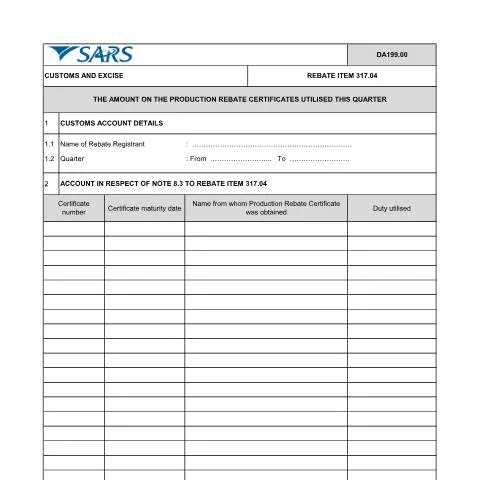
Navigating the DA 199 00: Purpose and Importance of the Rebate Item 317.04
The DA 199 00 certificate stands as a pivotal document for businesses engaging in import and export within South Africa’s customs framework. This document is a key component in the realm of production rebate certificates, particularly under the Rebate Item 317.04, which concerns the amounts utilized during a specific quarter. Understanding its purpose, importance, and operational intricacies is crucial for businesses to ensure compliance and maximize available benefits.
Understanding the Legal Standing of the DA 199 00 Certificate
The DA 199 00 certificate holds significant legal value in South Africa's customs landscape. It serves as a formal record that details the duty utilized by a rebate registrant over a defined period. This document is not merely administrative; it operates under the legal framework established by the Customs and Excise Act, providing businesses with a legitimate means to claim rebates on specific duties.
Legal Framework and Implications
Under the Customs and Excise Act, this document operates as a refund mechanism for certain duties paid on inputs used in the production of goods. The implications are far-reaching, allowing businesses to maintain competitive pricing by offsetting costs related to duties. The enforcement of proper documentation ensures that the legitimacy of claims is upheld, further emphasizing the importance of accurate and diligent record-keeping.
Eligibility Criteria: Who Can Obtain the DA 199 00 Certificate?
The DA 199 00 is not a document accessible to all; there are specific criteria that must be met for a business to qualify for its issuance. Primarily, the entity must be registered as a rebate registrant with the South African Revenue Service (SARS) and must be engaged in production activities that fall under the categories specified by Rebate Item 317.04.
Requirements for Application
- Rebate Registration: Entities must be officially registered with SARS as rebate registrants.
- Active Business Operations: The business should be actively involved in production activities that necessitate the use of imported goods.
- Compliance Records: Previous compliance with customs regulations is essential, including timely payments of duties.
Step-by-Step Procedure for Obtaining the DA 199 00 Certificate
Acquiring the DA 199 00 certificate involves a detailed process that must be followed precisely to avoid delays or complications. Here’s a structured approach to ensure a smooth application experience.
Application Process Overview
- Gather Required Information: Prepare documentation which includes your customs account details and previous duty records.
- Complete the DA 199 00 Form: Fill out the PDF form accurately, ensuring that all relevant details are included.
- Submit the Application: Submit the completed form to SARS through the appropriate channels, ensuring compliance with any additional guidelines stipulated.
- Await Processing: After submission, await confirmation from SARS regarding the status of your application.
- Receive the Certificate: Upon approval, the DA 199 00 certificate will be issued, detailing the eligible duty amounts for the specified quarter.
Duration of Validity and Renewal Considerations
Understanding the timeframe associated with the DA 199 00 certificate is critical for planning purposes. The validity of the document pertains to the quarter it covers, but there are nuances to consider regarding renewal and continued eligibility.
Validity Period Details
The DA 199 00 certificate is specific to the quarter it pertains to, meaning businesses must submit new claims each quarter to maintain their rebate benefits. The key is to ensure records are kept up-to-date and submitted promptly at the end of each fiscal quarter.
Common Scenarios: Addressing Loss, Errors, and Disputes
In the event of a misissue, loss, or dispute regarding the DA 199 00 certificate, businesses must take swift action to rectify these issues. The administrative setup allows for procedures that must be adhered to in handling such situations.
Steps to Resolve Issues
- Lost Certificate: If the DA 199 00 certificate is lost, a formal application must be submitted to SARS for a replacement.
- Errors in Documentation: In cases where inaccuracies are found, businesses should file a correction request, providing the necessary details to rectify the mistake.
- Disputes Over Duty Amounts: When disputes arise regarding the duty amounts listed, businesses should engage directly with SARS, providing documentation to support their claims.
Practical Uses and Requirements from Regulatory Bodies
The DA 199 00 certificate has specific applications and can be requested by various regulatory bodies within South Africa. Understanding its practical uses can help businesses leverage this document to their advantage.
Applications in Business Operations
- Import Documentation: Often required during the importation of goods to demonstrate that duties have been claimed.
- Financial Audits: Can be demanded during audits to verify compliance with customs regulations.
- Stakeholder Reporting: Useful for providing stakeholders with verified financial documentation concerning duties and rebates.
Final Thoughts on the DA 199 00 Certificate
Engaging with the DA 199 00 certificate process can initially appear challenging. However, by understanding its significance, eligibility requirements, and application methods, businesses can effectively leverage this important document to ensure their operations align with South African customs regulations.
Ultimately, navigating the complexities of customs documentation requires diligence and attention to detail. As you embark on this journey, maintaining organized records and being aware of the quarterly deadlines will be essential in ensuring that your business remains compliant and benefits from the available rebate structures.
Understanding the DA 199 00 - Rebate Item 317 04
The DA 199 00 form, specifically designed for rebate item 317 04, plays a crucial role in the South African tax system, particularly for businesses engaged in production activities. This rebate is aimed at promoting local manufacturing by allowing qualifying entities to claim back a portion of their production costs. It is essential for businesses to understand the eligibility criteria and the nuances of the rebate process to maximize their benefits.
To qualify for rebate item 317 04, businesses must meet specific criteria set out by the South African Revenue Service (SARS). Typically, these include being a registered taxpayer, engaging in manufacturing activities, and maintaining proper documentation of all production costs incurred during the quarter. The application process involves submitting the DA 199 00 form along with supporting documents that validate the production costs claimed. These documents may include invoices, receipts, and production records that clearly outline the expenses associated with the production activities.
Key Considerations When Filing the DA 199 00
When filling out the DA 199 00 form for rebate item 317 04, attention to detail is paramount. Errors or omissions can lead to delays in processing or even rejection of the rebate claim. Here are several key considerations:
- Accurate Record-Keeping: Ensure that all supporting documents are accurate, complete, and organized. This facilitates a smoother review process by SARS.
- Quarterly Reconciliation: Regularly reconcile production costs on a quarterly basis to ensure that the amounts claimed align with actual expenses. This practice not only helps in claiming rebates but also aids in financial planning.
- Understanding Rebate Limits: Familiarize yourself with the maximum allowable rebate limits for your specific industry. This information is available on the SARS website or can be obtained through consultation with tax professionals.
Moreover, it is advisable to consult with financial or tax advisors who specialize in South African tax regulations. They can provide valuable insights and assist in navigating the complex landscape of tax rebates, ensuring that your business remains compliant while maximizing the available benefits.
Utilizing Technology for Rebate Applications
In today’s digital age, leveraging technology can significantly streamline the rebate application process. SARS has made strides in providing online services aimed at simplifying tax-related tasks, including the submission of the DA 199 00 form. Here are some ways in which technology can enhance the rebate application experience:
- Online Submission: The DA 199 00 form can be submitted electronically through the SARS eFiling platform. This not only expedites the process but also allows for easier tracking of your application status.
- Integrated Record Management: Utilizing accounting software that integrates with SARS eFiling can facilitate better record-keeping and ensure that all necessary documents are readily available when needed. This integration can reduce errors and save time.
- Alerts and Notifications: Setting up alerts for deadlines related to rebate applications can help ensure that you do not miss important submission dates, enhancing overall compliance.
By incorporating these technological solutions, businesses can optimize their rebate claims, ensuring they take full advantage of the financial benefits that South African tax legislation offers.
Impact of External Accounts on Rebate Claims
The concept of external accounts plays a significant role in the context of rebate item 317 04. Understanding how external accounts interact with your production rebate claims is essential for accurate reporting and compliance. When businesses operate with external accounts, they often deal with cross-border transactions, which necessitates a thorough understanding of how these transactions impact the rebate claims.
For instance, if your business imports raw materials used in the production process, it is crucial to document these transactions meticulously. External suppliers must be registered within the South African tax framework, and proper invoices must be obtained to support your rebate claims. Proper accounting for these external accounts ensures that production costs are accurately reported and legitimate claims are made.
Additionally, businesses must be aware of the currency exchange rates that could affect the overall costs of production. Fluctuations in exchange rates can impact the calculation of production costs and, subsequently, the rebate amount claimed. It is advisable to consult financial experts who can assist in navigating these complexities to ensure that external accounts do not adversely affect your rebate claims.
Future Trends in Production Rebates and Taxation
As the South African economy continues to evolve, staying ahead of trends in taxation is vital. The government periodically reviews tax incentives, including production rebates, to align with economic goals and environmental sustainability. Here are some anticipated trends that may influence the future of production rebates and the DA 199 00 form:
- Increased Focus on Sustainability: As the global push for sustainability grows, there may be incentives introduced for businesses that implement environmentally friendly practices in their production processes. This could lead to new rebate categories within the DA 199 00 framework.
- Digital Transformation of Taxation: As more businesses shift to digital operations, we can expect further advancements in online tax submission systems. Enhanced digital platforms will likely reduce the administrative burdens related to rebate claims.
- Greater Transparency and Compliance Requirements: The government may introduce stricter compliance measures to improve tax collection and minimize fraud. Businesses must stay informed about changes in regulations that could affect their eligibility for rebates.
Being proactive in understanding these trends and adapting your business practices accordingly will be essential to leverage available tax benefits effectively.