Understanding the DA 185 4A12 Form: A Crucial Tool for Electricity Producers
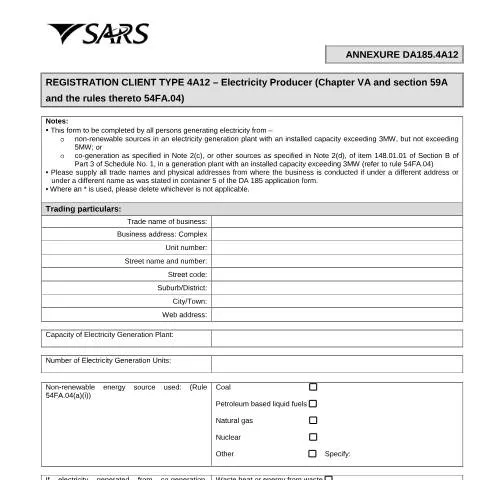
For stakeholders in South Africa’s energy sector, particularly those involved in electricity production, the completion and submission of the DA 185 4A12 form is a significant administrative requirement. This form is mandated for all entities generating electricity from non-renewable sources or co-generation processes with an installed capacity exceeding 3MW, but not exceeding 5MW. The nuances of this form can considerably impact not only compliance but also operational legitimacy within the energy sector.
The Role of the DA 185 4A12 Form in Energy Regulation
Administered under Chapter VA and section 59A of prevailing energy regulations, the DA 185 4A12 serves as a registration document for electricity producers. Adhering strictly to the rules outlined in 54FA.04, the form plays an essential role in registering producers with the relevant authorities, thereby ensuring that their operations conform to national standards of electricity production.
Failure to properly fill out or submit this form can lead to severe administrative penalties, including the inability to legally operate energy generation plants, highlighting the importance of understanding the form’s requirements in detail.
Filling the DA 185 4A12: A Step-by-Step Breakdown
Completing the DA 185 4A12 form requires careful attention to detail. Each section must be filled out accurately to avoid delays or rejections. Below is a breakdown of key sections found in the form:
1. Business Trading Particulars
- Trade Name of Business: Provide the official trade name under which the electricity is produced.
- Business Address: Enter the full address where the business operates, including complex and unit numbers, street name, and postal code.
- Suburb/District: Identify the suburb or district for accurate geographic classification.
- Web Address: If applicable, include the business’s website for verification purposes.
2. Capacity and Generation Units
This section necessitates the declaration of:
- Capacity of Electricity Generation Plant: State the total capacity in Megawatts (MW) of the electricity generation plant.
- Number of Electricity Generation Units: Specify how many generation units are operational at the facility.
3. Energy Source Declaration
Producers must indicate the non-renewable energy sources used in electricity generation. Options include:
- Coal
- Petroleum-based liquid fuels
- Natural gas
- Nuclear
- Other (please specify)
For those engaged in co-generation, the form requires an indication of the type of co-generation employed, with options listed in the form.
Submission Channels: Paper vs Online
The submission of the DA 185 4A12 can be done through various channels, each with its own operational nuances:
1. Online Submission
By leveraging the online submission platform, producers can expedite their registration process. Advantages include:
- Immediate acknowledgment of receipt
- Reduced wait times compared to traditional mail
- Enhanced tracking of submission status
2. Paper Submission
For those preferring traditional methods, the paper submission entails sending the completed form to the relevant government department. While this method is still widely used, it may involve:
- Longer processing times
- Potential for lost documents during transit
- Lesser tracking capabilities compared to online systems
Whichever method is chosen, it is advisable to maintain duplicates of submitted forms and any related documents for personal records.
What Happens After Submission? Tracking Your Application
Once the DA 185 4A12 form is submitted, applicants can expect a structured review process by the Department of Minerals and Energy (DME). The timeline for processing can vary based on the volume of applications received, but typically, stakeholders should allow a period of at least 30 days for feedback.
Follow-Up Procedures
Stakeholders have the right to inquire about the status of their application. Useful steps include:
- Contacting the DME's designated office via email or telephone
- Providing application reference numbers or identifying details to facilitate tracking
- Requesting updates on potential outstanding requirements or additional documents needed
Special Circumstances: Navigating Unique Scenarios
Various scenarios may necessitate additional considerations when completing the DA 185 4A12 form. Here’s how to handle some common complexities:
1. Foreign Entities
Foreign electricity producers must ensure that they also comply with local legislation and may need to provide evidence of compliance with international standards. It is essential to check the specific requirements outlined in regulations governing foreign investments in the energy sector.
2. Minors and Guardianship
In cases where the applicant is a minor or under guardianship, it is critical to include necessary legal documentation that verifies guardianship and the capacity to enter into obligations on behalf of the minor.
Consequences of Non-Compliance: Legal Implications
Filing the DA 185 4A12 accurately can safeguard against legal repercussions. Non-compliance may result in:
- Fines imposed by regulatory bodies
- Revocation of operational licenses
- Increased scrutiny from governmental authorities
This form not only serves as a registration tool but also as a legal affirmation of adherence to existing energy regulations.
Dealing with Rejections: The Appeal Process
In the unfortunate event that an application is rejected, understanding the appeals process is vital. Applicants are entitled to:
- Receive a detailed explanation of the reasons for rejection
- Request a review or resubmission of the application with noted corrections
- Seek counsel from legal experts specialized in energy regulation if necessary
This proactive approach can mitigate potential setbacks in business operations.
Regulatory Framework: The Backbone of the DA 185 4A12
Understanding the historical and regulatory context of the DA 185 4A12 enhances its significance. The form is influenced by several legislative measures, including the Promotion of Administrative Justice Act 3 of 2000 (PAJA), which mandates that all administrative actions must be lawful, reasonable, and procedurally fair. This framework empowers stakeholders to demand transparency and fairness in the processing of their applications.
Moreover, the DA 185 4A12 aligns with South Africa’s energy policies aimed at promoting sustainable electricity generation, fostering economic growth, and encouraging compliance with environmental standards. Given this, it is more than a form; it symbolizes a commitment to responsible energy production.
The Importance of Compliance: Rights and Responsibilities
Submitting the DA 185 4A12 successfully opens avenues for legitimate operation within the energy sector. It not only ensures compliance with state regulations but also confers certain rights, such as:
- The ability to operate within legal and regulatory frameworks, thereby avoiding penalties
- Access to potential government incentives for compliant energy producers
- Participation in industry discussions and policy-making, as registered producers often have a voice in regulatory matters
However, this compliance comes with responsibilities, including maintaining accurate records, adhering to production limits, and promptly addressing any regulatory inquiries.
Final Thoughts: Navigating the Future of Energy Production in South Africa
As the South African energy landscape evolves, understanding forms like the DA 185 4A12 becomes indispensable for electricity producers. They represent not only regulatory compliance but also a pathway to contributing positively to the nation’s energy goals. By engaging diligently with these requirements, stakeholders can position themselves as responsible and proactive participants in a vital sector.
Staying informed, being meticulous in completion, and understanding the implications of the DA 185 4A12 can lead to a more efficient and legally sound operation in South Africa's dynamic energy market.
Understanding the DA 185 4A12 Form: An Overview of Client Type 4A12 for Electricity Producers
The DA 185 4A12 form is specifically designed for individuals and companies seeking to register as electricity producers in South Africa under Chapter VA and section 59A, as well as rules 54FA 04 of the National Electricity Regulatory framework. This form enables applicants to comply with the necessary legal and regulatory requirements to operate as electricity producers, particularly in renewable energy sectors. Understanding the details and implications of this registration process is critical for applicants wishing to enter the energy market.
When filling out the DA 185 4A12 form, it’s essential to gather all necessary documentation. This includes proof of identity, business registration documents, and evidence of technical capabilities to produce electricity. Applicants must also provide a detailed operational plan that outlines the proposed methods, technologies, and timelines for electricity production. The form requires comprehensive energy production projections to assess the impact on the energy supply chain within the country.
Moreover, it's important to take into account the regulatory environment surrounding electricity production in South Africa. The Department of Mineral Resources and Energy (DMRE) plays a vital role in overseeing compliance, and therefore, applicants must ensure that their projects adhere to standards set forth by the DMRE to avoid any future legal complications. Seeking advice from legal and energy sector experts can significantly smoothen the application process and help avoid potential pitfalls.
Critical Documentation and Submission Process for DA 185 4A12
Submitting the DA 185 4A12 form is just one part of the process, as the accompanying documentation plays a crucial role in the success of the application. Essential documents include:
- Proof of Identity: Applicants must submit a certified copy of their 13-digit South African ID number or a valid passport if they are a foreign national.
- Business Registration: A copy of the company registration certificate issued by the Companies and Intellectual Property Commission (CIPC) is mandatory to validate the business entity under which the applicant is operating.
- Technical Qualifications: Documentation showcasing technical expertise, such as qualifications of engineers involved in the project, certifications for the renewable energy technology intended for use, and previous project experiences.
- Operational Plan: A detailed report outlining the production capacity, source of energy, project timeline, and potential impacts on the local energy market.
- Environmental Impact Assessment (EIA): Depending on the scale of the production, an EIA may be necessary to assess the project's potential effects on the environment and secure the relevant permits.
Once the DA 185 4A12 form and accompanying documents are compiled, applicants must submit them to the appropriate regulatory body responsible for energy production licenses. This submission can typically be done via the DMRE's online portal or through physical submission at designated offices. However, applicants should verify the submission process as it may vary depending on the province and the nature of the energy project.
It is critical to ensure that all documents are accurate and complete to avoid delays in processing the application. Should the application require additional information or clarification, the DMRE will issue a request for information, which must be responded to promptly to avoid further delays.
Post-Application Process: Expectations and Monitoring Compliance
Once the DA 185 4A12 form has been submitted, applicants enter a monitoring phase where they must stay informed about the status of their application. The DMRE provides mechanisms to check the application status via its online platform. This transparency is crucial for applicants to ensure their projects remain on track and for timely responses to any requests from the DMRE.
Following the approval of the registration, electricity producers must comply with ongoing regulatory requirements to maintain their operational licenses. This includes regular reporting on production volumes, adherence to quality standards, and compliance with safety regulations. Failure to comply with these conditions may lead to penalties or revocation of the license.
Moreover, electricity producers are encouraged to engage with local communities and stakeholders. Transparency and communication with the public can facilitate smoother operations and foster goodwill, crucial particularly in renewable energy projects that may affect local ecosystems or communities.
Additionally, producers should stay updated on changes in legislation and government policies regarding energy production, as these can impact operational strategies and market conditions. Engaging with industry associations and attending workshops hosted by the DMRE or other relevant bodies can provide valuable insights into the evolving landscape of energy production in South Africa.