Understanding the I.T. Form No. 76: A Vital Tool for Tax Compliance
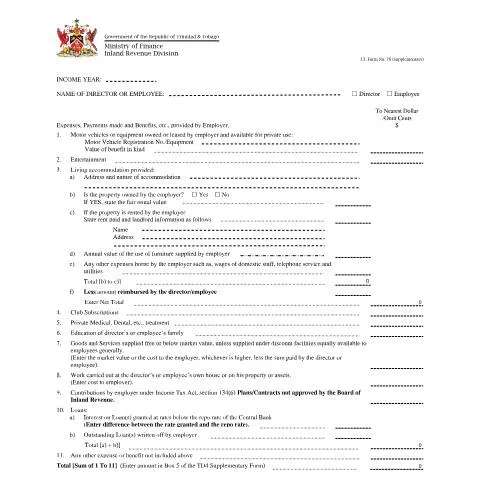
The I.T. Form No. 76, officially titled "Expenses, Payments made and Benefits etc., provided by Employer," plays a crucial role in the tax landscape of Trinidad and Tobago. This document is instrumental for employers and employees alike, as it enables the accurate reporting of various benefits and expenses associated with employment. Understanding its importance, the proper way to complete it, and the implications of not filing correctly is essential for compliance with the local tax authorities.
The Target Audience: Who Needs to Submit Form IT76?
This form is primarily designed for directors and employees of companies operating in Trinidad and Tobago. It is important to discern who falls under these categories, as the form caters to different profiles with various obligations:
- Directors: Individuals in positions of authority overseeing the company's direction, typically involved in decision-making processes.
- Employees: Staff members receiving salaries or other forms of compensation for their services.
Each group has distinct reporting responsibilities; for instance, directors may have different compensation structures compared to regular employees, necessitating comprehensive documentation of benefits and expenses.
Specific Circumstances for Submission
Certain situations may mandate the submission of Form IT76 even when one might not ordinarily consider it necessary. These include:
- When an employee receives significant fringe benefits that exceed the standard compensation.
- When a director has complex compensations involving various allowances or reimbursements.
- In instances where employees are reimbursed for out-of-pocket expenses related to their work.
Navigating the Sections of Form IT76: A Step-by-Step Guide
Completing Form IT76 accurately is paramount for ensuring compliance and avoiding potential penalties. Below is a detailed breakdown of key sections within the form, elucidating what information is required in each.
Section 1: Motor Vehicles or Equipment
This section requires the reporting of any vehicles or equipment provided by the employer that are available for private use. Key information to fill out includes:
- The registration number of the vehicle or description of the equipment.
- The value of the benefit in kind that the employee derives from this use.
Section 2: Entertainment
Here, the employer must disclose any entertainment expenses provided to the employee. This could include costs for events, dining, or recreational activities.
Section 3: Living Accommodations
Living accommodations provided by the employer are detailed in this section. It includes:
- The address and nature of the accommodation.
- Whether the property is owned or rented by the employer, along with fair rental values and landlord contact details if applicable.
The Importance of Accurate Reporting: Consequences of Inaccuracy
Accurate reporting on Form IT76 is not just a legal obligation; it also affects the tax liabilities of both the employer and the employee. Misreporting or failing to disclose the necessary information can lead to serious financial repercussions:
- Penalties: The Inland Revenue Division (IRD) may impose fines for incorrect submissions.
- Increased Scrutiny: Inaccuracies may prompt more thorough audits of both the employer and employee’s financial records.
- Loss of Tax Benefits: Failure to report can result in the loss of potential tax deductions.
What to Do If Information Is Missing or Misreported
In cases where an error is identified after submission, the following steps should be taken:
- Contact the IRD as soon as possible to report the mistake.
- Prepare to submit a revised form with the correct information.
- Keep records of all communications with the IRD regarding the issue for future reference.
Special Cases: Unique Situations Requiring Consideration
Certain unique circumstances may affect how Form IT76 is completed or submitted. These include:
- Foreign Nationals: Employees who are not citizens of Trinidad and Tobago may have special tax considerations, especially regarding benefits provided in foreign currencies.
- Minors: The employment of minors may necessitate specific disclosures regarding their benefits and compensations due to additional legal protections for young workers.
- Urgent Situations: In cases of immediate tax compliance, such as nearing deadlines, expedited processes may be available through digital submissions.
The Broader Context: Where Form IT76 Fits into Tax Compliance
Form IT76 is part of a broader regulatory framework established by the Government of Trinidad and Tobago. This framework mandates accurate reporting of income and benefits for tax purposes to ensure compliance with the Income Tax Act.
Additionally, it complements other forms, such as the TD4 Supplementary Form, which consolidates information provided in IT76 to evaluate overall tax liabilities.
Filing both forms correctly is essential for maintaining compliance with local tax laws, benefiting both employees and employers through tax efficiency.
Historical Context of Tax Compliance in Trinidad and Tobago
The requirement for transparency in how benefits and expenses are reported has evolved significantly. The introduction of the Income Tax Act and subsequent amendments have shaped the necessity and structure of forms like IT76, ensuring that both employers and employees meet their fiscal responsibilities.
Conclusion: Ensuring Compliance and Peace of Mind
Completing Form IT76 accurately is integral to effective tax management for both employees and employers. By understanding its components, the implications of errors, and the broader context of tax compliance, all parties can navigate the regulatory landscape of Trinidad and Tobago with confidence. For further assistance, individuals are encouraged to consult tax professionals or contact the IRD directly to ensure that all submissions are compliant with applicable laws and regulations.
Understanding Tax Treatment of Employee Benefits in Trinidad and Tobago
In Trinidad and Tobago, the taxation of employee benefits is a critical aspect of payroll management and compliance. Employers must understand how various forms of compensation such as bonuses, allowances, and non-monetary benefits impact their tax obligations. Under the Income Tax Act, certain benefits provided by employers can be categorized as taxable or non-taxable based on their nature and the conditions under which they are provided.
For instance, any cash allowances or bonuses are generally considered taxable income and must be reported by the employee on their annual tax return. Conversely, some non-cash benefits, such as employer-provided transportation or educational assistance, may qualify for specific exemptions. Employers should ensure they are familiar with the relevant tax codes, particularly to differentiate between what constitutes a taxable benefit and what does not. An analysis of the Income Tax (Caribbean Community) Act and guidelines issued by the Board of Inland Revenue (BIR) can provide clarity on these distinctions.
Filing Obligations and Record Keeping for Employers
Employers in Trinidad and Tobago have specific obligations regarding the filing of employee benefit records. It is not enough to merely provide benefits; employers must accurately report them to the relevant authorities. The Annual PAYE Return is a key document that must include comprehensive details of all payments and benefits made to employees. This encompasses wages, bonuses, and other allowances, as well as benefits in kind.
Employers are also required to maintain meticulous records to support the information reported on their tax returns. This includes comprehensive documentation such as pay slips, benefit statements, and any correspondence with the BIR. Keeping accurate records is not only critical for compliance but also helps in mitigating risks during audits. Furthermore, employers should be aware that failure to report employee benefits accurately can lead to penalties, interest on unpaid taxes, and potential legal repercussions.
Utilizing a professional payroll management system can aid in ensuring that all tax obligations are tracked and fulfilled in a timely manner. Employers should also familiarize themselves with the e-Tax platform provided by the BIR, which allows for digital filing and better record management.
Employee Responsibilities Regarding Taxable Benefits
While employers bear the primary responsibility for reporting benefits, employees also have obligations when it comes to the tax treatment of these benefits. It is imperative that employees understand their tax liabilities associated with the benefits they receive. For example, if an employee receives a transportation allowance or a housing benefit, it is their responsibility to report this income when filing their annual tax return.
Employees should also be aware of the timelines for tax return submissions, which are due by April 30 following the fiscal period. If an employee has received benefits that are deemed taxable, they must ensure that these are included in their calculations to avoid any discrepancies that could arise during tax assessments.
Furthermore, employees should maintain up-to-date records of all benefits received, including any correspondence with their employer regarding these benefits. This can serve as evidence in the event of an inquiry or audit by the BIR. Utilizing resources such as the ttconnect ID for accessing relevant tax information and guidance can also help employees navigate their responsibilities effectively.