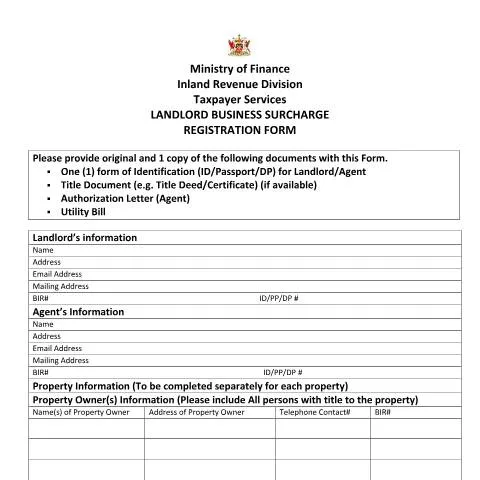
Navigating the Landlord Surcharge Registration Form: A Comprehensive Guide
For landlords operating in Trinidad and Tobago, the Landlord Surcharge Registration Form plays a vital role in ensuring compliance with tax obligations. This form serves as a gateway for landlords to register for the surcharge that applies to rental properties and is a crucial step in maintaining good standing with the Inland Revenue Division (IRD). Understanding the nuances of this document can streamline the registration process and avoid potential pitfalls.
Who Needs to Submit the Landlord Surcharge Registration Form?
The requirement to file the Landlord Surcharge Registration Form extends to various profiles of landlords:
- Individual Landlords: Individuals who own property and rent it out, whether residential or commercial.
- Real Estate Agents: Agents acting on behalf of property owners must submit the form along with an authorization letter.
- Co-owners: In cases where multiple individuals hold title to a property, each owner must be listed and provide their respective details.
- Entities: Businesses or organizations that own rental properties as part of their operations.
Each of these circumstances may involve different documentation and specifics to consider. For instance, landlords with multiple properties will need to complete additional sections of the form for each property listed.
Completing the Landlord Surcharge Registration Form: Step-by-Step
Filling out the Landlord Surcharge Registration Form accurately is essential to avoid delays or rejections. Here’s a section-by-section breakdown:
Landlord Information
This section captures the primary details of the landlord or authorized agent. You will need to provide:
- Name
- Address
- Email Address
- Mailing Address
- BIR Number or identification document number (ID/Passport/Driver's Permit)
Agent’s Information (if applicable)
If you are submitting the form through an agent, this section must include their details, mirroring the information required for the landlord.
Property Information
Each property must be documented separately. The required details include:
- Name(s) of Property Owner(s): All individuals holding the title must be named.
- Location of Premises: Include address and legal title information.
- Property Use Category: Categorize the property into residential, commercial, agricultural, or mixed-use, ticking all applicable boxes.
Documentation Requirements
Along with the completed form, landlords are required to provide:
- One form of identification (ID/Passport/Driver's Permit) for the landlord or agent
- Title Document (e.g., Title Deed/Certificate) if available
- Authorization Letter if submitted by an agent
- Utility Bill for proof of address
Failure to provide any of these documents can lead to processing delays or outright rejection of the registration.
Submission Channels for the Registration Form
Landlords have several options for submitting the Landlord Surcharge Registration Form, each with its own set of advantages:
Online Submission
Online submissions are increasingly popular. To submit digitally, landlords must have a ttconnect ID, enabling access to the e-Tax platform. This method allows for faster processing and tracking of submissions. Here’s how to do it:
- Log in to your ttconnect account.
- Navigate to the Landlord Surcharge Registration section.
- Upload the completed form and required documents.
- Submit for processing.
In-Person Submission
For those preferring face-to-face interaction, submitting the form at the IRD office is a viable option. Here’s what you need to know:
- Visit the IRD Tower located at 2-4 Ajax Street, Government Campus Plaza, Port of Spain.
- Bring the original form along with one copy and all required documents.
- Ensure all sections are fully completed to avoid delays.
Mail Submission
Alternatively, landlords may choose to mail their registration forms. To do this effectively:
- Ensure all documents are securely attached to the form.
- Use a reliable postal service to prevent loss.
However, mailing may result in longer processing times compared to online or in-person submissions.
Potential Issues and Resolving Them
Landlords might encounter issues during the registration process. Understanding how to address these can save time and frustration.
Registration Refusal or Rejection
If your registration is rejected, review the following:
- Incomplete Information: Check if all required fields in the form are filled out.
- Missing Documentation: Ensure all requested documents are included.
- Errors in Details: Verify that all names, addresses, and identification numbers are correct.
Appealing a Decision
If you believe your application was unjustly rejected, you can appeal the decision. This involves:
- Submitting a formal request for reconsideration to the IRD.
- Providing any additional documentation or clarification needed to support your case.
Updating Information Post-Submission
What if circumstances change after you've submitted your registration? It's vital to:
- Notify the IRD of any changes in contact details, ownership, or property status.
- File updates through the same channels used for the original submission, whether online or in person.
Understanding the Processing Timeline
Once the Landlord Surcharge Registration Form is submitted, landlords can expect varying processing times based on submission methods:
| Submission Method | Average Processing Time |
|---|---|
| Online Submission | 5-7 Business Days |
| In-Person Submission | 5-10 Business Days |
| Mail Submission | 10-14 Business Days |
Landlords can track their application status via the e-Tax portal or by contacting the IRD directly.
Special Considerations: Unique Scenarios
While the registration process is straightforward for most landlords, certain situations warrant special attention:
Foreign Property Owners
Foreign nationals owning property in Trinidad and Tobago must ensure compliance with local laws. They need to:
- Provide additional identification as required by the IRD, which may include work permits or residency documentation.
- Consider consulting with a local legal expert to navigate the registration process effectively.
Minors as Property Owners
In the case that minors hold title to property, registration must be handled by a legal guardian or parent. Ensure that:
- Guardians provide proof of guardianship along with their identification.
- The application is submitted in accordance with the IRD’s stipulations regarding minors.
Urgent Situations
For landlords facing time-sensitive issues, such as impending rental agreements or legal proceedings, it’s crucial to expedite the registration. Here are steps to take:
- Use online submission for faster processing.
- Contact the IRD directly to inform them of the urgency.
- Ensure all documents are ready and available to avoid delays.
Conclusion: The Importance of Compliance
Successfully navigating the Landlord Surcharge Registration Form is crucial for landlords in Trinidad and Tobago. Not only does it fulfill legal obligations, but it also protects landlords from potential fines or legal issues. By understanding the requirements, ensuring accurate completion, and being aware of the submission channels, landlords can ensure a smooth registration process. Whether you're a seasoned property owner or new to the rental market, keeping these guidelines in mind will enhance your compliance and operational efficiency.
Understanding the Process for Completing the Landlord Surcharge Registration Form
When you decide to engage in rental activities in Trinidad and Tobago, registering for a Landlord Surcharge with the Ministry of Finance is an essential step. This process ensures that you are compliant with the regulations governing rental properties and enables the collection of any applicable surcharges. The form you will need is typically referred to as the 'Landlord Surcharge Registration Form' and can be accessed through the relevant governmental portal. Below, we will explore how to effectively complete this form and the specific information required.
To start the registration, you need to gather some key information. First, have your Central ttconnect ID ready, as this is crucial for accessing the online submission process. If you do not have one, you can create an account at the ttconnect website, which will guide you through the necessary steps.
As you fill out the Landlord Surcharge Registration Form, be prepared to provide details about your properties, including:
- Property Address: You must list the physical address of each rental property under your management.
- Type of Property: Specify whether the property is residential or commercial, as this can impact the surcharge applied.
- Rental Income: Indicate the monthly rental income for each property, which will be used to calculate the surcharge.
- Identification Documents: You may need to upload documents proving ownership or legal authority to rent the property, such as a title deed or lease agreement.
Once the form is filled out, review all details for accuracy. Submit the form online or print and mail it to the Ministry of Finance, depending on your preference. Ensure that you keep a copy of your submission and any reference numbers provided, as you may need these for future inquiries.
Common Challenges and Solutions When Registering as a Landlord
While the registration process for the Landlord Surcharge is designed to be straightforward, prospective landlords may encounter several challenges. Understanding these hurdles and how to navigate them can save you time and frustration.
One common issue arises from incomplete or incorrect information on the registration form. This can lead to delays in processing your application. To mitigate this risk, carefully check each section of the form against the requirements specified on the Ministry of Finance’s website. Additionally, consider having a trusted colleague or a legal advisor review your application before submission.
Another challenge might be associated with the digital submission process. If you experience issues accessing the online portal, ensure your internet connection is stable. Furthermore, check that your browser is up to date, as outdated software can hinder your ability to submit forms online. If problems persist, contact the technical support team through the contact information provided on the Ministry of Finance website.
Some landlords may also face difficulties related to the payment of surcharges once registered. It is critical to be aware of the surcharge payment deadlines, typically outlined in the registration confirmation you receive. Setting up reminders in your calendar can help you stay on top of these deadlines to avoid penalties.
Post-Registration Compliance: Ensuring Continued Adherence to Regulations
Once you have successfully registered for the Landlord Surcharge, your obligations do not end there. Ongoing compliance with local regulations is essential for maintaining your status as a registered landlord in Trinidad and Tobago.
One of the key requirements is ensuring that your rental properties are compliant with health and safety regulations as mandated by local authorities. Regular property inspections can help you identify any potential issues before they become problematic. It is advisable to keep records of these inspections, as they may be requested by authorities to verify compliance with established standards.
Additionally, you must keep accurate financial records to support the income figures reported during your registration. This includes maintaining receipts for all rental payments received and documenting any expenses associated with property management. Proper record-keeping not only aids in compliance but also enhances your ability to make informed financial decisions regarding your rental properties.
Staying informed about any changes in the legislation surrounding landlord responsibilities and the Landlord Surcharge is equally vital. Regularly checking updates on the Ministry of Finance's website or subscribing to newsletters from relevant government agencies can ensure you remain compliant with the latest regulations.
Engaging with a local real estate association can also be beneficial. Such organizations often provide resources, workshops, and networking opportunities that can assist landlords in navigating the regulatory landscape effectively.