The Critical Role of the VAT Exemption List for Energy Supply Equipment in Rwanda
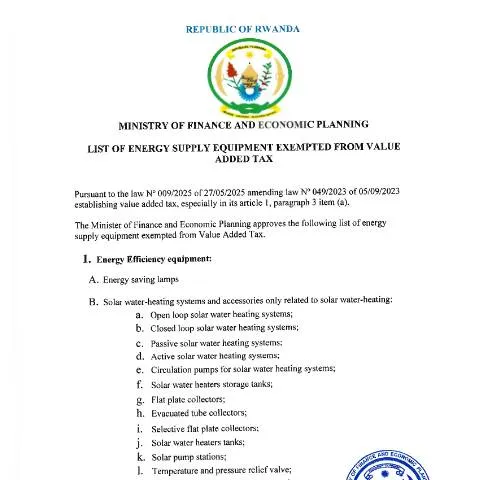
In Rwanda, the drive towards enhancing renewable energy and promoting sustainable practices is underscored by regulatory frameworks aimed at reducing the financial burdens associated with such transitions. The document titled List of Energy Supply Equipment Exempted from VAT July 2025 serves as a vital instrument in this regard, outlining which energy supply equipment is eligible for exemption from Value Added Tax (VAT). This crucial list not only facilitates access to renewable energy technologies for consumers and businesses but is also a significant step towards Rwanda's ambitious energy goals.
Understanding the Legislative Framework Behind the Exemption
The VAT exemption is grounded in Law No. 009/2025, enacted on 27th May 2025, which amends previous legislation regarding VAT implementation. The key intent of this law and the subsequent document is to enhance energy efficiency and promote the adoption of clean energy solutions across the nation.
This regulatory framework aims to encourage investments in renewable energy technologies and reduce reliance on fossil fuels, aligning with global sustainability goals and the objectives set forth in Rwanda's Vision 2050.
Key Legislation and Amendments
- Law No. 009/2025: This law amends previous VAT regulations to include exemptions specifically for energy supply equipment.
- Law No. 049/2023: Establishes the parameters for VAT exemptions in the energy sector.
Understanding these legislative foundations is critical for stakeholders interested in benefiting from these exemptions.
Who Can Benefit from the VAT Exemption
The implications of this document extend to a broad spectrum of stakeholders, including:
- Businesses: Companies involved in the production, distribution, or installation of energy-efficient technologies stand to gain significantly from the VAT exemptions.
- Households: Individual consumers looking to adopt renewable energy solutions, such as solar heating systems or energy-efficient cookstoves, will find the financial burden lessened.
- Government Entities: Local and national government initiatives aimed at promoting sustainable energy practices are also facilitated by these exemptions.
A Detailed Look at the Equipment Listed for VAT Exemption
The document catalogues an extensive range of energy supply equipment eligible for VAT exemption, divided into several categories:
- Energy Efficiency Equipment: This includes items such as energy-saving lamps and various solar water-heating systems.
- Clean Energy Technologies: Listings under this section cover equipment necessary for renewable power generation, such as photovoltaic (PV) modules and associated electronic devices.
- Biomass and Cookstoves: The document details biomass fuels produced in Rwanda, as well as improved cookstoves that meet specific emission standards.
Examples of Exempted Equipment
| Category | Equipment |
|---|---|
| Energy Efficiency | Energy-saving lamps, Solar water heaters |
| Clean Energy | PV modules, Inverters |
| Biomass | Improved cookstoves, Solid biomass fuels |
Completing the VAT Exemption Application Process
For stakeholders to benefit from the VAT exemptions outlined in this document, there are specific procedures to follow:
- Registration: Entities must ensure they are registered with the Rwanda Revenue Authority (RRA) to initiate the exemption application.
- Documentation: Collect and prepare necessary documentation, including proof of purchase and compliance with specified standards.
- Submission: Submit the application along with supporting documents through the online platform, Irembo, or directly to the local authorities.
- Approval: Wait for clearance or recommendation from the Ministry, confirming eligibility for the VAT exemption.
Key Documentation Required
- Proof of purchase of listed equipment
- Compliance certificates for equipment meeting specified efficiency standards
- Any additional recommendations from relevant authorities
Consequences of Non-Compliance or Oversight
Stakeholders must be aware of the potential consequences of failing to adhere to the requirements associated with obtaining VAT exemptions:
- Financial Implication: Failure to comply could result in the obligation to pay VAT on equipment that would otherwise be exempt.
- Legal Ramifications: There may be legal repercussions for misrepresentation or failure to follow the stipulated process.
Thus, meticulous attention to detail and compliance with all requirements is essential.
The Broader Impact of the VAT Exemption Document
This VAT exemption list transcends its immediate financial implications; it is a catalyst for broader energy policy objectives in Rwanda. By stimulating the adoption of renewable energy technologies, the document helps in reducing greenhouse gas emissions, enhancing energy efficiency, and promoting sustainable economic growth.
Furthermore, the exemptions align closely with Rwanda’s commitment to the Paris Agreement and Sustainable Development Goals (SDGs), particularly those focused on affordable and clean energy (SDG 7) and climate action (SDG 13).
Community Engagement and Awareness
To maximize the benefits of the VAT exemption, community engagement initiatives are crucial. Programs aimed at increasing awareness about available exemptions and the associated benefits can foster greater participation in renewable energy programs. This ensures that both businesses and households make informed decisions regarding energy efficiency investments.
Final Thoughts on the Future of Energy in Rwanda
The List of Energy Supply Equipment Exempted from VAT July 2025 document serves as a foundational tool in Rwanda's quest for sustainable energy solutions. As awareness and understanding of its provisions increase, it is anticipated that more stakeholders will take advantage of these exemptions, leading to a more resilient and environmentally-friendly energy landscape.
As the government continues to promote policies that incentivize renewable energy adoption, ongoing education and advocacy will be vital in achieving the nation's energy goals, thus paving the way for a more sustainable and equitable future for all Rwandans.
Understanding VAT Exemptions for Energy Supply Equipment in Rwanda
The Value Added Tax (VAT) exemptions for energy supply equipment in Rwanda are pivotal in promoting renewable energy use and improving access to electricity. As of July 2025, certain energy supply equipment will be exempted from VAT, facilitating a more sustainable energy sector. This initiative aims to reduce the financial burden on both businesses and households, making it easier for them to invest in energy-efficient technologies.
The exemption applies to a range of equipment such as solar panels, wind turbines, and other renewable energy technologies. Stakeholders, including investors and local suppliers, should be thoroughly familiar with the criteria and categories of equipment that qualify for these exemptions to capitalize on the benefits. The Rwandan Revenue Authority (RRA) plays a crucial role in defining and updating the list of exempted items, ensuring that the guidelines are clear and accessible to the public.
Furthermore, it is important to understand that the exemption is not universally applied to all energy supply equipment, but rather it is targeted towards specific items that significantly contribute to environmental sustainability. This strategic approach aligns with Rwanda's broader goals for climate change mitigation and energy diversification.
Application Procedures for Tax Exemptions on Energy Supply Equipment
To benefit from the VAT exemptions on energy supply equipment, businesses and individuals must adhere to specific application procedures set forth by the RRA. First and foremost, applicants must possess a valid National Identification Number (NIN), as it is essential for all tax-related activities in Rwanda.
The application process begins with the completion of the relevant forms, which can be found on the Irembo platform. Specifically, the form entitled 'VAT Exemption Application for Renewable Energy Equipment' is designated for this purpose. Applicants must provide comprehensive details about the equipment they intend to purchase, including specifications, pricing, and the intended use of the equipment.
Once the application is submitted, it undergoes a review process by the RRA to confirm the eligibility of the equipment for VAT exemption. It's advisable to keep thorough documentation throughout the purchase process, as the RRA may require additional information or verification of the use of the equipment for renewable energy purposes.
Upon approval, the applicant will receive a tax exemption certificate, which must be presented to suppliers at the point of sale to successfully waive the VAT on the equipment. This process not only encourages compliance but also reinforces the transparent utilization of funds for energy projects in Rwanda.
The Economic Impact of VAT Exemptions on Energy Supply Equipment
The implementation of VAT exemptions for energy supply equipment is expected to have a profound economic impact. By reducing the initial costs associated with purchasing renewable energy technology, these exemptions will likely stimulate investment in the sector, thereby creating job opportunities and enhancing local capacities.
Furthermore, easier access to energy supply equipment can lead to the proliferation of small and medium-sized enterprises (SMEs) in the renewable energy sector. This development is critical, as SMEs are often vital for economic growth and innovation. By supporting these entities through tax relief, the government is fostering a vibrant ecosystem that not only drives economic growth but also promotes energy independence.
The ripple effect of these exemptions can be significant, leading to enhanced energy access in rural areas and improving the overall quality of life for numerous citizens. Increased access to sustainable energy solutions can support educational initiatives, healthcare facilities, and agricultural productivity, ultimately contributing to Rwanda's development goals.
The interplay between tax policy and energy access demonstrates the Rwandan government’s commitment to integrating economic growth with sustainable environmental practices. Ultimately, this initiative not only addresses current energy challenges but also positions Rwanda as a leader in the transition towards a green economy in Africa.